

 English
 русский
 Español
 عربى
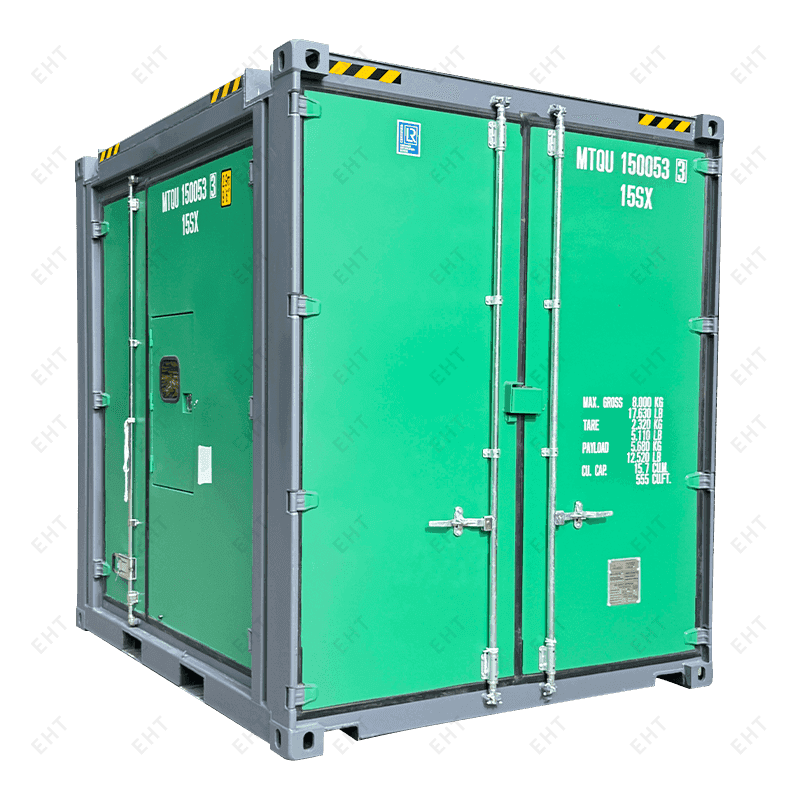
عربى40ft Custom Air Compressor Container
Specialized Shipping Container | 40ft Custom Air Compressor ContainerOverall Dimensions: 12192 × 2438 × 2896mmLarge...
Reefer containers are the workhorses of the global cold chain, and the 40ft reefer container is one of the most frequently used sizes for international trade of perishables. Whether you are shipping fresh fruit, frozen seafood, dairy products, or temperature-sensitive pharmaceuticals, understanding the true 40ft reefer container dimensions is essential for route planning, pallet configuration, and payload calculations. In this guide, we break down the standard measurements, high cube variants, weight limits, and a few practical details that are often missed by shippers and buyers.
Content
The standard 40ft reefer container has an external length of 40 feet, an external width of 8 feet, and an external height of 8 feet 6 inches. Those numbers follow ISO standards, which means the container can fit on standard ship cells, truck chassis, and rail wagons. However, the internal volume is smaller than the external envelope might suggest, because the walls are filled with thick foam insulation, and the front end houses a complete refrigeration unit.
| Specification | Imperial | Metric |
|---|---|---|
| External length | 40 ft 0 in | 12,192 mm |
| External width | 8 ft 0 in | 2,438 mm |
| External height | 8 ft 6 in | 2,591 mm |
| Internal length | approx. 37 ft 11 in | approx. 11,560 mm |
| Internal width | approx. 7 ft 6 in | approx. 2,290 mm |
| Internal height | approx. 7 ft 3 in | approx. 2,210 mm |
| Door opening width | approx. 7 ft 6 in | approx. 2,290 mm |
| Door opening height | approx. 7 ft 3 in | approx. 2,210 mm |
| Usable volume | approx. 2,090 cu ft | approx. 59.3 m³ |
| Maximum gross weight | 71,650 lb | 32,500 kg |
| Empty weight (tare) | approx. 10,580 lb | approx. 4,800 kg |
| Maximum payload | approx. 61,070 lb | approx. 27,700 kg |
As you can see, the internal length is not the full external length. Around 20 to 30 centimeters are consumed by the refrigeration machinery, wall paneling, and the internal floor rails. This matters when you are loading long machinery, oversized crates, or pallets that have to be aligned end to end. Always confirm the exact interior drawing with your supplier, especially if your cargo is close to the length limit.
For rail freight operators, a 40ft railway reefer container offers reinforced corner castings, stronger door hinges, and improved vibration dampening. These details do not change the main dimensions, but they help protect cargo during the heavy shunting and sudden movements common in rail networks. We build this version with the same external envelope so that you can switch between ocean and rail without reworking your pallet plans.
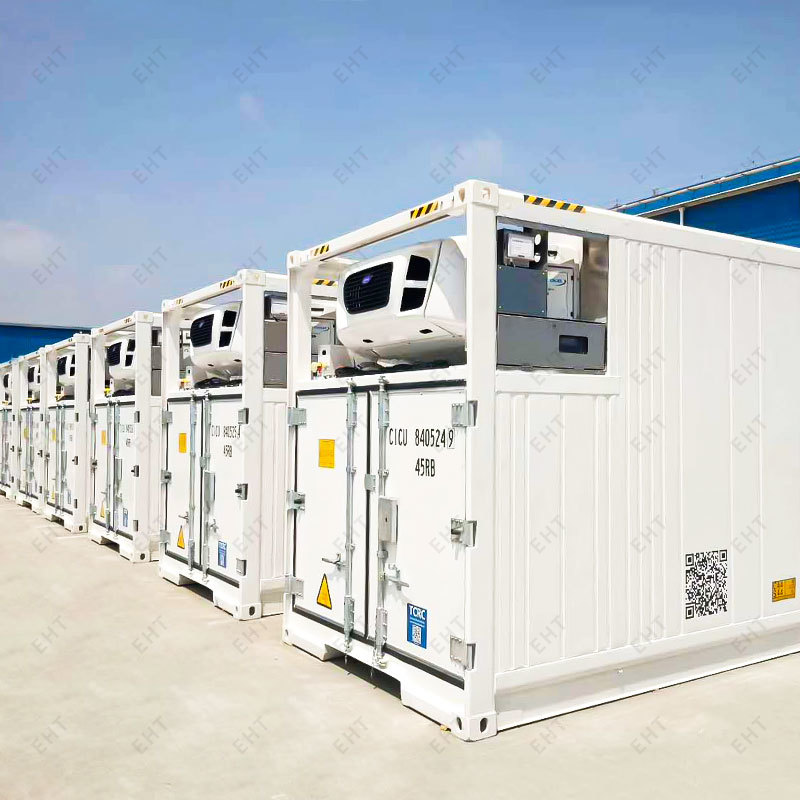 40 Feet Railway Reefer ContainerThe 40H railway reefer container represents an introduced advanced solution for the transportation of temperature-sensitive goods across rail networks on an internatio...View Product →
Most 40ft reefer containers in global service are high cube models. The high cube variant keeps the same external length and width as the standard container, but raises the external height to 9 feet 6 inches. That extra 12 inches of vertical space translates into a significantly larger internal volume, making high cube reefers the preferred choice for high-volume cargo such as leafy greens, tropical fruit, and packaged food products.
| Specification | Imperial | Metric |
|---|---|---|
| External height | 9 ft 6 in | 2,896 mm |
| Internal length | approx. 37 ft 11 in | approx. 11,560 mm |
| Internal width | approx. 7 ft 6 in | approx. 2,290 mm |
| Internal height | approx. 8 ft 2 in | approx. 2,500 mm |
| Door opening width | approx. 7 ft 6 in | approx. 2,290 mm |
| Door opening height | approx. 8 ft 2 in | approx. 2,500 mm |
| Usable volume | approx. 2,366 cu ft | approx. 67.0 m³ |
| Maximum gross weight | 71,650 lb | 32,500 kg |
| Empty weight (tare) | approx. 10,140 lb | approx. 4,600 kg |
| Maximum payload | approx. 61,510 lb | approx. 27,900 kg |
Because high cube reefers sit slightly higher on a chassis, it is important to check local road bridge and tunnel height limits if the container will travel by truck. On vessels, the extra height can affect stacking plans and lashing arrangements. For cross-border road operations, a 40ft TIR reefer container provides customs-approved sealing and documentation advantages while retaining the same high cube internal volume.
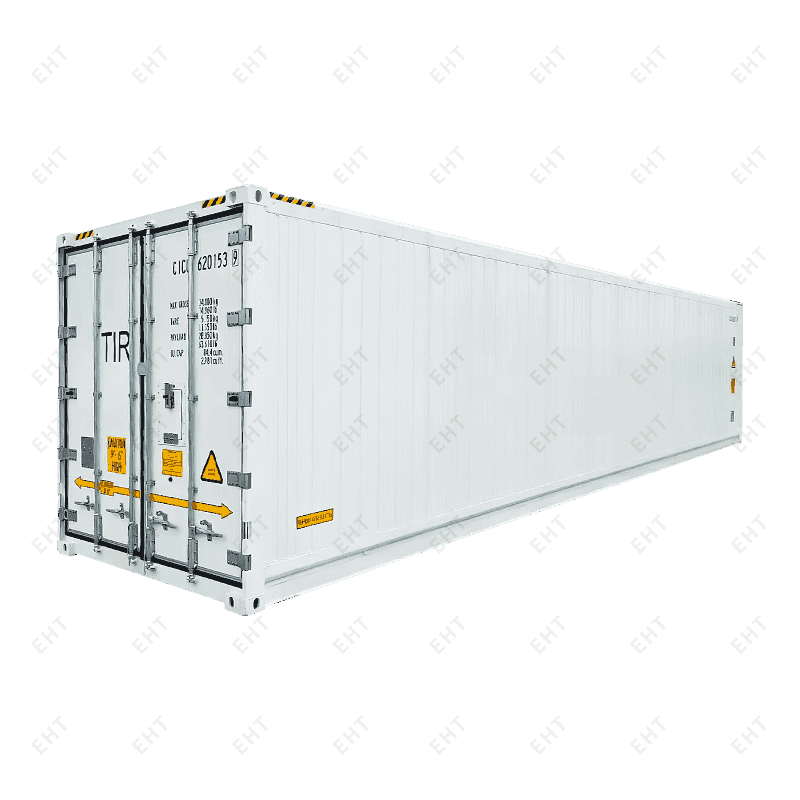 40 Feet TIR Reefer ContainerThe 45-foot TIR reefer container is a sophisticated solution engineered to preserve perishable goods at a precise low temperature, ensuring their quality is maintained...View Product →
Probably the most practical question we hear from customers is: how many pallets fit in a 40ft reefer? The answer depends on the pallet size, the orientation, and the amount of space you must leave for air circulation. The table below gives typical numbers for a 40ft high cube reefer with an internal width of about 2.29 meters.
| Pallet type | Pallet size (L × W) | Typical quantity |
|---|---|---|
| EUR pallet | 1,200 × 800 mm | 24 pallets |
| US pallet | 1,219 × 1,016 mm | 20 pallets |
| Asia pallet | 1,100 × 1,100 mm | 22 pallets |
These figures assume a simple block layout with straight rows. In real operations, however, you should not push pallets completely against the side walls. The reefer floor has T-shaped decking that channels cold air from the front refrigeration unit toward the rear door. If pallets are blocking the floor slots, airflow is reduced, and the cargo in the center of the container can become warmer than the setpoint. A practical loading plan usually leaves a few centimeters of lateral clearance and enough head space around the air return grille at the front.
Every 40ft reefer has a maximum gross weight, typically 32,500 kg. The tare weight, also called empty weight, usually sits between 4,600 and 4,800 kg for standard high cube refrigerated containers. The difference between those two numbers gives you the maximum payload. For the figures used in our tables, that payload is roughly 27,700 to 27,900 kg.
When you are planning a shipment, do not simply subtract the container tare from the maximum gross weight. You must also account for the weight of the chassis, lashing materials, slip sheets, pallets, and any cargo dunnage. Heavy products such as frozen meat or chilled beverages can hit the weight limit before the container is full. Light products like salads or flowers can fill the cube while still leaving payload capacity. Understanding both limits helps you avoid overweight penalties and under-loaded journeys.
A 40ft reefer is not just an insulated box. It is a complete refrigeration and airflow system that can maintain setpoints from about -25°C to +30°C, as long as the ambient conditions are within the design range. The cooling unit pushes cold air through the floor channel system, and the air travels along the T-floor, up through the cargo, then returns to the evaporator through the front grille. This path is why proper stacking matters so much. If cargo blocks the air path or is stacked too close to the top, warm spots can develop and cause product spoilage.
Modern reefers use multiple temperature sensors to monitor return air, supply air, and cargo temperature. Our detailed article on how a reefer container keeps food fresh while crossing oceans covers the backup systems, alarm thresholds, and remote monitoring methods that make long voyages possible. For food producers who need extra hygiene, the 40H food reefer container uses interior liners that are smooth, non-toxic, and easy to clean, making it suitable for direct food distribution.
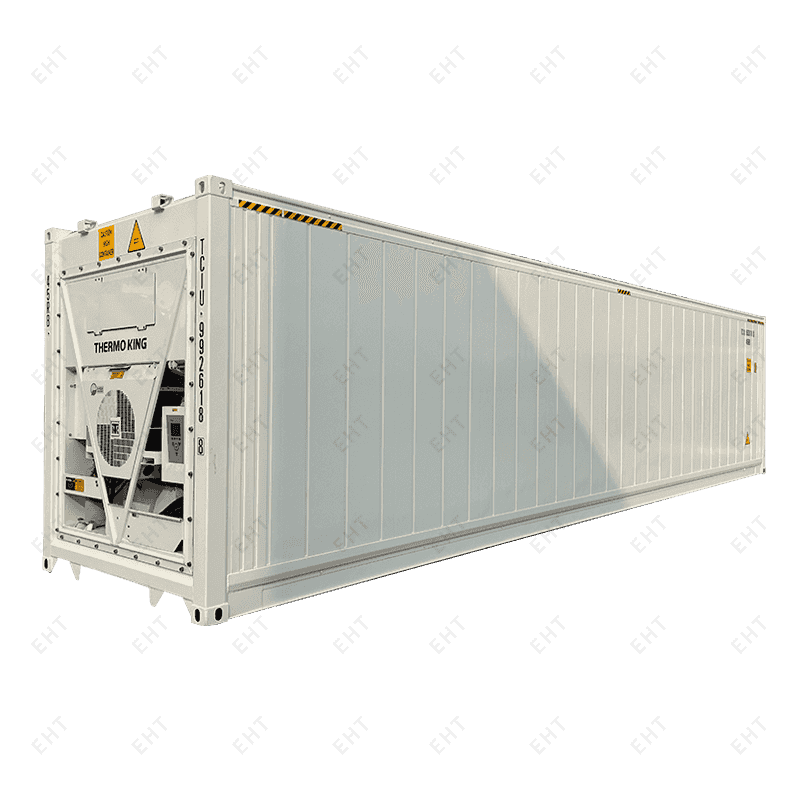 40H Food Reefer ContainerThe 40H food reefer container, a staple in international logistics, is specifically designed to preserve the integrity of temperature-sensitive commodities during tran...View Product →
Even though the nominal 40ft reefer dimensions are standardized, not every unit is physically identical. Different insulation thicknesses, refrigeration brands, and floor structures can shift the internal dimensions by several centimeters. If you are integrating racks, installing partitions, or planning to retrofit the container for a special product, always request a dimension drawing that includes corner castings, wall corrugations, door hinge protrusions, and the exact floor rail positions.
As a container manufacturer, we are often asked to build reefers with special internal partitions, additional ventilation ports, extra data logging connections, or custom door configurations. Those modifications affect capacity, weight, and sometimes certification, so the best approach is to define your cargo type, temperature range, transport mode, and loading method before choosing a starting model. If your cargo fits standard pallets and standard airflow patterns, a stock 40ft high cube reefer is usually the most cost-effective solution.
Keeping these dimensions and operational details in mind will help you avoid costly mistakes, protect your perishable cargo, and make your cold chain more predictable. Whether you are expanding a reefer fleet, buying your first container, or replacing aging equipment, the 40ft reefer remains one of the most efficient refrigerated shipping options available for land and sea transport.

What to stay up to date?
Contact us via the email address below.
No. 178, Wuzhou East Road, Economic Development Zone, Yangzhou, Jiangsu.
Copyright 2024 Yangzhou Yichengke Integrated Technology Co., Ltd. All Rights Reserved.

