

 English
 русский
 Español
 عربى
عربى40ft Custom Air Compressor Container
Specialized Shipping Container | 40ft Custom Air Compressor ContainerOverall Dimensions: 12192 × 2438 × 2896mmLarge...
Across the global power industry, one shift has become impossible to ignore: the containerized substation market is moving from a niche solution to a mainstream infrastructure choice. As a manufacturer of specialized containers and integrated systems, EHT sees this trend reflected in the growing number of inquiries from renewable energy developers, utilities, mining operators, and emergency power planners. Projects that once assumed a permanent brick-and-mortar substation are now asking for modular, factory-built alternatives that can be delivered faster and relocated when needs change.
Containerized substations are complete power distribution and conversion units built inside standard ISO container frames. They integrate transformers, switchgear, protection relays, auxiliary supplies, HVAC, and fire suppression systems into a single transportable module. Depending on the scope, they can function as medium-voltage distribution nodes, high-voltage step-down stations, or mobile backup power centers connected to diesel generators, battery storage, or renewable generation.
Content
Public market studies published between 2023 and 2026 place the global containerized substation market at roughly USD 2.5 billion to USD 3.5 billion, depending on the base year and methodology. The consensus across these studies is steady annual growth in the 8% to 9% range, with market size projected to exceed USD 7 billion by the mid-2030s. This momentum is driven by the structural shift toward renewable energy, the need for faster grid connections, and the growing acceptance of modular power infrastructure in place of traditional construction.
| Base Year | Base Value | Forecast Year | Forecast Value | CAGR |
|---|---|---|---|---|
| 2023 | USD 2.50 billion | 2030 | USD 4.83 billion | 8.6% |
| 2024 | USD 2.51 billion | 2030 | USD 4.25 billion | 9.03% |
| 2025 | USD 3.17 billion | 2035 | USD 7.18 billion | ~8.5% |
| 2026 | USD 3.47 billion | 2036 | USD 7.85 billion | 8.5% |
From our position on the manufacturing floor, these numbers translate into real projects: heavier order pipelines for medium-voltage distribution containers, more requests for high-voltage enclosures, and a noticeable increase in customized configurations for wind, solar, and microgrid applications.
Several converging forces are pushing developers and grid operators toward containerized substations. Understanding these drivers is important not only for market observers but also for buyers who need to make confident procurement decisions.
Renewable energy is the single strongest growth driver. Solar and wind farms face tight commissioning schedules, and the substation is often the critical path for grid connection. A containerized substation can be fully assembled, wired, and tested in the factory, then delivered to site for installation within weeks rather than months. The same logic applies to battery energy storage systems, which increasingly accompany renewable plants. EHT manufactures 20-foot to 45-foot battery energy storage containers specifically for grid and renewable applications, integrating them with the same structural and thermal discipline used in containerized substations.
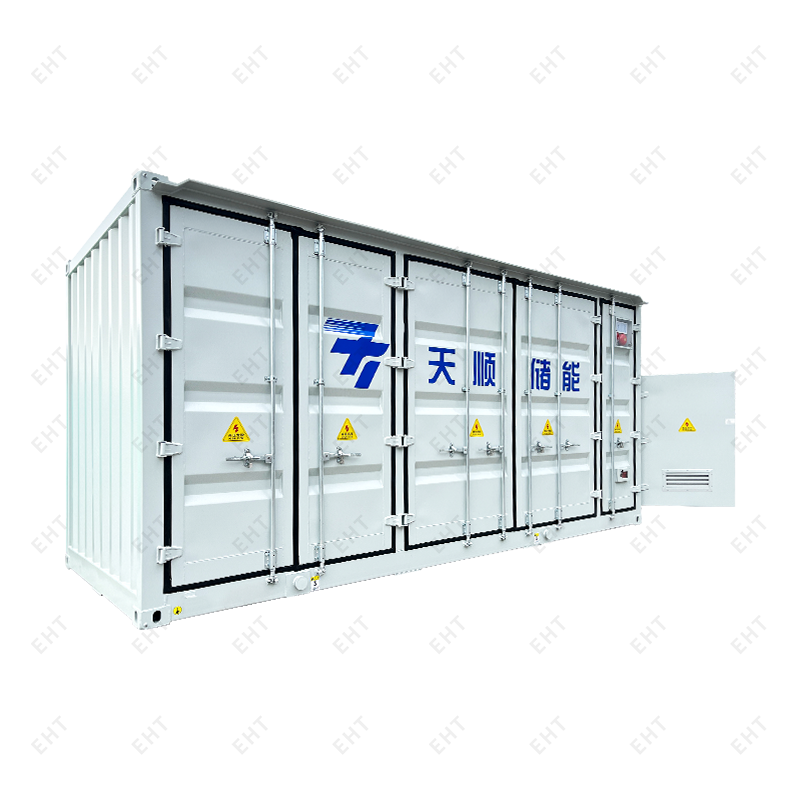 20ft Battery Energy Storage Container for Grid and Renewable ApplicationsThis containerized storage system supports peak shaving and load balancing for grid-level projects and renewable integration. It appears after a discussion of battery storage needs, with walk-in and non-walk-in options and air or liquid cooling.View Product →
For a deeper look at how BMS, EMS, and PCS systems work inside an energy storage container, we have covered that in a separate technical guide. The key point for substation buyers is that containerized platforms are no longer limited to simple distribution — they can host complex power electronics, monitoring systems, and protection schemes in the same footprint.
Time is money in power infrastructure. A traditional substation requires civil works, structural steel erection, equipment installation, cabling, and extensive on-site testing. A containerized substation shifts most of that work to the factory, where production lines, jigs, and quality control procedures ensure consistency. On site, the unit is placed on a prepared foundation, connected to incoming and outgoing cables, and commissioned. The difference in schedule can be dramatic — often 40% to 50% faster than conventional builds.
Flexibility extends beyond speed. Because the substation is built inside an ISO container frame, it can be transported by truck, rail, or ship, lifted by standard container handling equipment, and moved again years later if the project location changes. For mining, oil and gas, and large construction projects that shift their centers of operation, this relocatability is a decisive advantage.
In remote areas without reliable grid infrastructure, containerized substations are becoming the backbone of distributed power systems. Combined with diesel generators, solar, or battery storage, they form complete off-grid power nodes that can be deployed quickly and operated with minimal local support. Disaster recovery is another high-growth scenario: after storms, floods, or grid failures, a mobile substation can restore power to critical facilities while permanent infrastructure is rebuilt.
EHT produces a range of containerized power solutions for such applications. Our low-noise diesel generator containers are engineered for continuous duty, sound attenuation, and safe fuel handling, making them natural companions to containerized substations in temporary and permanent installations alike.
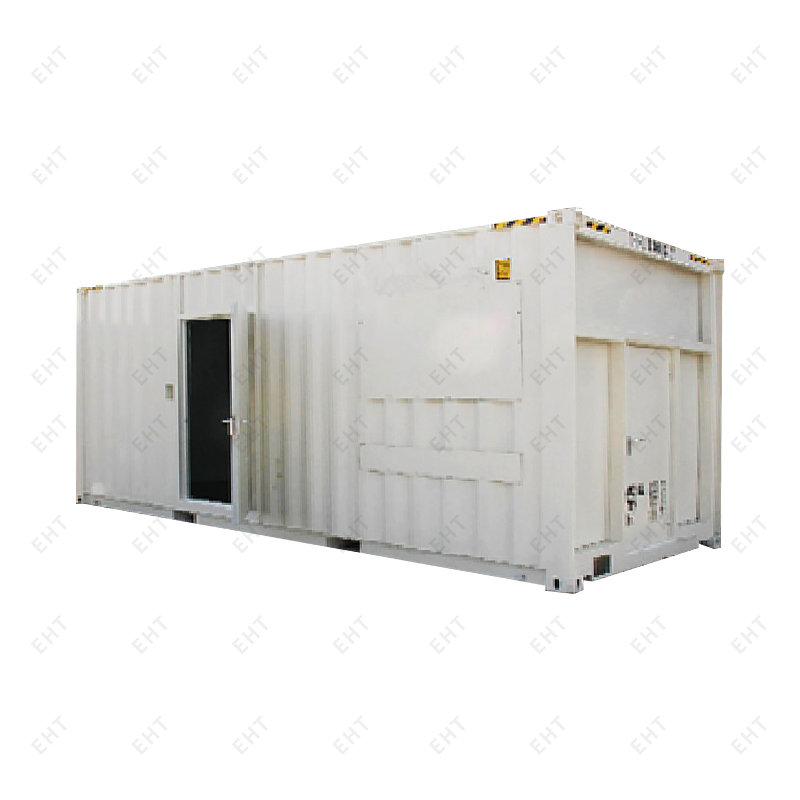 20ft Low Noise Diesel Generator Container with Sound AttenuationThis containerized generator set offers rainproof, low-noise operation for mobile and temporary power needs. It follows a section on containerized power solutions, making it a practical companion for substations in off-grid or backup scenarios.View Product →
The combination of substation containers, energy storage containers, and generator containers gives project developers a complete toolkit for electrification in places where traditional grids are absent or unreliable.
Across published containerized substation market reports, several segmentation patterns are consistent. Medium voltage currently accounts for the largest share of shipment volume, driven by wind farm collection networks, industrial distribution, and utility feeder applications. High voltage is growing at the fastest rate, fueled by large utility-scale renewable projects and grid interconnection upgrades that require compact, pre-tested substation solutions.
| Dimension | Leading Segment | Fastest-Growing Segment |
|---|---|---|
| Voltage Level | Medium Voltage | High Voltage |
| Application | Renewable Energy Integration | Disaster Recovery & Temporary Power |
| End User | Utilities | Telecommunications |
| Component | Transformers | Control Systems |
The component trend is particularly relevant for manufacturers. Transformers still represent the highest-value component inside a containerized substation, but control systems are gaining share quickly as utilities demand remote monitoring, automated protection coordination, and smart grid readiness. This is pushing manufacturers to strengthen their capabilities in low-voltage and control wiring, not just high-voltage assembly.
The containerized substation market is global, but regional priorities differ. North America and Europe are focused on grid modernization and renewable integration, with strong environmental and safety regulations shaping product design. Asia-Pacific is the largest volume market, driven by rapid urbanization, industrial expansion, and rural electrification programs. The Middle East and Africa are emerging hotspots for containerized substations, especially for off-grid electrification and large infrastructure projects in harsh environments.
| Region | Primary Drivers | Market Characteristics |
|---|---|---|
| North America | Aging grid infrastructure, renewable expansion | Focus on innovation, sustainability, and smart grid integration |
| Europe | Regulatory push for clean energy | Strong certification requirements and early technology adoption |
| Asia-Pacific | Urbanization, industrialization, energy access | Largest volume contributor with rapid capacity additions |
| Middle East & Africa | Off-grid electrification, resource extraction projects | Fast-growing markets with demand for rapid deployment and extreme-climate durability |
For manufacturers, serving these diverse regions means maintaining a broad set of international certifications. EHT’s product certificates include CE for the European market, CSA for the United States and Canada, and AS/NZS 1170.2 for structural design compliance in Australia. These credentials are not just paperwork — they reduce approval cycles for end customers and help EPC contractors meet local regulatory requirements with less friction.
Containerized substations may look similar from the outside, but the internal engineering and manufacturing quality vary significantly between suppliers. Based on our experience serving international customers, we recommend evaluating at least the following aspects before placing an order:
The core value of a containerized substation lies in factory integration. When transformers, switchgear, protection relays, and auxiliary systems are installed and tested at the factory, site work is reduced to foundation preparation, cable connection, and commissioning. This approach lowers the risk of weather delays, labor shortages, and on-site installation errors. It also makes quality control more reliable, because the same welders, electricians, and test engineers build every unit under consistent conditions.
For international buyers, checking certifications is critical. An uncertified container may face long delays at customs, fail third-party inspections, or require expensive rework. A fully certified product, on the other hand, moves through project approvals quickly and gives end users confidence in its long-term reliability. EHT’s certifications cover both the container structure and the integrated system, and our factory operates under ISO 9001 quality management standards with ISO 14001 and ISO 45001 for environmental and occupational health and safety.
No two substation projects are exactly alike. Voltage level, transformer rating, switchgear configuration, busbar arrangement, cable entry direction, anti-corrosion grade, internal walkway width, and even nameplate language can all vary. A capable manufacturer should be able to work from your blueprint — or from a preliminary concept — and propose practical optimizations for manufacturing, transport, and installation. At EHT, we have built our entire product system around customization. Our special distribution room container is a typical example of this capability: a fully equipped power distribution room housed in a standard container frame, suitable for a wide range of applications.
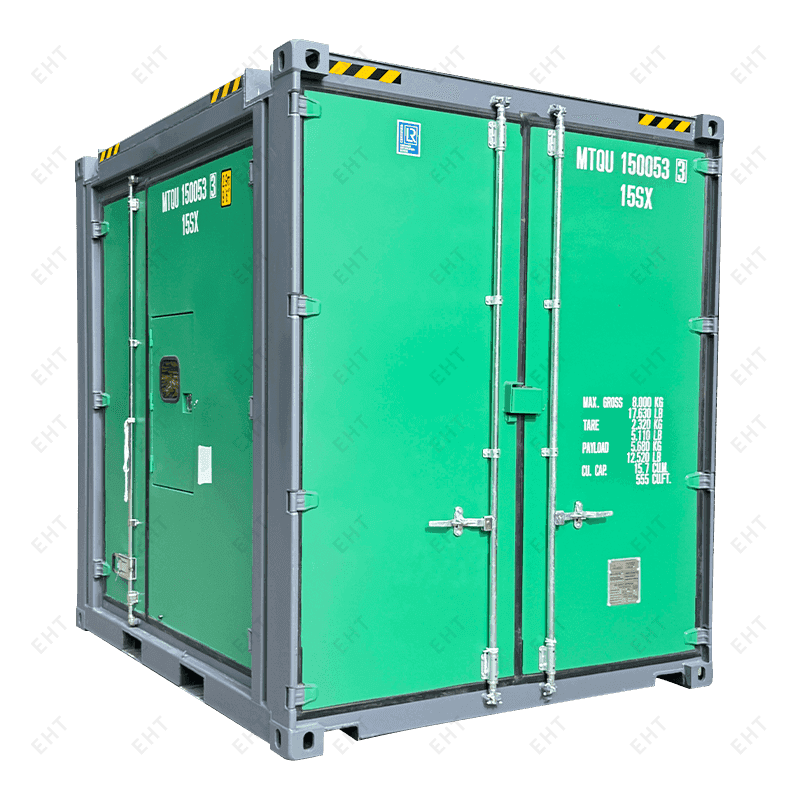
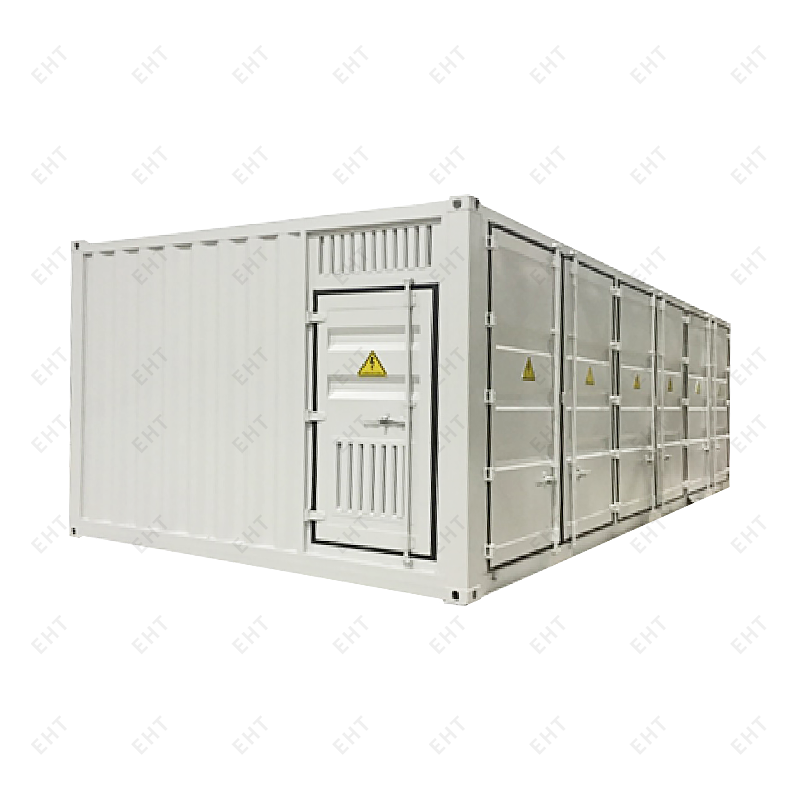 Special Distribution Room Container for Customized Power DistributionA modular, self-contained distribution room built in a standard container frame, suitable for emergency relief and off-grid sites. It is highlighted as an example of the manufacturer's customization capability for projects with varying voltage, switchgear, and layout requirements.View Product →
Whether you need a 20-foot unit for a small industrial site or a 40-foot high-capacity substation for a utility project, the same manufacturing discipline applies: precise structural work, careful wiring, thorough testing, and clean documentation.
Looking ahead, the containerized substation market is likely to continue its upward trajectory for at least the next decade. Several trends will shape the next generation of products. Intelligent monitoring and remote diagnostics are becoming standard expectations, enabling utilities to operate distributed substations with fewer on-site personnel. Environmental considerations are also moving to the forefront: SF6-free switchgear, low-loss transformers, and more efficient cooling systems are increasingly specified in tenders. Modular architectures will keep evolving, allowing substation containers to be paired more flexibly with battery storage, hydrogen power, and renewable generation in hybrid energy hubs.
For buyers, the practical benefit of these trends is improving performance and total cost of ownership. For manufacturers, they demand continuous investment in engineering, certification, and production technology. The companies that succeed will be those that treat each containerized substation not as a commodity box but as a carefully engineered power asset.
The containerized substation market is not just a collection of statistics — it reflects a structural change in how power infrastructure is planned, built, and maintained. As a manufacturing partner with international certifications and a broad product portfolio, EHT is ready to support utilities, EPC contractors, and project developers with reliable, code-compliant, custom-engineered container solutions. We also welcome distribution partners who want to bring these products to new regions; if that sounds like a fit, feel free to explore our partnership opportunities.

What to stay up to date?
Contact us via the email address below.
No. 178, Wuzhou East Road, Economic Development Zone, Yangzhou, Jiangsu.
Copyright 2024 Yangzhou Yichengke Integrated Technology Co., Ltd. All Rights Reserved.

