

 English
 русский
 Español
 عربى
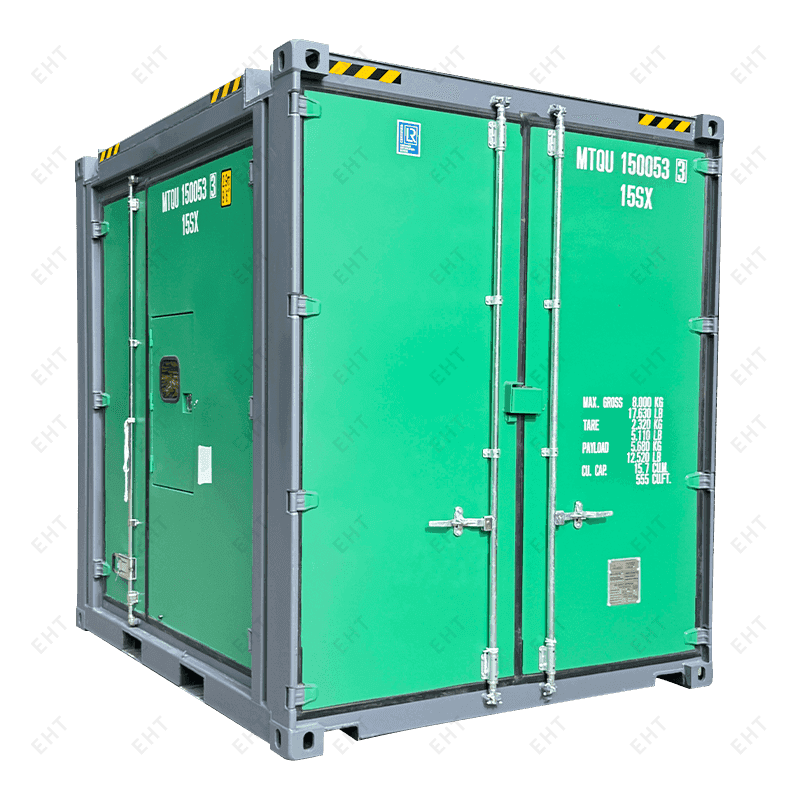
عربى40ft Custom Air Compressor Container
Specialized Shipping Container | 40ft Custom Air Compressor ContainerOverall Dimensions: 12192 × 2438 × 2896mmLarge...
A utility-scale solar farm in a remote area needs storage online before the next quarterly curtailment review. A commercial building operator wants to cut demand charges without sacrificing parking space. In both cases, the decision usually narrows to one question: which containerized battery energy storage system (BESS) should we specify? Factory-integrated BESS containers have become a standard answer because they compress the entire storage plant into a single, tested unit. This guide explains what these containers contain, how to compare the specs that matter, and what separates a reliable manufacturer from a supplier of white-label boxes.
Content
At the most basic level, a BESS container is a battery storage plant built inside an ISO-standard cargo enclosure. The structure houses battery racks, a battery management system (BMS), power conversion system (PCS), thermal management, fire suppression, cable trays, lighting, and an auxiliary power panel. All components are integrated on a production line, then tested as a complete system before delivery. That factory integration is the core difference between a container and a field-assembled battery room. On site, the unit is lifted onto a foundation, connected to the grid, and commissioned in days rather than months.
The internal architecture is straightforward. Battery modules are bolted into racks and connected to a DC bus. The BMS monitors cell voltages and temperatures, controls contactors, and communicates with the plant controller. The PCS converts DC to AC and manages grid synchronization. Thermal management, often liquid cooling for high-capacity units, keeps cells inside the optimum temperature band. Fire detection and suppression are permanently installed, which is a significant advantage over retrofitting safety systems in a building.
The way the BMS, EMS, and PCS work together determines how well the system responds to grid commands and protects the battery. Buyers should look for proven control software and clear fault-response logic, not just hardware specifications. For smaller renewable and commercial installations, a 20-foot battery energy storage container for grid and renewable energy is often the most balanced choice. It occupies less than 15 square meters of site area yet provides enough capacity for peak shaving, microgrid stabilization, and solar self-consumption applications.
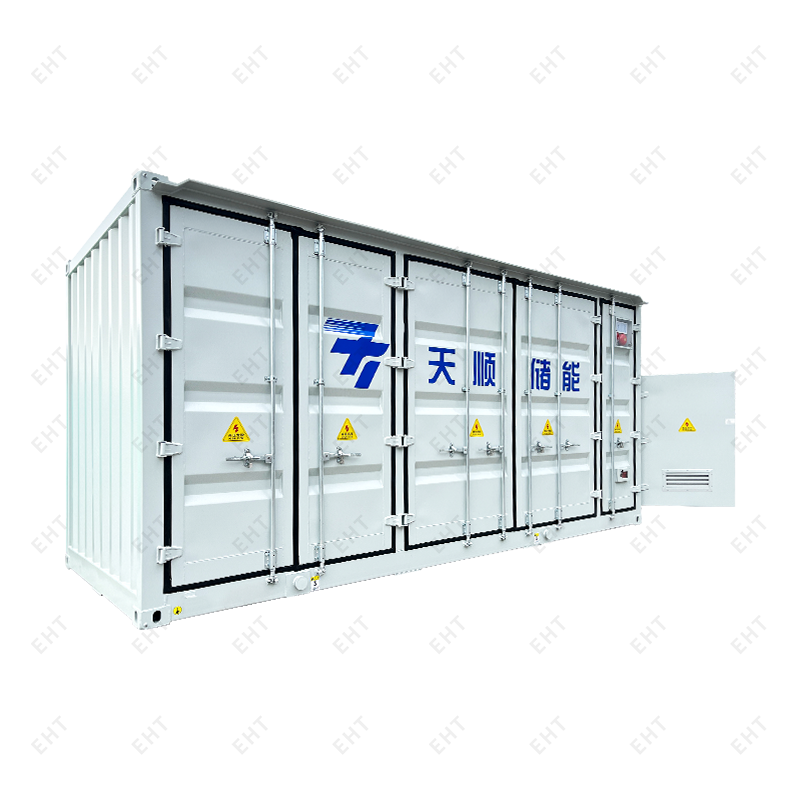 20ft Battery Energy Storage Container for Grid and Renewable Energy Suppliers, WYangzhou Yichengke Integrated Technology Co., Ltd is China Wholesale 20ft Battery Energy Storage Container for Grid and Renewable Energy ...View Product →
Containerized BESS units deliver three big advantages that explain their market dominance: speed, predictability, and modularity. First, speed. A typical battery building involves civil works, structural steel, HVAC installation, electrical rooms, and separate delivery of batteries and inverters. A container bundles all of that into one factory build, with the enclosure itself serving as the building. The schedule saving is often measured in months, which matters for projects that need to hit a commercial operation date.
Second, predictability. By building indoors on a controlled production line, a manufacturer can repeat the same design across multiple projects. That means fewer field errors, consistent quality control, and better documentation for permitting authorities. The buyer sees a mature product rather than a one-off construction project.
Third, modularity. If a site needs 5 MW / 10 MWh today and 10 MW / 20 MWh next year, you can install one container now and add another later. Each container is self-contained, with its own cooling and safety systems, so the expansion does not require shutting down the first unit. From a financial perspective, the containerized approach also reduces construction risk. The project's cost is largely locked in at the factory, and financing is easier when the main equipment is a definable asset rather than a pile of site-built components.
Choosing the right container starts with the project's energy-to-power ratio. A system that discharges over one hour needs high power and lower energy. A system that provides four hours of shifting needs more battery capacity relative to the inverter size. Once the required capacity and power are clear, the container size follows. Another important specification is cooling strategy. Air cooling is simpler and works well at lower capacities, while liquid cooling is more efficient at high charge/discharge rates and in high ambient temperatures. For capacities above 2 MWh per container, liquid cooling is increasingly common because it keeps the pack temperature more uniform and reduces cell degradation.
| Container Size | Typical Energy Capacity | Cooling Method | Best Suited For |
|---|---|---|---|
| 20 ft | 1–2 MWh | Air or liquid | Grid and renewable projects, commercial microgrids |
| 32 ft | 3.72 MWh | Liquid | High-density commercial and industrial storage |
| 40 ft | 3.5 MWh | Liquid | Utility-scale and large C&I installations |
| 45 ft | 3.5+ MWh | Liquid | Large projects with lithium or sodium-ion chemistry |
The right size also depends on allowable transport dimensions. In many regions, a 40-foot container is the standard maximum for road transport, while a 45-foot unit may require special permits. A qualified manufacturer will discuss these constraints during the design phase. If your project needs the highest energy density per footprint, a 40-foot high-capacity energy storage container with 3.5 MWh is a proven option. It matches the footprint of a standard 40-foot ISO unit while delivering utility-class capacity in a single enclosure.
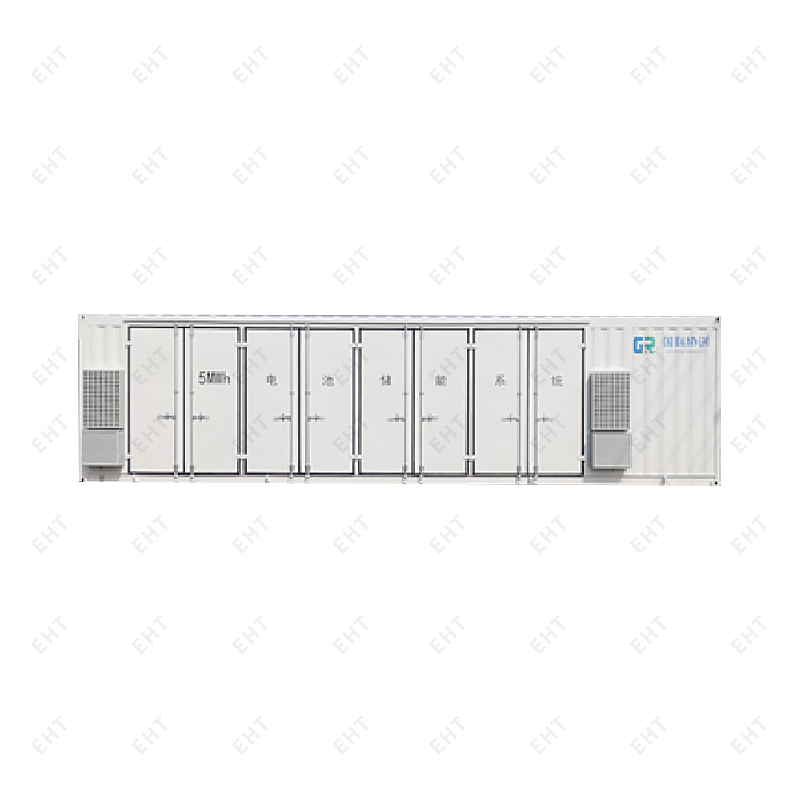 40ft High-Capacity Energy Storage Container with 3~5 MWh Suppliers, Wholesale faYangzhou Yichengke Integrated Technology Co., Ltd is China Wholesale 40ft High-Capacity Energy Storage Container with 3~5 MWh Suppliers a...View Product →
BESS containers are used in grid, commercial, industrial, and off-grid settings. On the grid side, they provide frequency regulation, voltage support, and black-start capability. They also help integrate renewable energy by smoothing the ramp rate of solar or wind plants and shifting generation to evening peaks. In remote areas, a containerized BESS can replace diesel generators for short-duration power requirements, cutting fuel costs and maintenance.
Commercial and industrial users typically use BESS containers for demand charge reduction and backup power. A container located near a manufacturing plant can discharge during the utility's peak window and recharge at night, lowering the monthly energy bill. Some operators use the same unit to provide a clean interruptible power supply for sensitive equipment. For island grids or mining camps, containers are attractive because they can be shipped by truck, rail, or barge. Units built to DNV standards can even be deployed on offshore platforms or in other marine environments, where corrosion resistance and structural integrity are critical.
For large-scale projects that may expand over several phases, the 45-foot lithium and sodium-ion energy storage container offers chemistry flexibility. Sodium-ion cells perform better in cold climates and rely on a supply chain without lithium constraints, which can be a decisive advantage for certain procurement strategies.
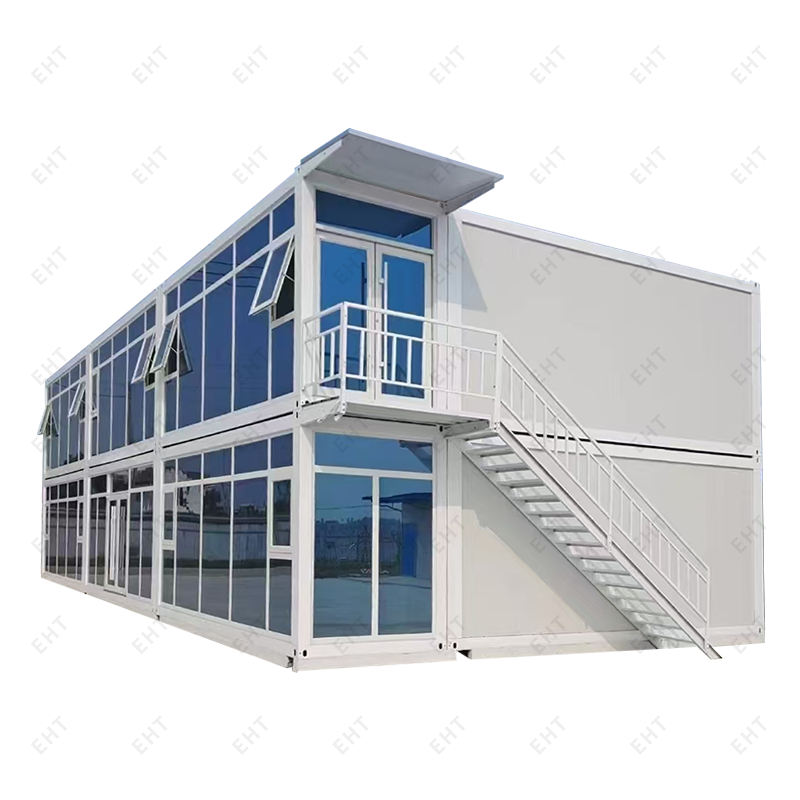 45ft Lithium and Sodium-Ion Energy Storage Container for Large-Scale Projects SuYangzhou Yichengke Integrated Technology Co., Ltd is China Wholesale 45ft Lithium and Sodium-Ion Energy Storage Container for Large-Scale...View Product →
A BESS container is a long-term asset, so engineering quality matters beyond the battery itself. The enclosure must be strong enough for repeated lifting and transportation, and rigid enough to keep battery racks aligned during an earthquake or high wind. Door seals, ventilation louvers, and cable entries must be designed for the site environment. For marine environments, this includes salt-spray-resistant coatings and stainless fasteners.
Thermal management is the most important factor for battery life. A temperature difference of just a few degrees between cells can accelerate aging. Liquid cooling reduces these gradients and allows higher charge/discharge rates without hotspots. The control system should also include redundant thermal sensors and a fire alarm panel with remote alarm capability. Safety compliance is a non-negotiable part of procurement. Lithium-ion systems require thermal runaway gas detection, deflagration vents, and appropriate fire suppression. Sodium-ion batteries have different hazards, so the system design must match the cell chemistry. Buyers should request documentation showing compliance with UL 9540A, IEC 63056, or the relevant local standards.
Beyond product certification, the manufacturer's own quality systems matter. EHT operates under ISO 9001, ISO 14001, and ISO 45001 management systems, and its products carry CE, CSA, and AS/NZS 1170.2 structural design certification where needed. This paperwork reduces the risk of delays during local inspections and insurance underwriting.
The right BESS container balances capacity, safety, and delivery schedule. Start with the project's energy and power needs, verify the manufacturer's production standards, and ask for the same certification package you would require from any major electrical equipment supplier. If you are planning a storage project and want a partner who can custom-build the container around your requirements, talk to EHT. We also invite energy developers and resellers to explore our dealer program for ongoing projects.

What to stay up to date?
Contact us via the email address below.
No. 178, Wuzhou East Road, Economic Development Zone, Yangzhou, Jiangsu.
Copyright 2024 Yangzhou Yichengke Integrated Technology Co., Ltd. All Rights Reserved.

