

 English
 русский
 Español
 عربى
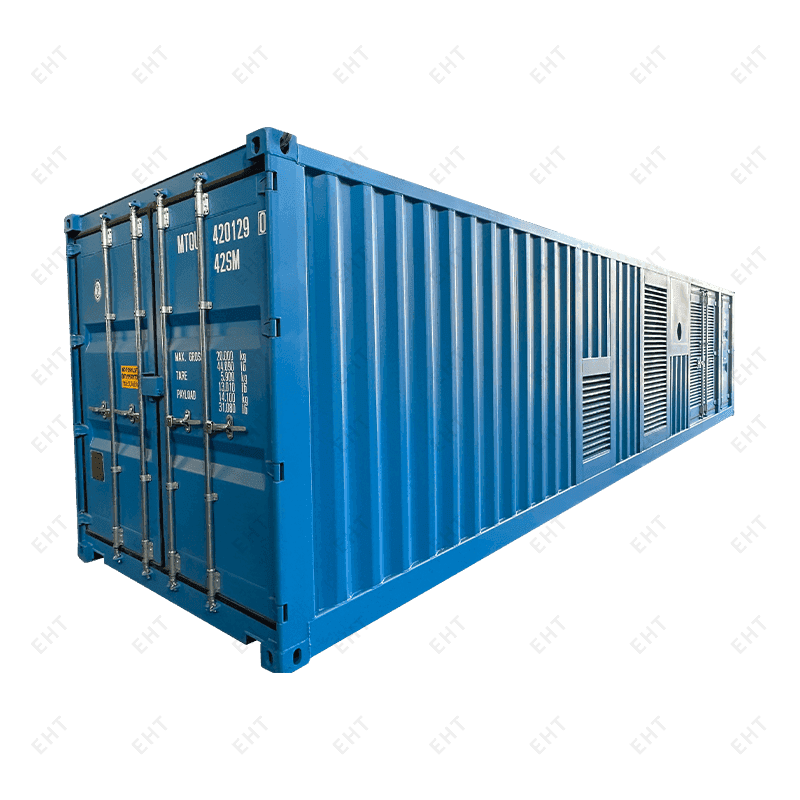
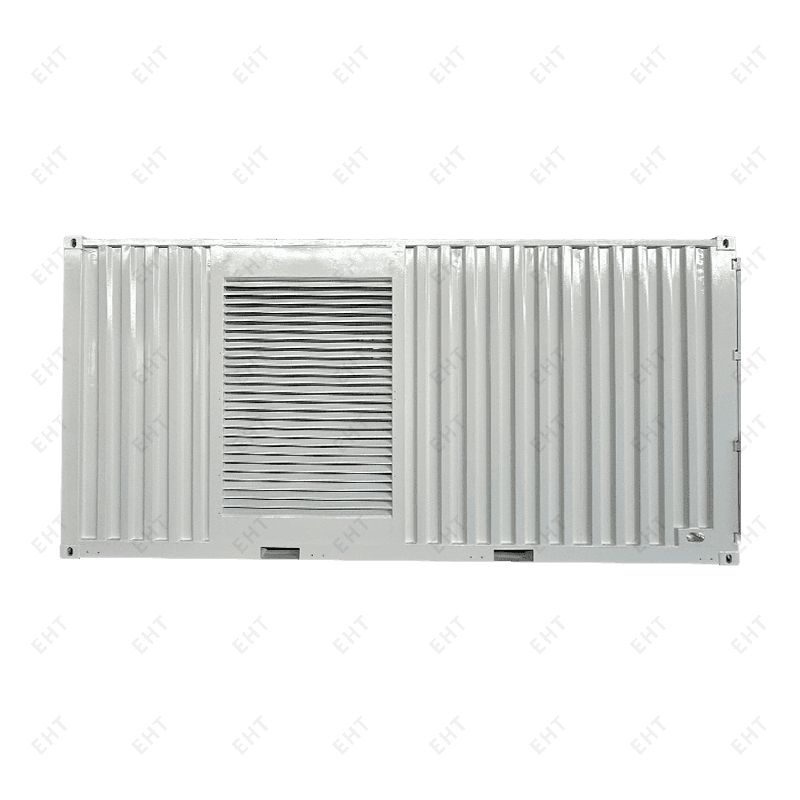
عربى40ft Custom Air Compressor Container
Specialized Shipping Container | 40ft Custom Air Compressor ContainerOverall Dimensions: 12192 × 2438 × 2896mmLarge...
Watch a 40ft box settle onto a skeletal chassis and lock down with four turns of a handle, and you start to see why drivers treat the trailer and the container as one machine. The trailer sets where the box can go, how fast it travels and how much it may legally weigh.
What follows is the practical side of shipping container trailers: what they are, the types you will meet on the road, the numbers worth remembering, and how to load and secure a box without damaging it or the trailer underneath.
Content
A shipping container trailer is a trailer built around the dimensions of the ISO freight container. Most are skeletal chassis, a frame of steel beams with almost no deck, because the container does not need one. An ISO box carries its strength in the bottom rails and corner castings, so the trailer only has to support it at those points and lock it down.
The locking is done by twist locks: conical fittings that rotate into the bottom corner castings of the container. Four of them, set to the standard spacing, are enough to hold a loaded box at highway speed. That is why a container trailer looks so light for the job; the strength is shared between the trailer frame and the container itself.
Two details separate a container trailer from a general flatbed. The lock positions are fixed by the ISO standard at 2,438 mm (8ft) across the width, and the container carries a CSC safety approval plate showing it is fit for transport. Checking that plate before loading saves a great deal of trouble later.
Most container haulage falls into six families of trailer, and each one solves a slightly different problem.
| Trailer type | How the container is held | Where it works best |
|---|---|---|
| Skeletal chassis (fixed length) | Four twist locks built into an open frame | Routine port, rail and yard shuttles of one box size |
| Extendable chassis | Sliding beams with lock positions for 20ft, 40ft and sometimes 45ft | Fleets that switch box sizes without swapping trailers |
| Flatbed with container locks | Bolt-on twist locks, or chains and straps over a flat deck | Mixed work where the trailer is not always carrying a container |
| Gooseneck or drop-deck | Low deck section plus locks or chains | Heavy or tall boxes where bridge clearance is tight |
| Tilt or tipping trailer | Tilting platform with locks; the bed itself raises | Loading without a crane, and tipping loose cargo from bulk boxes |
| Self-loading side-loader | Hydraulic cranes that lift the box from the ground onto the deck | Sites with no ramp, crane or forklift access |
A fixed chassis is the simplest and cheapest answer, but it carries one length of box and nothing else. Extendable chassis cost more to buy and maintain, yet they earn their keep quickly where both 20ft and 40ft units pass through the same gate.
Two sets of figures drive every loading decision: the length of the box and the total weight of the combination.
| Item | 20ft | 40ft |
|---|---|---|
| External length | 6,058 mm | 12,192 mm |
| External width | 2,438 mm | 2,438 mm |
| Typical empty container weight | 2,200-2,400 kg | 3,700-4,000 kg |
| Common maximum gross rating | 30,480 kg | 30,480-32,500 kg |
| Typical chassis tare | 2,600-3,200 kg | 4,800-5,900 kg |
Weight is where planning usually goes wrong. A 40ft box may be rated above 30 tonnes gross, yet a standard tractor and chassis combination often runs out of legal axle weight long before the container is full. Against a typical interstate limit of 80,000 lbs (36,287 kg) for the whole combination, a heavy steel box can only be part-loaded once the trailer's own tare has been subtracted.
The trailer is only half of the match. Door position, lock spacing and total height all decide how comfortably a load moves.
Door orientation matters more than most people expect. A standard end-door container has to be unloaded from the rear, which is fine on a wide apron and awkward in a narrow yard where the trailer is parked against a wall. A side door box lets a forklift work alongside the chassis instead.
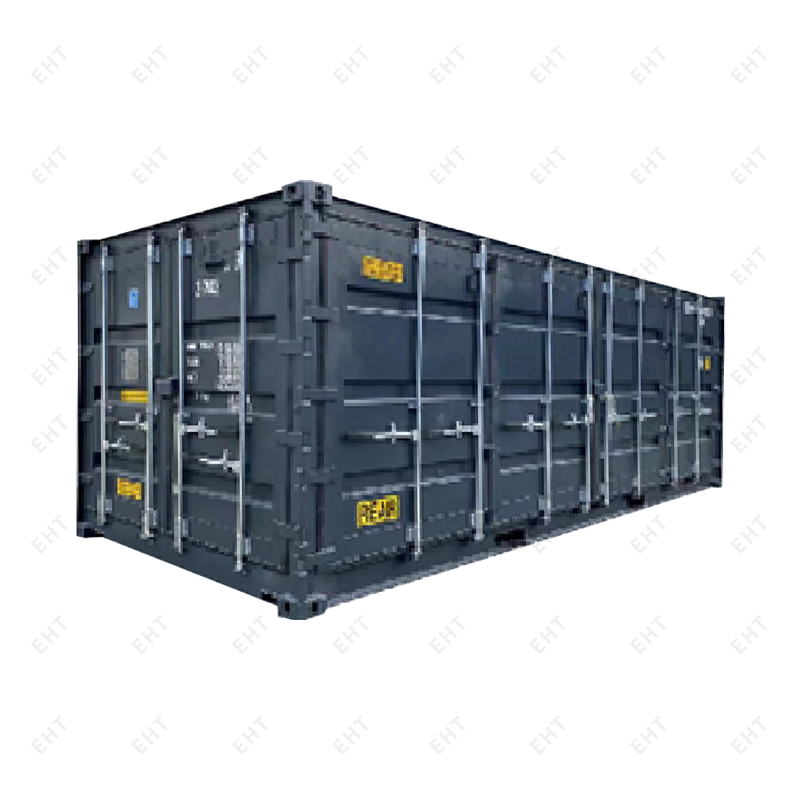 20 Feet Side Door Specialized Shipping ContainerFor yards where rear unloading is awkward, this 20-foot side-door container allows forklift access alongside the chassis.View Product →
Height is the other quiet constraint. An ISO container on a standard chassis sits at roughly 4.1 m overall, already near the legal limit on many routes, and a heavier deck or larger tyres can push it over. When you are choosing a box for a specific route, it is worth looking at the specialized and custom container range we build, because a few centimetres of deck height can decide whether a permit is needed at all.
The loading method usually decides how the day goes.
Securing is where experience shows. Four twist locks are the baseline, not the whole answer. Locks should be fully engaged with the handles pinned or wired, heavy loads benefit from chains or straps at the bottom corner castings as well, and the combination should be re-checked after the first few kilometres.
 20ft Open Top Bulk Cargo Container (20' OT)An open-top 20-foot container suited to crane or grab loading of bulk, oversized, or awkward cargo that end doors cannot handle.View Product →
How the container is built matters too. An open-top box is lifted into place and filled from above with a grab or a crane, which suits scrap, aggregates or machinery that would be awkward to push through end doors on a chassis.
Repositioning is the quiet cost in container haulage. A one-way delivery often means the trailer runs back with nothing on it, or with a box occupying a full 20ft of deck for no reason.
Flat pack containers solve part of that problem. They fold down to a fraction of their working height, so several units can share one trailer deck on the return leg. For camps, remote projects and seasonal sites, that single detail can cut the transport bill substantially.
Our guide to the advantages of flat pack containers covers the trade-offs in more detail.
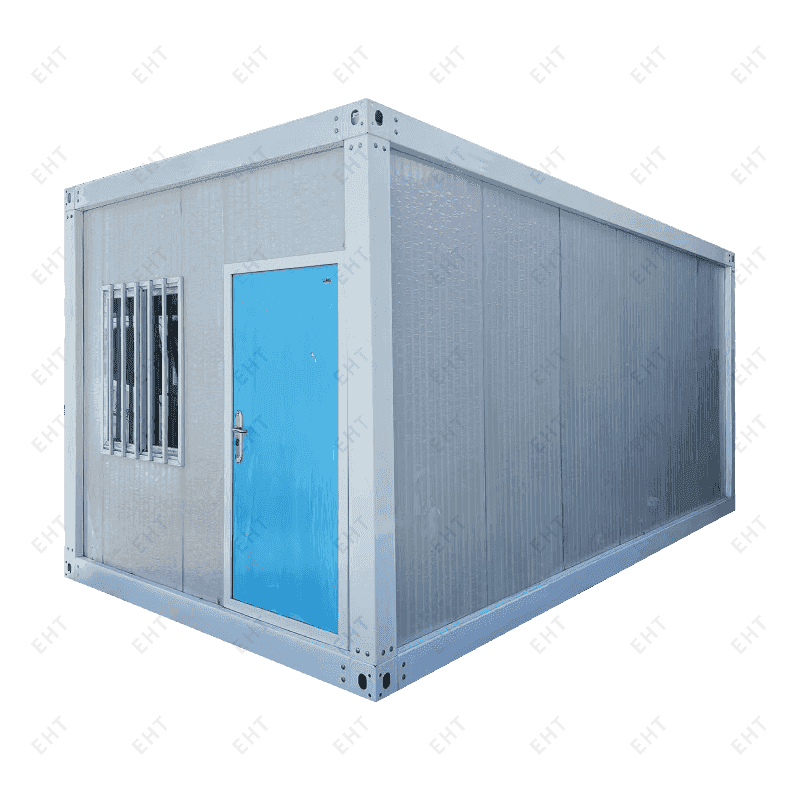 20 Feet Flat Pack ContainerA modular steel-frame container with interchangeable wall panels, packable for transport and combinable for mobile camps or site accommodation.View Product →
Container trailers live inside a set of rules that have little to do with the trailer itself.
Axle weight and gross combination weight come first, and the bridge formula means a longer combination can carry more than a shorter one at the same 80,000 lbs ceiling. Height comes next: a standard box on a standard chassis sits close enough to the common 13ft 6in clearance that a different tyre size or an extra deck plate can require a permit or a route survey. Width is rarely the problem, since the container itself is 2,438 mm wide.
The everyday checks matter just as much: low bridges and overhead wires on the planned route, rail crossings that can lift a lightly loaded trailer, and the securement rules that apply to anything travelling outside the box.
You need a trailer with twist locks at the 20ft positions. A dedicated 20ft chassis is the classic answer, but an extendable chassis set to 20ft or a flatbed with properly fitted locks works just as well, provided the axle loads stay legal.
Four twist locks engage the bottom corner castings and are rotated to lock. Chains, straps or additional locks are often added for heavy loads, and everything is re-checked after the first few kilometres.
Not safely. A flat deck without locks or correct securing points leaves the box resting on a smooth surface with nothing positive holding it down. Bolt-on twist locks or a proper chain and strap arrangement are the minimum.
None of this is complicated once the trailer, the box and the route are treated as one package rather than three separate purchases. The box sets the load, the trailer sets the limits, and the route decides whether either can move today.
If you are planning a project and are unsure which container type will suit the trailers and the sites you have, tell us what you are moving and where it has to go. That is usually enough for us to point you at a sensible starting point.

What to stay up to date?
Contact us via the email address below.
No. 178, Wuzhou East Road, Economic Development Zone, Yangzhou, Jiangsu.
Copyright 2024 Yangzhou Yichengke Integrated Technology Co., Ltd. All Rights Reserved.

