

 English
 русский
 Español
 عربى
عربى40ft Custom Air Compressor Container
Specialized Shipping Container | 40ft Custom Air Compressor ContainerOverall Dimensions: 12192 × 2438 × 2896mmLarge...
Containerized Energy Storage System
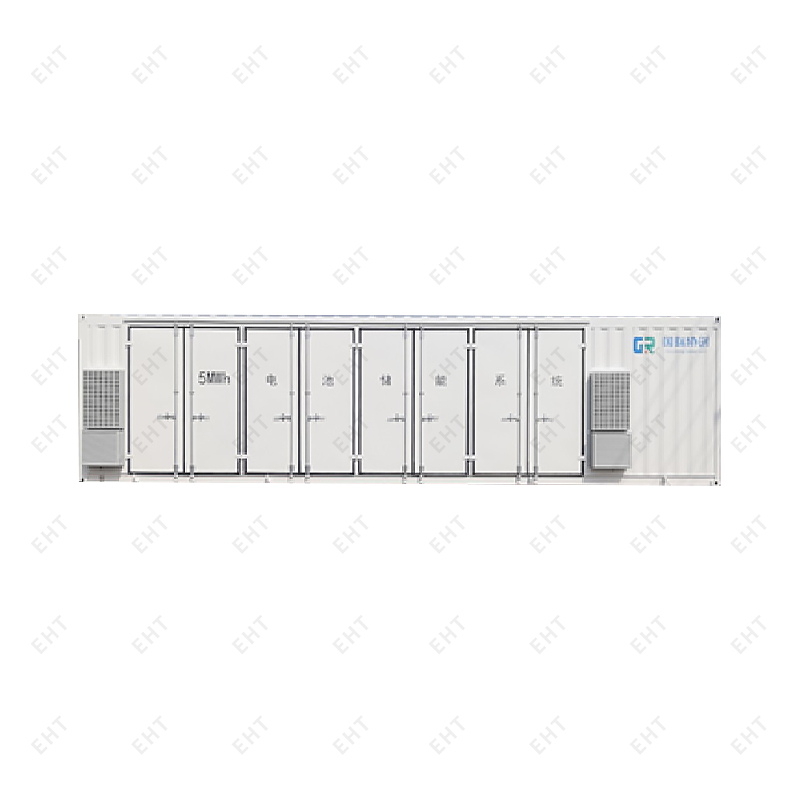
A modern 40ft energy storage container can store up to 5MWh of electricity — enough to power approximately 500 homes for an entire day.
For solar farms, industrial facilities, microgrids, and utility-scale projects, containerized BESS systems provide a fast, scalable, and cost-effective way to store energy and improve grid reliability.
In this article, we'll explore how a 40ft high-capacity energy storage container works, its key applications, and why it has become the preferred solution for large-scale energy storage projects.
Content
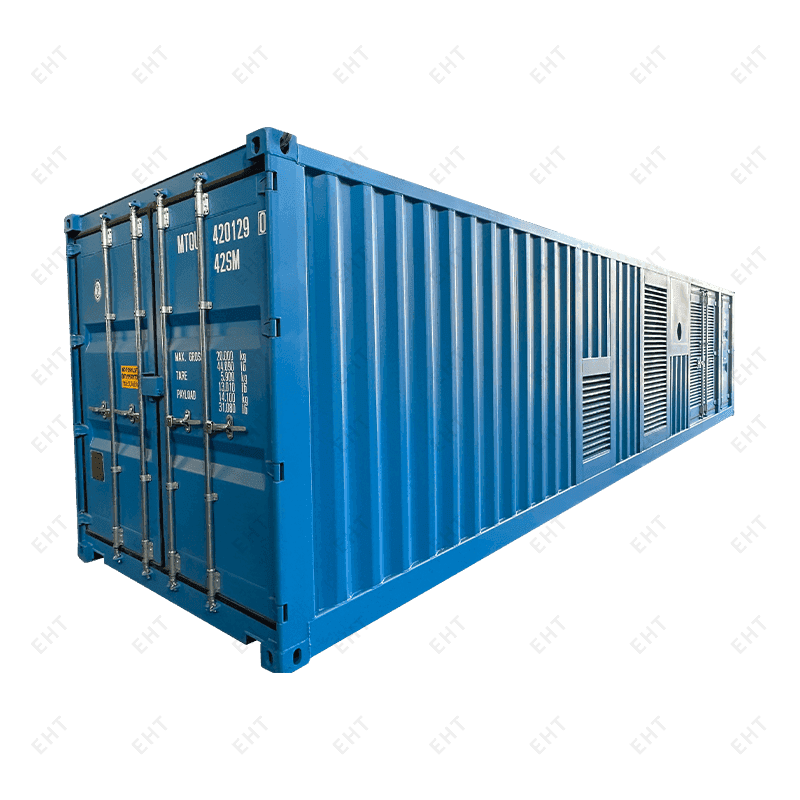
A 40ft energy storage container is a factory-built, fully integrated power storage unit housed inside a standard ISO shipping container. It combines lithium battery racks, a Power Conversion System (PCS), a Battery Management System (BMS), HVAC climate control, fire suppression, and remote monitoring equipment -- all pre-wired, pre-tested, and ready to deploy. Unlike custom-engineered storage facilities that require months of civil construction, a containerized BESS can be shipped anywhere in the world, placed on a prepared concrete pad, connected to a grid or renewable energy source, and commissioned within one to two weeks.
The internal architecture typically segments the container into a battery module bay occupying approximately 70 to 75 percent of the interior length, with the remaining space dedicated to power conversion equipment, switchgear, monitoring servers, and climate control units. High-voltage DC busbars connect battery racks to the PCS, which converts stored DC power to grid-synchronized AC output at voltages ranging from 400V to 35kV depending on the transformer configuration used.
The scale and flexibility of 40ft containerized storage systems make them applicable across a remarkably broad range of use cases. Their deployment continues to accelerate globally as governments and corporations pursue decarbonization targets and energy security goals. The following applications represent the most common deployments -- each backed by measurable real-world outcomes.
EHT Project Example
Project Location: Southeast Asia
Configuration:4 × 40ft BESS Containers
Capacity:20MWh
Application:Solar + Storage
Result:
• Reduced curtailment by 30%
• Improved grid stability
• Increased renewable energy utilization
Large industrial facilities, data centers, ports, and commercial campuses face significant electricity costs driven by demand charges -- fees applied based on their highest power consumption interval during a billing period. At a manufacturing plant operating with high and irregular power loads, a single 2MWh 40ft container was deployed to charge during low-tariff off-peak hours and discharge during peak demand windows. The results were significant: demand charges were reduced by 38%, representing a direct cut to what had previously accounted for 40% of the monthly electricity bill. Full return on investment was achieved within 4.5 years, with zero disruption to plant operations throughout the project lifecycle. In markets with significant demand charge structures, the ROI for such installations is typically achieved within 3 to 6 years.
In remote mining operations, island communities, military bases, and off-grid industrial sites, 40ft containers provide the backbone of standalone microgrid systems. In one island community deployment, a single 5MWh container paired with a solar array replaced the site's previous diesel-only power supply. After commissioning -- completed within two weeks of container delivery -- diesel consumption fell by 70% and the community achieved stable 24/7 power supply for the first time. The containerized format proved critical for this project: standard ISO dimensions meant the unit could be transported by sea freight without special permits and positioned using standard container handling equipment already available at the port.
Grid operators and independent power producers deploy banks of 40ft containers at substations and transmission nodes to provide frequency regulation, voltage support, and peak shaving services. A single site may deploy dozens of units in parallel to achieve project capacities of 50MWh to several hundred MWh. The fast response time of lithium battery systems -- typically under 100 milliseconds -- makes them far more effective than traditional peaker plants for managing sudden load fluctuations. Critical infrastructure operators including hospitals, water treatment plants, and telecommunications providers also use these containers as large-scale uninterruptible power supplies, providing instantaneous switchover with zero emissions and no fuel logistics dependency.
The choice of the 40ft container as the standard enclosure for high-capacity energy storage is not arbitrary. This format offers a combination of structural, logistical, and economic advantages that smaller cabinet-style or custom-built systems cannot easily replicate.
Why Choose EHT Energy Storage Containers?
ISO Container Design
Customized Capacity up to 5MWh+
Integrated Fire Suppression System
Global Shipping Capability
OEM & EPC Support
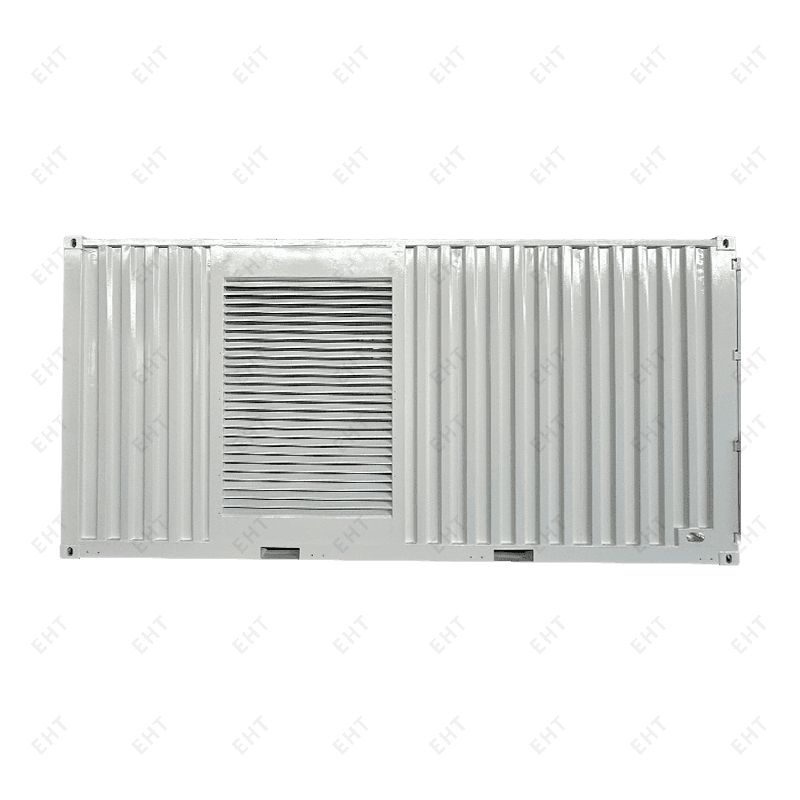
One of the most critical engineering challenges in a 40ft high-capacity energy storage container is thermal management. Lithium battery cells are highly sensitive to temperature -- operating outside the optimal range of 15°C to 35°C accelerates capacity degradation, increases internal resistance, and in extreme cases can trigger thermal runaway events. Modern 40ft systems address this with multi-layer thermal management strategies.
Precision air conditioning units maintain internal ambient temperature within tight bands even in extreme outdoor environments ranging from desert heat to Arctic cold. Liquid cooling systems applied directly to battery modules provide more precise cell-level temperature control and allow for higher charge and discharge rates without thermal stress. Advanced BMS algorithms monitor cell temperatures in real time across hundreds of individual sensors distributed throughout the battery racks and automatically throttle charge or discharge rates if any thermal anomaly is detected, protecting both the batteries and the surrounding infrastructure.
Choosing the right 40ft high-capacity energy storage container for a specific project requires careful evaluation beyond basic energy capacity figures. Decision-makers should assess the following factors to ensure the selected system delivers the expected performance and return on investment over its operational lifespan.
Looking for a Reliable BESS Container Manufacturer?
EHT specializes in the design and manufacturing of:
① 20ft Energy Storage Containers
②40ft High-Capacity BESS Containers
③Battery Energy Storage Enclosures
⑤ Customized Containerized Power Solutions
Contact our engineering team today for technical specifications, quotations, and project consultation.
【Request a Quote】

What to stay up to date?
Contact us via the email address below.
No. 178, Wuzhou East Road, Economic Development Zone, Yangzhou, Jiangsu.
Copyright 2024 Yangzhou Yichengke Integrated Technology Co., Ltd. All Rights Reserved.

