

 English
 русский
 Español
 عربى
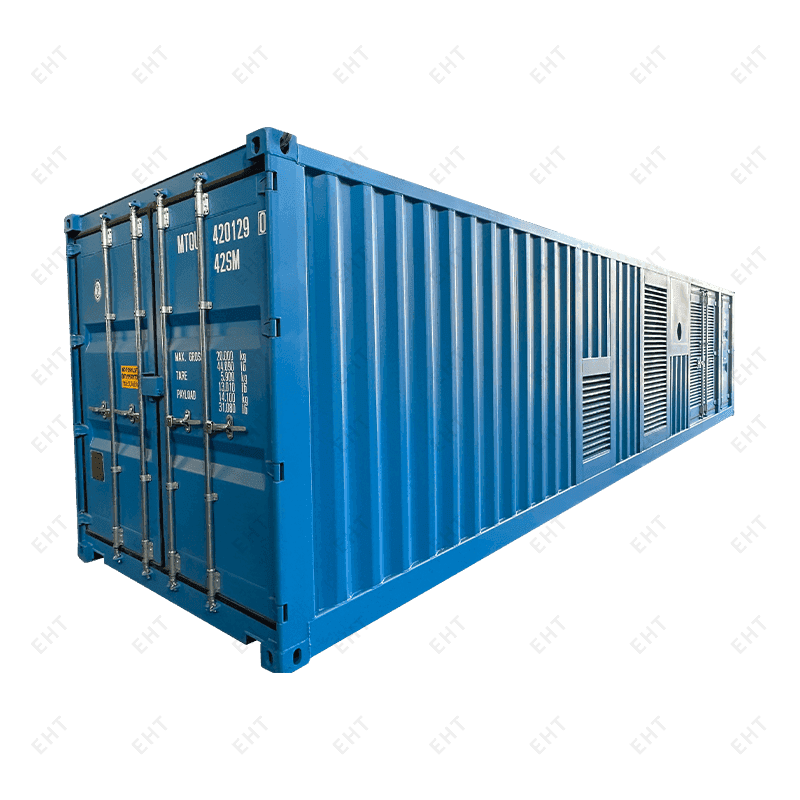
عربى40ft Custom Air Compressor Container
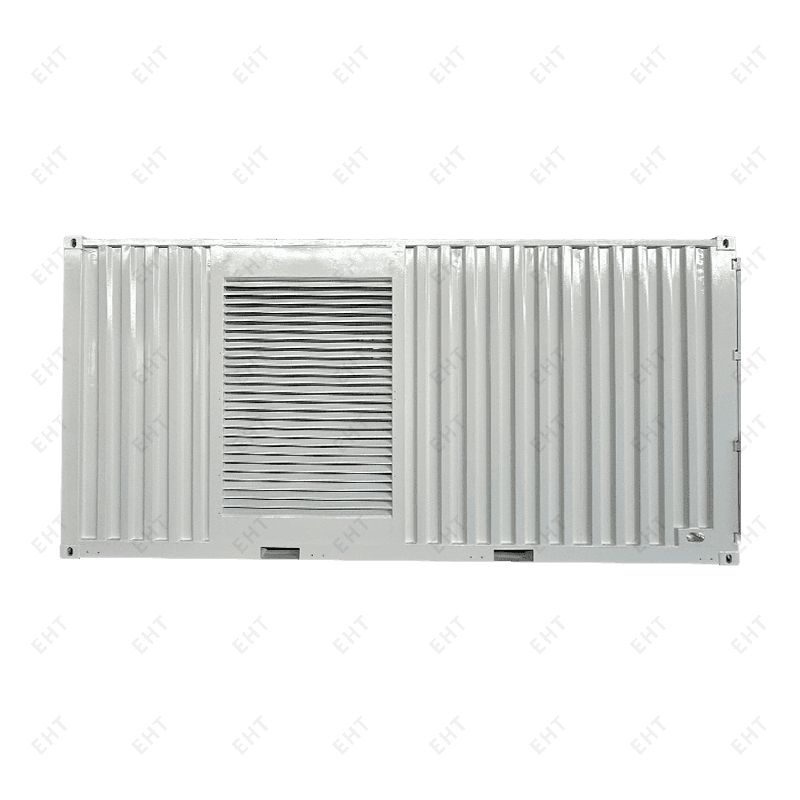
Specialized Shipping Container | 40ft Custom Air Compressor ContainerOverall Dimensions: 12192 × 2438 × 2896mmLarge...
Content
For manufacturers, contractors, and distributors who regularly ship tools and equipment across regions or international borders, space waste during transportation is one of the most underestimated cost drivers in the supply chain. Every cubic centimeter of unused container space translates directly into inflated freight charges, more trips per order cycle, and a heavier carbon footprint. Traditional rigid tool containers — whether metal cases, fixed-shell boxes, or standard crates — are built around the largest item they need to hold, meaning that lighter or smaller loads still occupy the same volume. This structural inefficiency compounds across thousands of shipments per year, quietly eroding profit margins.
This is precisely the problem that special detachable tool container suppliers have set out to solve. By engineering containers whose internal configurations, outer dimensions, or modular panels can be adjusted, separated, or collapsed based on the actual load requirements, these suppliers are enabling businesses to ship smarter — filling space intentionally rather than paying for air. Understanding how this works, and how to identify the right supplier, is essential for any logistics or procurement team looking to optimize transportation efficiency.
The term "detachable" in the context of tool containers refers to a design philosophy centered on modularity and reconfigurability. Unlike conventional containers that are manufactured as a single, fixed unit, detachable tool containers are built from interlocking or separable components — panels, trays, dividers, lids, and frames — that can be assembled in multiple configurations or broken down into flat-pack form when not in use or when being returned empty.
Leading special detachable tool container suppliers typically offer several structural variants:
Each of these designs targets a different dimension of space inefficiency, giving logistics teams flexibility to match container configuration precisely to load volume on any given shipment.
The operational logic behind space reduction is straightforward once you examine a typical shipping scenario. Consider a contractor shipping a mixed load of hand tools, power tool accessories, and precision instruments. A standard fixed container sized for the largest item in the set — say, a circular saw — will leave significant dead space when that item is removed from the shipment. A detachable container, by contrast, allows that section of the container to be physically separated or collapsed, and the remaining tools can be consolidated into a smaller, tighter configuration that occupies less pallet space.
Space savings from detachable tool containers typically manifest in three concrete ways:
When containers can be reconfigured to match the actual tool inventory being shipped, outbound freight volume drops measurably. Suppliers who have implemented detachable container systems report reductions in shipped volume of 20% to 40% per pallet, depending on the variability of their order sizes. Over a full year of shipments, this volume reduction can translate into significant freight cost savings and fewer total truck or container loads required.
One of the most overlooked contributors to transportation inefficiency is the cost of returning empty containers. Fixed rigid containers take up the same space on the return trip as they do when full, meaning businesses effectively pay double freight for every reusable container in circulation. Collapsible and detachable containers address this directly: when folded or disassembled, multiple units can occupy the space that a single assembled container would have taken. Some detachable designs allow a 4:1 or even 6:1 nesting ratio, dramatically cutting return freight costs.
Because detachable containers can be sized and stacked more precisely, they tend to achieve better fill rates on standard pallets and shipping containers. Irregular gaps — the wasted space between fixed-shape boxes that don't tessellate neatly — are minimized when containers can be configured to complementary dimensions. Warehouse and shipping managers working with detachable container systems frequently report improvements in pallet utilization from the industry average of around 60–65% up to 80–85%.
Not all detachable tool container suppliers offer the same level of engineering quality or customization capability. When evaluating potential partners, procurement teams should assess suppliers against a defined set of performance criteria to ensure the containers will hold up under real transportation conditions while delivering genuine space savings.
| Evaluation Criteria | What to Look For | Why It Matters |
| Material Durability | High-density polyethylene (HDPE) or reinforced polypropylene | Withstands repeated assembly/disassembly cycles without joint fatigue |
| Modular Range | Multiple compatible sizes within one system | Allows mixing container sizes on one pallet without compatibility issues |
| Load Rating | Certified static and dynamic load capacities | Ensures containers don't fail under stacking pressure during transit |
| Collapse Ratio | Minimum 3:1 folded-to-assembled volume ratio | Directly determines return logistics savings |
| Customization Options | Custom foam inserts, labeling panels, color coding | Supports tool protection and warehouse identification systems |
| Certification | ISO 9001, ISTA transit testing compliance | Validates performance under industry-standard transport conditions |
While detachable tool containers benefit virtually any business involved in tool logistics, several industries see particularly strong returns on investment due to the nature of their shipping patterns and tool inventories.
Large construction firms frequently need to distribute tools across multiple active job sites simultaneously, often shipping partial tool sets rather than full inventories to each location. Detachable containers allow project managers to split a master container into site-specific sub-units, ship each unit to its destination, and consolidate empties for return without incurring full-container freight costs on each leg.
Maintenance, repair, and overhaul (MRO) operations in automotive and aerospace sectors manage highly specialized tool sets that vary in size and weight. Detachable containers with configurable inner partitions allow MRO teams to ship precisely the right tools for each maintenance task without carrying empty space for tools not required on that mission. This is particularly valuable for overseas or remote maintenance deployments where freight costs are highest.
Tool rental businesses operate on thin margins and high inventory turnover, making transportation efficiency a direct profitability driver. Detachable containers support rapid reconfiguration between rental cycles, allow multiple smaller rental orders to be consolidated into a single outbound shipment in separate container modules, and simplify return logistics when customers ship back partial sets.
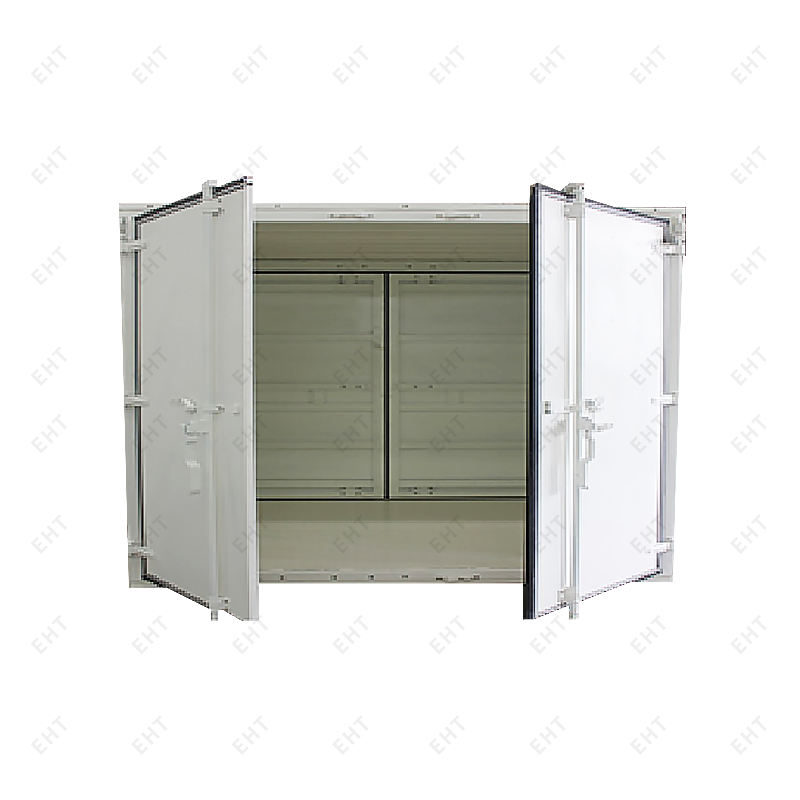
Businesses evaluating the switch to detachable tool containers often focus on the upfront cost difference compared to standard rigid containers. However, the true return on investment calculation must account for cumulative savings across the full transportation lifecycle. Key variables to include in your ROI model are:
Most businesses working with established special detachable tool container suppliers report full payback on the container investment within 12 to 18 months, with ongoing annual savings that scale with shipment volume. The larger and more variable the shipping operation, the faster the payback period tends to be.
Selecting the right supplier goes beyond comparing product specs and unit prices. The best special detachable tool container suppliers function as logistics partners, working with your team to map current container workflows, identify specific points of space waste, and engineer container solutions precisely sized for your most common shipment configurations. Look for suppliers who offer on-site or virtual logistics audits, prototype testing programs, and post-deployment performance reviews to ensure the containers are delivering measurable space savings in practice.
Additionally, consider the supplier's manufacturing scalability and lead time reliability. As your business grows or shipping volumes fluctuate seasonally, you need a partner capable of ramping container supply without compromising quality or delivery schedules. Suppliers with vertically integrated manufacturing — controlling their own mold tooling, material sourcing, and quality testing — are generally better positioned to offer consistent lead times and competitive pricing at scale.
In a logistics environment where every efficiency gain contributes directly to bottom-line performance, the shift to special detachable tool containers represents one of the most practical, high-impact investments a tool-intensive business can make. The technology is proven, the suppliers are increasingly sophisticated, and the space savings are real — making now an ideal time to reassess how your containers are working for you.

What to stay up to date?
Contact us via the email address below.
No. 178, Wuzhou East Road, Economic Development Zone, Yangzhou, Jiangsu.
Copyright 2024 Yangzhou Yichengke Integrated Technology Co., Ltd. All Rights Reserved.

