

 English
 русский
 Español
 عربى
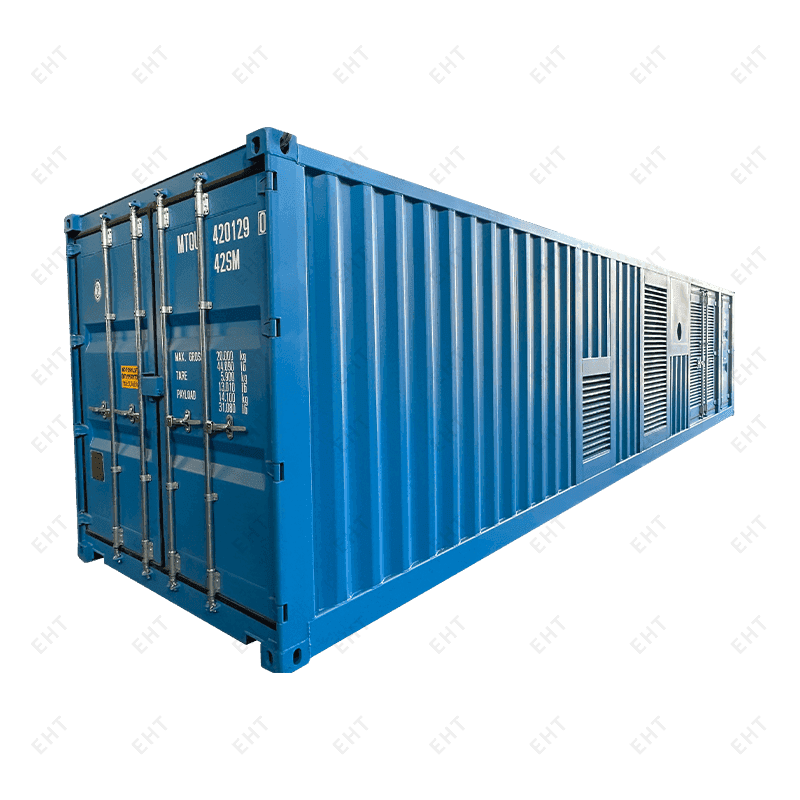
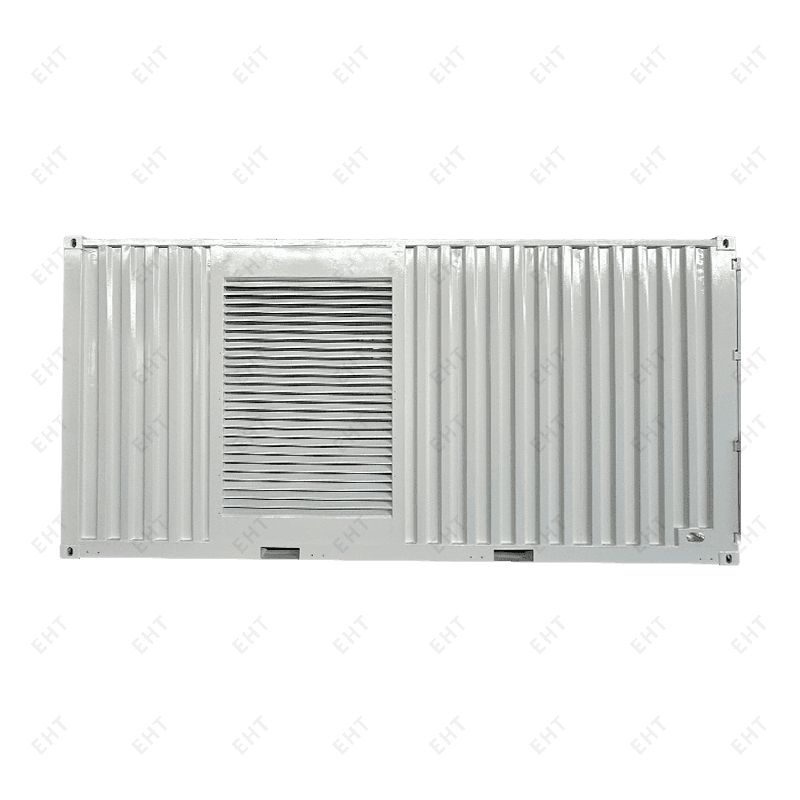
عربى40ft Custom Air Compressor Container
Specialized Shipping Container | 40ft Custom Air Compressor ContainerOverall Dimensions: 12192 × 2438 × 2896mmLarge...
If you have spent any time sourcing industrial containers, you have probably noticed how often the trail leads back to China. That is not a coincidence. Over roughly three decades, the country has assembled the steel supply, port access, welding talent and component ecosystem that make large-scale container manufacturing practical at a cost and pace few other regions can match. Industry estimates consistently place China's share of global container production above ninety percent, and that figure has stayed remarkably stable even as freight markets have swung up and down.
We are a container manufacturer ourselves, so we will not pretend to be neutral. But after years of building energy storage units, hydrogen containers, offshore modules and accommodation boxes for clients on several continents, we have a fairly clear view of what buyers should look for, and what they usually overlook. This article is our attempt to share that view honestly.
Content
Three things came together, and it is worth understanding all three because they shape how you should source today.
The first is steel. Container manufacturing consumes enormous volumes of corten steel plate, section steel and cast corner fittings. China's steel industry scaled up through the 1990s and 2000s, and container factories grew alongside it. Having the raw material, the rolling mills and the component suppliers within a few hours' drive removes a great deal of cost and lead-time friction.
The second is geography. The main production clusters sit close to deep-water ports along the Yangtze River Delta and the Bohai Rim. A finished container can leave the welding line and be loaded onto a vessel without a long inland journey, which matters when you are shipping something the size of a 40-foot box.
The third, and the one buyers underestimate most, is the supplier ecosystem. A single customized container might hold a refrigeration unit, a lithium battery rack, a fire suppression system, a generator, a distribution panel and a set of stainless steel fittings. In a mature cluster, all of that can be sourced, integrated and tested locally. That is why a Chinese manufacturer can often quote a fully integrated unit faster than a fabricator elsewhere can quote the empty shell.
New buyers sometimes assume the industry is only about standard dry boxes. It is not. The table below gives a rough map of the categories you will run into, and the details worth checking in each one.
| Container category | Typical application | What to check |
|---|---|---|
| Energy storage containers | Grid support, renewable integration, off-grid power | Thermal management, fire suppression, grid-code compliance |
| Hydrogen production containers | Distributed hydrogen generation, refuelling stations | Ventilation, gas detection, hazardous-area classification |
| Refrigerated containers | Food, pharmaceutical and cold-chain logistics | Temperature uniformity, power supply, insulation |
| DNV offshore containers | Tool storage, equipment maintenance, pipe handling | DNV 2.7-1 certification, lifting frame design |
| Accommodation containers | Site camps, temporary offices, disaster relief | Insulation, sanitary fit-out, stacking and transport |
| Specialized shipping containers | Bulk cargo, chemicals, side-loading logistics | Door configuration, cargo securing, structural strength |
| Customized equipment containers | Compressors, nitrogen units, switchgear, sewage treatment | Equipment mounting, cable routing, service access |
Certification is where a lot of first-time buyers get burned, usually without realising it until a customs officer or a site engineer asks a question nobody can answer.
At the factory level, the three management-system certificates worth confirming are ISO 9001 for quality, ISO 45001 for occupational health and safety, and ISO 14001 for environmental management. They are not glamorous, but they indicate a plant that has been audited and that keeps documentation. For the product itself, the relevant mark depends entirely on where the container is going. CE marking matters in Europe, CSA in the United States and Canada, AS/NZS 1170.2 wind-loading compliance in Australia and New Zealand, and DNV 2.7-1 for anything headed to an offshore platform.
The point that matters most: a certificate belongs to a specific factory, a specific design and often a specific unit. When you are comparing suppliers for energy storage containers or any other technical product, ask to see the certificate scope and the design calculations behind it. A trading company can forward a PDF. It cannot easily pass an audit.
Over the years we have been on both sides of these conversations, as a supplier and as a buyer of components. The questions below are the ones that consistently separate a solid partner from an expensive lesson.
Standard containers are commodities, and frankly, most manufacturers can build them. The difference shows up when the box has to do something unusual. Three areas come up again and again in our own order book.
Battery storage is no longer an experiment; it is infrastructure. A 20-foot unit that has to sit beside a solar farm or a substation must manage heat, handle fire risk and communicate cleanly with the site controller. The container shell is the easy part. The integration, the thermal design and the safety logic are where projects succeed or stall.
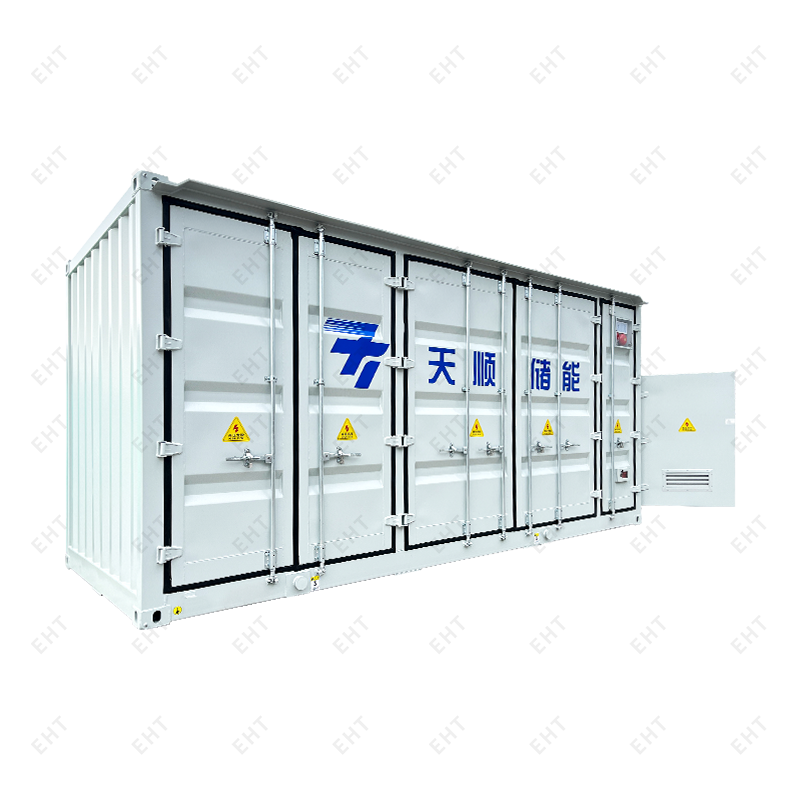 20ft Battery Energy Storage Container for Grid and Renewable IntegrationContainerized battery storage for grid, microgrid, and renewable projects, with thermal management and safety integration suited to transportable, certifiable power infrastructure.View Product →
Hydrogen adds a second layer of complexity. Ventilation has to be engineered rather than guessed, gas detection must be reliable, and every penetration has to respect the hazardous-area classification. Clients often arrive with a process design and need a container that turns it into something transportable and certifiable.
 40ft Containerized Hydrogen Production System for Modular Green HydrogenIntegrated electrolyzer, purification, control, and storage in a transportable unit for distributed, offshore, desert, and renewable-powered hydrogen projects.View Product →
The least glamorous category is often the most demanding. Compressors, nitrogen generators, switchgear and treatment units all arrive with their own footprint, airflow demand and service clearance. Building the enclosure around real equipment, rather than around a drawing, is the difference between a tidy plant room and a maintenance nightmare.
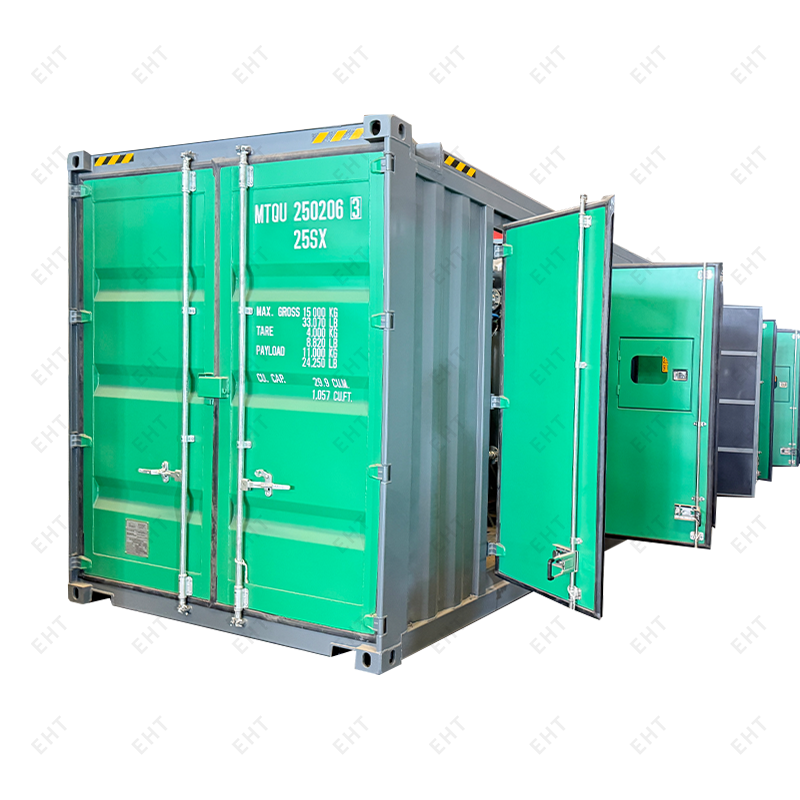 20ft Customized Nitrogen Equipment Container Work Cabin for Offshore UseCustomizable containerized working cabin for nitrogen equipment, with lifting points, marine-grade protection, CSC certification, and options for power, ventilation, and insulation.View Product →
If you only have twenty minutes with a potential supplier, use them on these.
Choosing a manufacturing partner is less about finding the lowest quotation and more about finding a team that will still answer the phone two years after delivery. That is the standard we hold ourselves to, and it is the standard worth holding every supplier to. If you serve a regional market and would like to work alongside us as one of our dealer and distribution partners, we are always glad to talk through the details. Otherwise, take the questions above to your next supplier meeting. They will save you far more than they cost.

What to stay up to date?
Contact us via the email address below.
No. 178, Wuzhou East Road, Economic Development Zone, Yangzhou, Jiangsu.
Copyright 2024 Yangzhou Yichengke Integrated Technology Co., Ltd. All Rights Reserved.

