

 English
 русский
 Español
 عربى
عربى40ft Custom Air Compressor Container
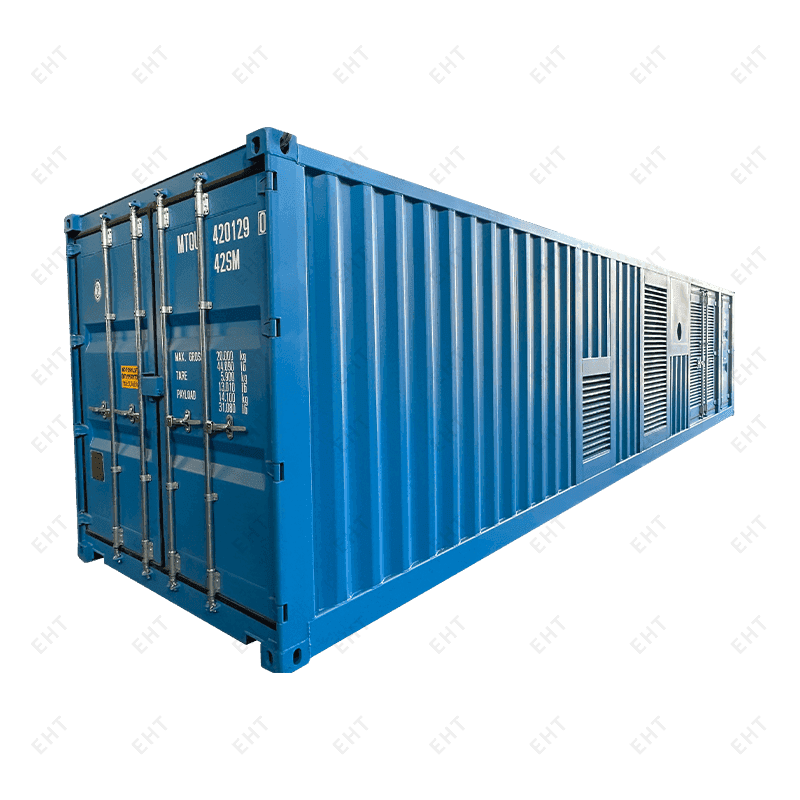
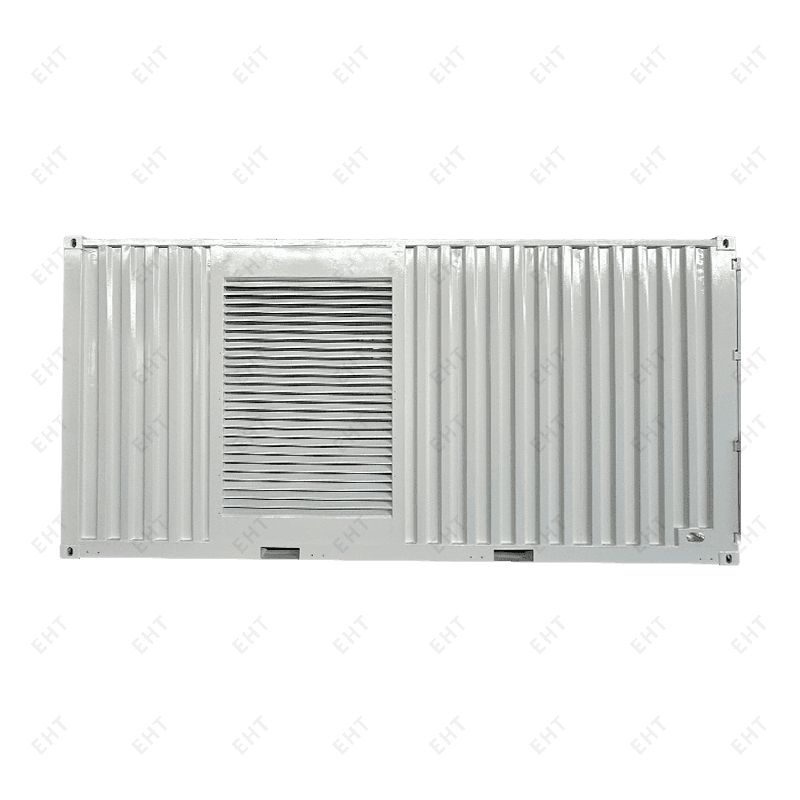
Specialized Shipping Container | 40ft Custom Air Compressor ContainerOverall Dimensions: 12192 × 2438 × 2896mmLarge...
Content
Containerized battery energy storage systems (BESS) housed in modified shipping containers are now the dominant deployment format for grid-scale energy storage, combining the structural versatility of ISO containers with advanced lithium-ion or LFP battery technology, energy management systems (EMS), and compliance with internationally recognized safety standards such as DNV 2.7-1. These systems deliver frequency response, peak shaving, and ancillary grid services while benefiting from the modularity, cost efficiency, and logistical ease that standard intermodal containers provide.
Whether you are evaluating a utility-scale BESS project, specifying an offshore container for a rig, or simply researching what makes these systems work, understanding the intersection of container engineering, battery design, and grid services is essential. This article covers each dimension in depth.
Grid frequency in the US is nominally maintained at 60 Hz; in Europe, it is 50 Hz. When generation and load become imbalanced — for instance, when a large power plant trips offline — frequency deviates. Battery storage systems respond within 200 milliseconds or less, far faster than gas peakers (which take 10–30 minutes) or even spinning reserves (2–5 minutes).
Grid services provided by containerized BESS include:
In 2023, the US BESS market deployed approximately 15 GWh of new capacity, with frequency regulation and capacity markets driving a significant share of revenue. The Hornsdale Power Reserve in South Australia (150 MW / 194 MWh, Tesla Megapacks) reduced South Australia's frequency regulation costs by AU$116 million in its first year of operation — a landmark proof of concept.
A containerized BESS is not simply a stack of batteries in a metal box. The design integrates multiple engineered subsystems:
Lithium iron phosphate (LFP) chemistry dominates new containerized BESS deployments due to its thermal stability and cycle life exceeding 6,000 cycles at 80% depth of discharge. A standard 20-foot container can house 500 kWh to 1.5 MWh depending on cell density; a 40-foot unit typically accommodates 2–4 MWh. Battery racks are wired in series-parallel configurations to achieve target voltage (often 1,000–1,500 V DC bus) and capacity.
The BMS monitors cell voltage, temperature, and state of charge (SOC) at the individual cell level. It enforces protection limits — typically cutting off charging above 3.65 V per LFP cell and discharging below 2.5 V — and communicates with the EMS for coordinated dispatch.
Bidirectional inverters convert DC battery power to AC grid power (and vice versa during charging). Modern PCS units achieve round-trip efficiency of 92–96%. Some designs use string inverters distributed along racks; others use a centralized inverter at the container's AC end.
LFP cells operate optimally at 15–35°C. Containerized systems use air conditioning, liquid cooling loops, or hybrid approaches. Liquid-cooled designs can reduce parasitic energy consumption by up to 30% compared to air-cooled equivalents in hot climates.
NFPA 855 and IEC 62933 require fire detection and suppression. Common systems use aerosol suppressants, FM-200 (HFC-227ea), or CO₂. Thermal runaway propagation barriers between racks are increasingly mandated. Are shipping containers fireproof? Standard Cor-Ten steel containers are not fire-rated; specialized BESS containers receive additional intumescent coatings, fire barriers, and active suppression to achieve ratings such as UL 9540A.
| Parameter | 20 ft Standard | 40 ft Standard | DNV 2.7-1 Offshore |
|---|---|---|---|
| Typical Capacity | 500 kWh – 1.5 MWh | 2 – 4 MWh | Varies (ruggedized) |
| Gross Weight Limit | ~30,480 kg | ~32,500 kg | Rated payload per cert. |
| Fire Suppression | Required (NFPA 855) | Required (NFPA 855) | Required + blast rated |
| Lifting Method | Corner castings / spreader bar | Corner castings / spreader bar | Certified lifting set (offshore) |
| Standard | ISO 668 | ISO 668 | DNV 2.7-1 / EN 12079 |
The EMS is the intelligence layer sitting above the BMS and PCS. It orchestrates how the battery system interacts with the grid, the site load, and energy markets. Without a capable EMS, a battery system cannot fully monetize its flexibility or protect itself from damaging operational patterns.
Key benefits of an EMS include:
Studies from NREL indicate that optimized EMS dispatch can improve project NPV by 15–25% compared to simple time-of-use strategies for co-located solar-plus-storage systems.
DNV stands for Det Norske Veritas, a Norwegian classification society and assurance organization founded in 1864. After merging with Germanischer Lloyd in 2013, it became DNV GL, and rebranded simply as DNV in 2021. DNV certifies ships, offshore structures, pipelines, and increasingly, energy storage and renewable energy assets.
DNV 2.7-1 (formally "Offshore Containers") defines requirements for containers used in offshore oil and gas operations — platforms, FPSOs, and jack-up rigs. It is the most widely referenced standard for offshore container certification, equivalent to or referenced alongside EN 12079.
Key requirements of DNV 2.7-1 include:
For offshore container data plates: the plate is typically stainless steel, stamped or laser-engraved, and mounted on the outside wall near the main access door. It must remain legible throughout the container's service life. Operators should verify the data plate before every lift.
All standard ISO shipping containers are designed to be lifted from their four corner castings — ISO 1161-compliant steel corner fittings with oval apertures that accept twist-lock pins, hooks, or shackles. Lifting from any other point risks catastrophic structural failure.
Twist locks (also called twistlocks or container locks) are the standard intermodal fastening device. A twist lock inserts into the corner casting's oval aperture and rotates 90° to lock. They are used to:
For lifting a shipping container safely, the general procedure is:
A standard 20-foot empty container weighs approximately 2,200 kg (4,850 lbs). A fully loaded 20-foot container can reach 28,000 kg (61,700 lbs). Always confirm the load before selecting lifting equipment.
Container dimensions follow ISO 668 standards, but North American domestic intermodal also uses non-ISO 53-foot containers.
The 53-foot container (also called a 53-foot domestic container or 53-foot high-cube) is the standard for US domestic intermodal rail and truck freight. It is not ISO-compliant and cannot be loaded on ocean-going vessels without special arrangements. Key dimensions:
A standard 53-foot dry van trailer (the most common type on US highways) has a nearly identical internal volume — typically cited at 2,600–2,700 cubic feet usable, slightly less than the container due to trailer structural elements. This volume can accommodate approximately 26 standard pallet positions (48×40 inches).
| Container Type | Length (ft) | Width (ft) | Height (ft) | Volume (cu ft) |
|---|---|---|---|---|
| 20 ft Standard | 19.4 | 7.7 | 7.9 | ~1,172 |
| 40 ft Standard | 39.5 | 7.7 | 7.9 | ~2,390 |
| 40 ft High-Cube | 39.5 | 7.7 | 8.9 | ~2,694 |
| 53 ft Domestic | 52.6 | 8.1 | 9.0 | ~2,820 |
Standard ISO containers feature double swing doors at one end (cargo doors). Common door configurations for modified containers include:
For BESS containers, personnel doors must be outward-opening and must not be blocked by internal equipment, meeting requirements of NFPA 855 for egress.
Refrigerated containers (reefers) require a continuous power supply to maintain internal temperatures, typically ranging from –30°C to +30°C. When reefers are not connected to shore power or rail plug-in power, they rely on diesel gensets — either clipped to the container's front frame (clip-on gensets) or integrated into the container (integrated gensets).
The US reefer container genset market is closely tied to perishable food logistics, pharmaceutical cold chain, and international trade volumes. Key market dynamics include:
Standard shipping containers are not fireproof. They are constructed from Cor-Ten (weathering steel), which maintains structural integrity at temperatures up to approximately 400–500°C — below the temperatures reached in most structural fires (600–900°C). Cor-Ten steel will lose significant yield strength above 300°C.
However, containers do offer some fire resistance advantages:
For BESS applications, enhanced fire resistance is achieved through: intumescent coatings that expand under heat to provide insulation, internal fire-rated wall linings (e.g., Promat or Rockwool mineral fiber boards rated to 60–120 minutes), suppression systems, and blast-relief panels that vent pressure safely in the event of thermal runaway. A properly fire-rated BESS container can achieve 60-minute fire containment, per UL 9540A test methodology, preventing fire from spreading to adjacent units.

What to stay up to date?
Contact us via the email address below.
No. 178, Wuzhou East Road, Economic Development Zone, Yangzhou, Jiangsu.
Copyright 2024 Yangzhou Yichengke Integrated Technology Co., Ltd. All Rights Reserved.

