

 English
 русский
 Español
 عربى
عربى40ft Custom Air Compressor Container
Specialized Shipping Container | 40ft Custom Air Compressor ContainerOverall Dimensions: 12192 × 2438 × 2896mmLarge...
Content
Hydrogen production systems — whether based on proton exchange membrane (PEM) electrolysis, alkaline electrolysis, or steam methane reforming (SMR) — generate, handle, and temporarily store a gas with a lower explosive limit of just 4% by volume in air and a molecular size small enough to permeate through materials that would contain any other industrial gas. When these systems are packaged inside containerized enclosures for deployment in remote, offshore, desert, arctic, or industrial environments, the engineering demands on the container itself become as critical as those on the electrolyzer stack or reformer within it. Standard ISO shipping containers modified with basic ventilation and electrical penetrations are wholly inadequate for serious hydrogen production duty — the environments where green hydrogen is most urgently needed are precisely those that demand purpose-engineered, application-specific container solutions.
The global market for containerized hydrogen production systems exceeded $1.2 billion in 2023 and is projected to grow at a compound annual rate above 28% through 2030, driven by offshore wind-to-hydrogen projects, remote mining and defense installations, and distributed refueling infrastructure. In every one of these deployment contexts, the ability of the container enclosure to withstand site-specific environmental extremes — while maintaining the safety, accessibility, and operational continuity of the hydrogen production equipment inside — determines whether a project succeeds or fails. Customization is not optional; it is the engineering foundation of reliable containerized hydrogen production.
A hydrogen production container must first satisfy structural integrity requirements that go well beyond standard ISO 668 container specifications. Electrolyzer stacks, water treatment systems, power conversion cabinets, and compressed hydrogen storage vessels introduce point loads, vibration sources, and mass distributions that standard container floor structures are not designed to handle without modification. Custom-engineered containers for hydrogen production typically incorporate reinforced steel subframes with load-rated equipment pads, anti-vibration mounts for rotating machinery such as pumps and compressors, and seismically braced internal racking systems that keep equipment secured during ground motion events up to Seismic Design Category D (peak ground acceleration 0.4g or above).
For offshore and coastal deployments, wave-induced dynamic loading adds a further structural dimension. Containers deployed on floating platforms, barges, or offshore wind substation decks must be designed to DNV GL or ABS offshore container standards, which require finite element analysis (FEA) verification of structural performance under combined static and dynamic loading scenarios including accelerations of 0.5g vertically and 0.3g horizontally. Lifting lug design, corner casting reinforcement, and tiedown provisions are all specified at significantly higher factors of safety than standard freight container equivalents — typically 3:1 or higher — because the consequences of container failure in a hydrogen-producing facility carry explosive as well as structural risk.
Hydrogen production equipment operates within relatively narrow temperature windows. PEM electrolyzers function optimally between 10°C and 60°C cell temperature; alkaline systems similarly require liquid electrolyte temperatures above 5°C to avoid viscosity-related performance loss, and below 90°C to manage membrane degradation. Achieving these conditions inside a steel container deployed anywhere from the Atacama Desert (ambient +50°C, solar load equivalent to an additional 30°C surface temperature) to the Canadian Arctic (ambient −50°C with wind chill) requires insulation, active climate control, and thermal management systems far beyond what any off-the-shelf enclosure provides.
In high-temperature environments, customized hydrogen containers incorporate 75–100 mm closed-cell polyurethane foam or mineral wool insulation panels within double-skin steel wall construction, reflective external coating systems with solar reflectance index (SRI) values above 80, and redundant mechanical cooling systems rated to maintain interior temperatures below 35°C at ambient +55°C. Cooling systems must operate reliably on shared power with the electrolyzer — typically using variable-speed scroll compressor air conditioning units sized with a 30% excess cooling margin. Intake air filtration is critical in desert environments: MERV-13 or better particulate filters backed by activated carbon stages prevent airborne sand, dust, and chemical contaminants from fouling electrolyzer membranes and heat exchangers.
At the cold extreme, customized containers for arctic hydrogen production duty are specified with insulation values (R-values) of R-30 to R-40 in walls, floors, and roof panels, electrically heat-traced all water lines and deionized water storage tanks to prevent freezing, and arctic-rated HVAC systems — typically propylene glycol hydronic heating systems paired with diesel or electric duct heaters — capable of bringing a cold-soaked interior from −50°C to operational temperature within 4 hours. All door seals, window gaskets, cable gland materials, and pneumatic actuator components must be rated for continuous operation at −55°C minimum, using EPDM or silicone elastomers rather than standard neoprene compounds that become brittle and fail at low temperatures.
The interior of a hydrogen production container is classified as a hazardous area under IEC 60079 (ATEX in Europe, NEC 500/505 in North America), specifically Zone 1 or Zone 2 for most electrolyzer installations, depending on ventilation effectiveness and the probability of flammable hydrogen concentrations during normal operation or foreseeable fault conditions. This classification mandates that every electrical device installed inside the container — luminaires, junction boxes, sensors, actuators, control panels, and cable glands — must be rated for the applicable hazardous zone, typically Ex d (flameproof) or Ex e (increased safety) for Zone 1, and Ex n or Ex ec for Zone 2.
Customized hydrogen containers address this requirement at the design stage rather than retrofitting — which is both technically inferior and more expensive. Zone classification drawings are prepared by competent persons, equipment schedules are built from approved hazardous area product databases, and installation practices follow IEC 60079-14 wiring requirements including minimum cable bending radii, stopping box requirements, and earthing continuity verification. Hydrogen detectors — typically catalytic bead or electrochemical type — are positioned at ceiling level (hydrogen rises) at densities of one detector per 20–30 m² of enclosed floor area, with alarm and automated shutdown setpoints at 10% and 25% of the lower explosive limit (LEL) respectively. Ventilation systems are designed to maintain hydrogen concentration below 25% LEL under worst-case leak scenarios, typically requiring 10–20 air changes per hour with fan redundancy and airflow monitoring.
Salt spray corrosion is among the most aggressive degradation mechanisms for steel container structures in offshore, coastal, and marine deployments. ISO 12944 defines corrosion categories C4 (high — industrial and coastal) and C5-M (very high — marine and offshore) as the relevant design environments for hydrogen containers in these settings, requiring coating systems with a design life of 15–25 years. Customized containers for C5-M environments typically receive a three-coat system: zinc-rich epoxy primer at 75 μm DFT, epoxy intermediate coat at 125 μm DFT, and polyurethane or polysiloxane topcoat at 75 μm DFT — for a total dry film thickness exceeding 275 μm. All welds, cut edges, and penetrations receive additional stripe coating before topcoat application.
Internal surfaces of containers deployed in alkaline electrolyzer applications face additional chemical corrosion risk from potassium hydroxide (KOH) electrolyte mist — a highly caustic aerosol that attacks unprotected steel and standard epoxy coatings aggressively. Customized solutions include fiberglass-reinforced polymer (FRP) lining of internal walls, stainless steel drip trays with chemical-resistant sealant joints beneath electrolyte-containing equipment, and floor coatings rated for continuous KOH exposure at concentrations up to 30% by weight. All structural steel in KOH-splash zones is specified in 316L stainless steel rather than carbon steel, regardless of coating system.
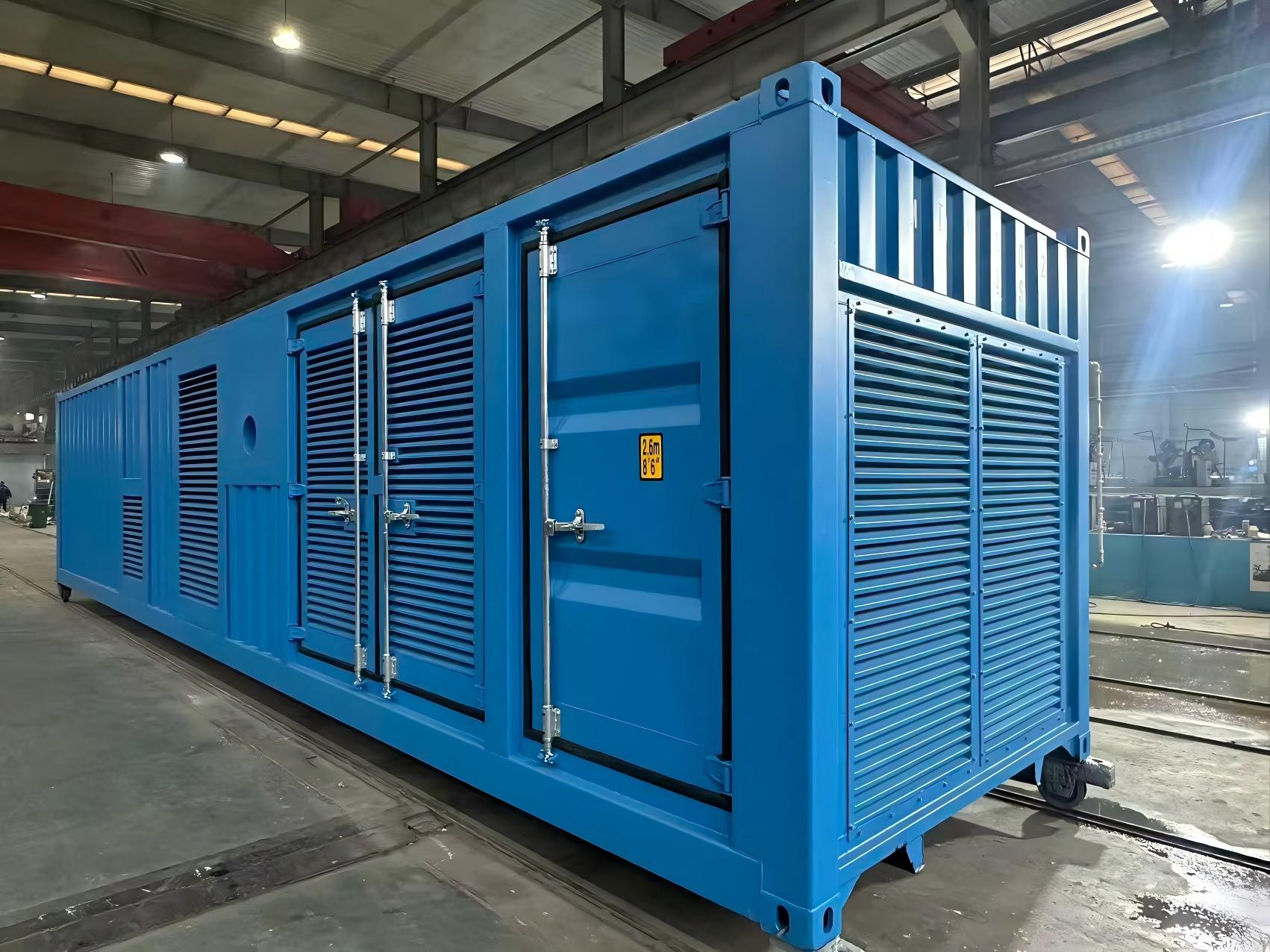
The table below summarizes the most critical container customization parameters matched to five major extreme environment categories encountered in hydrogen production deployments worldwide:
| Environment | Primary Stressor | Structural Specification | Thermal Specification | Special Requirements |
|---|---|---|---|---|
| Arctic / Sub-Zero | −50°C ambient, ice loading | Low-temperature steel (S355ML), snow load 3.0 kN/m² | R-35 insulation, glycol heating | −55°C rated seals, heat-traced pipework |
| Desert / High UV | +55°C ambient, sand, UV | Standard S355, double-skin walls | SRI >80 coating, redundant AC | MERV-13+ filtration, sand louvers |
| Offshore / Marine | Salt spray, wave motion, wind | DNV GL offshore standard, 0.5g dynamic | Pressurized HVAC, IP56 minimum | C5-M coating, 316L wetted parts |
| High Seismic Zone | Ground acceleration 0.4g+ | FEA-verified seismic bracing, SDC-D | Standard per ambient | Flexible pipe connections, seismic gas shutoff |
| Industrial Chemical | Acid/alkali atmosphere, fumes | Standard structural, FRP interior lining | Positive pressure purge ventilation | Chemical-resistant coating, PTFE cable glands |
Customized hydrogen production containers deployed in extreme or remote environments cannot rely on continuous on-site human supervision. The safety and monitoring architecture must therefore be comprehensive, self-diagnosing, and capable of executing protective actions autonomously. Standard safety system architecture for these containers includes a dedicated safety PLC (IEC 61511 SIL 2 rated) independent of the process control system, hardwired emergency shutdown (ESD) loops that function regardless of process control system status, and automatic isolation of hydrogen production and purging of the enclosure with inert gas upon detection of fire, hydrogen leak above 25% LEL, or loss of ventilation flow.
Remote monitoring capability is equally important. Customized containers for extreme environment deployment are equipped with industrial 4G LTE or satellite communication modules that transmit continuous operational data — electrolyzer stack voltage, current, temperature, water quality metrics, hydrogen purity, container internal temperature and humidity, and all alarm states — to a centralized cloud-based monitoring platform accessible by operations teams anywhere in the world. Remote parameterization and shutdown capability means that a single engineer can supervise dozens of geographically dispersed hydrogen production containers in real time, with response protocols escalating from automated alerts to remote shutdown to dispatch of field service personnel as alarm severity increases.
Procuring a customized hydrogen production container for extreme environment duty requires a detailed site and application specification document that enables manufacturers to engineer an appropriate solution rather than adapting a standard product. Buyers who provide vague or incomplete specifications receive inadequate designs that require costly modification in the field. The following parameters should be defined in full before approaching manufacturers:

What to stay up to date?
Contact us via the email address below.
No. 178, Wuzhou East Road, Economic Development Zone, Yangzhou, Jiangsu.
Copyright 2024 Yangzhou Yichengke Integrated Technology Co., Ltd. All Rights Reserved.

