

 English
 русский
 Español
 عربى
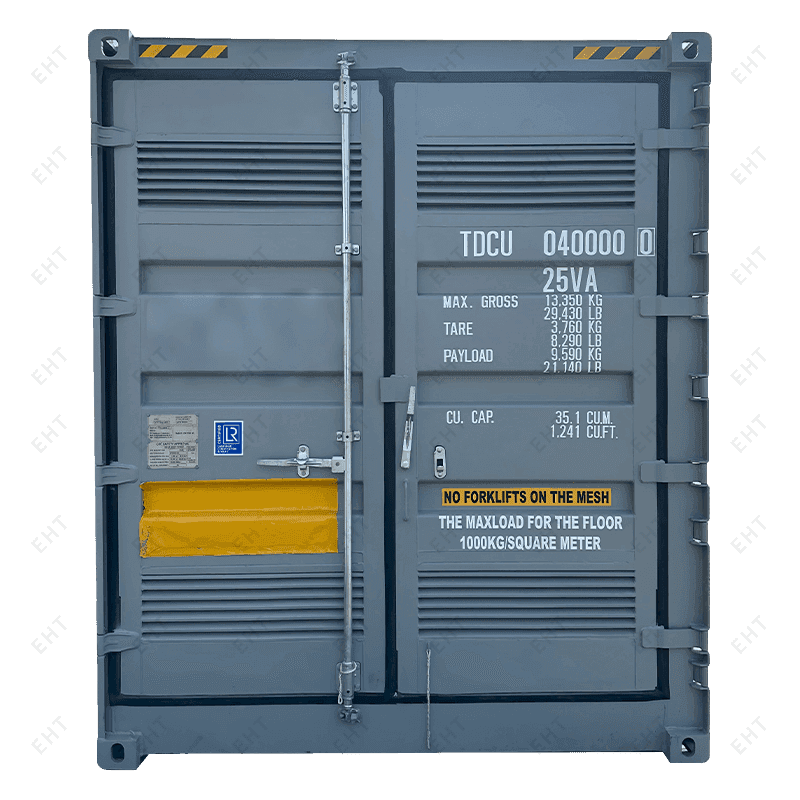
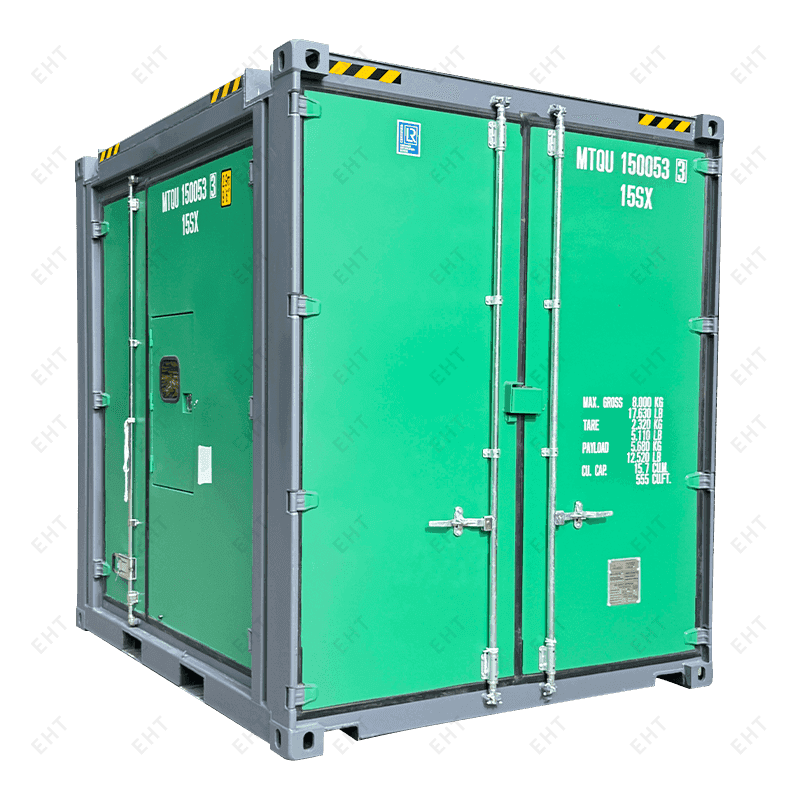
عربى40ft Custom Air Compressor Container
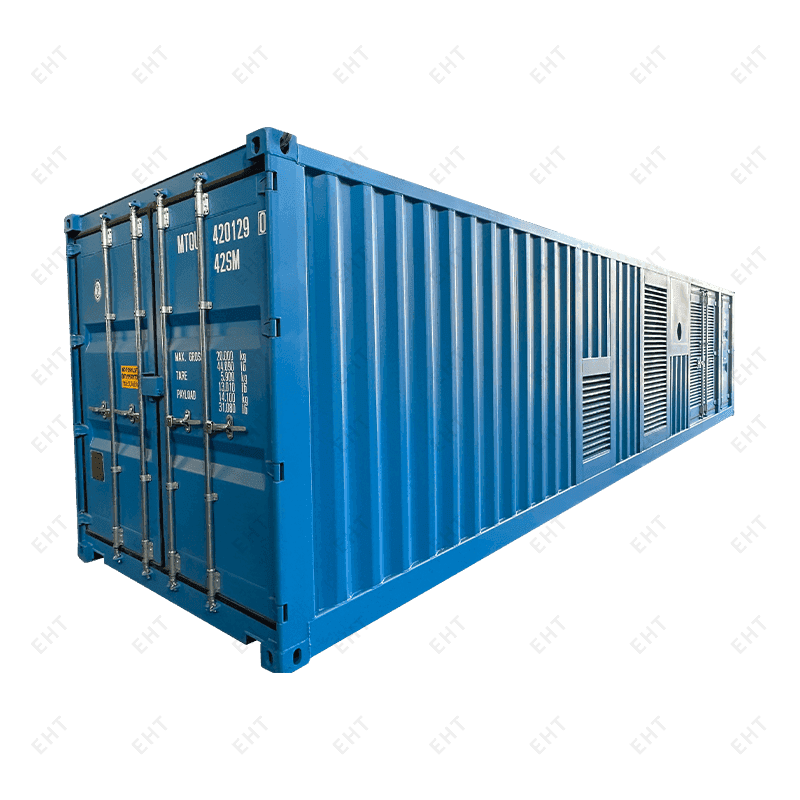
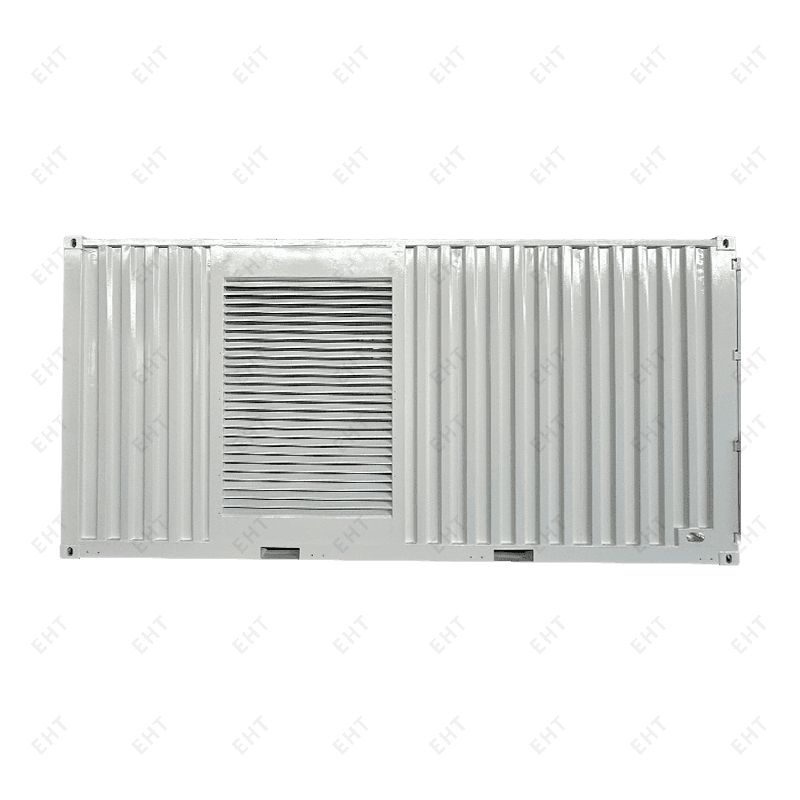
Specialized Shipping Container | 40ft Custom Air Compressor ContainerOverall Dimensions: 12192 × 2438 × 2896mmLarge...
Content
Open top containers and side door containers are specialized ISO intermodal units designed for cargo that cannot be loaded through standard end doors — either because it is too tall, too heavy for forklift access, or requires crane loading from above or side-access forklift loading along the full container length. The 20-foot open top container is the most widely available variant, offering a removable tarpaulin roof and a removable or bowing header bar at the door end to allow crane or overhead loading of oversized cargo. The 20-foot side door container adds one or more full-length doors along the container's long face, enabling side-loading with reach trucks or forklifts without the depth limitation of end-door-only access.
Both container types are available through major ocean carriers and container leasing companies, though they represent a smaller proportion of the global fleet than standard dry containers. Understanding their exact specifications, freight surcharges, and loading constraints is essential before booking either type.
The 20-foot open top container (ISO type code OT20) is built to the same external footprint as a standard 20-foot general purpose container but replaces the fixed steel roof with a removable tarpaulin cover supported by removable or swing-aside roof bows. The door end header bar can also be removed or bowed outward to allow cargo taller than the internal height to protrude above the container frame during loading before the tarp is fitted.
| Dimension | 20 ft Open Top | 20 ft Standard Dry |
|---|---|---|
| External Length | 6,058 mm (20 ft) | 6,058 mm (20 ft) |
| External Width | 2,438 mm (8 ft) | 2,438 mm (8 ft) |
| External Height | 2,591 mm (8 ft 6 in) | 2,591 mm (8 ft 6 in) |
| Internal Length | 5,900 mm | 5,898 mm |
| Internal Width | 2,350 mm | 2,352 mm |
| Internal Height | 2,350 mm | 2,393 mm |
| Door Opening Width | 2,340 mm | 2,340 mm |
| Door Opening Height | 2,274 mm | 2,280 mm |
| Tare Weight | ~2,400 kg | ~2,230 kg |
| Max Gross Weight | 30,480 kg | 30,480 kg |
| Max Payload | ~28,080 kg | ~28,250 kg |
| Cubic Capacity | ~32.6 m³ | ~33.2 m³ |
Note that the open top container's internal height is slightly less than the standard dry container — the roof bows and the tarpaulin fixing rail reduce available headroom by approximately 40 mm. However, the key advantage is that cargo can protrude above the container frame height when the tarpaulin is lashed over protruding cargo. Carriers typically permit over-height protrusion up to 300 mm above the top rail without special approval; greater protrusion requires out-of-gauge (OOG) booking and may necessitate on-deck stowage only.
The 40-foot open top container (OT40) is also widely available and follows the same construction principle. Its internal length of approximately 12,020 mm makes it suitable for longer cargo items such as structural steel sections, yacht masts, wind turbine blades (shorter sections), timber packs, and machinery frames. Payload capacity is approximately 26,500 kg with a tare weight of around 3,900 kg and a cubic capacity of approximately 65.5 m³.
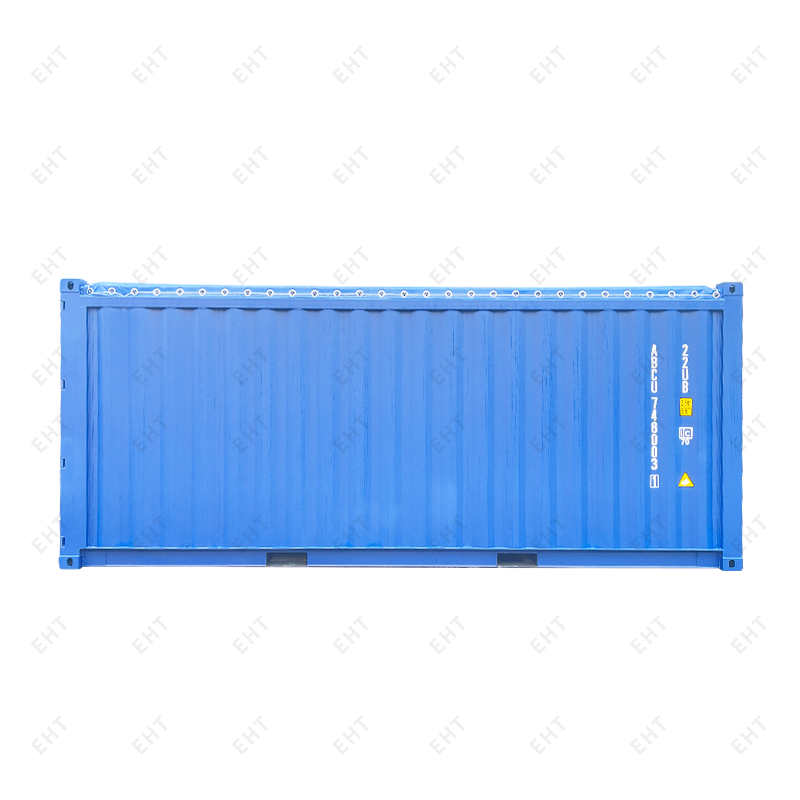
The defining operational advantage of an open top container is the ability to load cargo from directly above using a crane, overhead bridge, or gantry — eliminating the need to maneuver heavy or awkward items through the end door aperture. This is critical for commodities that are dense, fragile in horizontal handling, or simply too tall to pass through the standard door height of 2,280 mm.
For cargo that protrudes above the container top rail — a valid and common use of the open top format — the tarpaulin is lashed directly over the protruding cargo. The carrier must be notified of the protrusion height at booking, and the bill of lading will note the cargo as out-of-gauge. On-deck stowage is mandatory for protruding cargo as it cannot be safely stacked under other containers.
A side door (or side opening) container — sometimes called a "full side access container" or "side loader container" — adds one or more full-length door panels along one or both of the container's long sides, in addition to or instead of the standard end doors. The 20-foot side door container provides access to the entire 5.9-metre length of the container from the side, eliminating the reach limitation of end-door-only loading where forklift operators must maneuver pallets to the far end of the container through a 2.34-metre wide aperture.
Side door containers are typically constructed on a standard ISO 20-foot or 40-foot frame, with the side wall replaced by two to four hinged steel door panels that swing outward to provide a full or near-full opening along the container length. The doors are secured by cam-action locking rods identical to those used on end doors, and the same gasket sealing system makes the container weathertight when closed.
Key dimensional facts for a 20-foot side door container:
| Feature | 20 ft Open Top Container | 20 ft Side Door Container |
|---|---|---|
| Primary access direction | Vertical (crane/overhead) + end doors | Side (forklift/reach truck) + end doors |
| Over-height cargo capability | Yes — cargo can protrude above top rail | No — roof is fixed steel |
| Full-length side access | No | Yes — ~5.5 m opening |
| Weather protection | Tarpaulin (weatherproof when secured) | Fixed steel roof (fully weatherproof) |
| Loading equipment required | Crane or overhead lift | Forklift, reach truck, or side loader |
| Typical cargo | Stone, steel coils, tall machinery, timber | Palletized goods, long items, retail distribution |
| Freight surcharge vs. standard dry | 15–30% typical OOG surcharge | 10–20% equipment surcharge |
| On-deck stowage (protruding cargo) | Mandatory for over-height loads | Not required (standard stow) |
Side door containers were developed to address specific loading and unloading inefficiencies that end-door-only containers create in certain logistics environments. Their adoption has accelerated in distribution, retail supply chains, and any application where loading speed and access flexibility matter more than minimizing equipment cost.
Loading a standard 20-foot container with 11 pallets (the typical maximum for a 20 ft end-door container using standard 1,200×1,000 mm pallets) requires each pallet to be driven approximately 5 metres into the container with the first pallet. With a side door container, all pallets can be placed simultaneously from the side — a process that reduces stuffing time from 45–60 minutes to 10–15 minutes in well-organized distribution operations. This time saving is significant when handling high volumes of containerized retail freight.
Items that fit within the container's height and width envelope but are too long or too stiff to maneuver through an end door are natural candidates for side door containers. Examples include:
Side door containers are extensively used as on-site storage units and portable buildings where side access is operationally superior to end-door-only access. A construction site store container with a full-length side door allows workers to see and access any item in the container without shuffling stock forward from the back — reducing retrieval time and improving inventory control. Portable workshops, tool stores, and parts containers on mining and oil and gas sites increasingly specify side door or combination end-plus-side-door configurations.
Booking a specialty container involves considerations beyond simply specifying the equipment type. Shippers unfamiliar with OOG (out of gauge) and specialty equipment freight often encounter unexpected costs or delays.
Open top containers represent approximately 2–3% of the global container fleet of roughly 50 million TEU. Side door containers are even rarer — under 1% of fleet — and are predominantly owned by leasing companies and specialist logistics operators rather than major ocean carriers. Equipment availability varies significantly by port and trade lane. On high-volume trade lanes (Asia–Europe, Transpacific), open tops are generally available with 5–10 business days' notice; on secondary routes or at smaller ports, lead times of 2–4 weeks are common. Always confirm equipment availability with your freight forwarder before fixing cargo booking dates.
Specialty containers attract freight premiums over standard dry containers on the same trade lane:
For open top containers carrying cargo that protrudes above the top rail, the shipping instruction must include precise measurements of the cargo overage in all dimensions. The carrier's operations team uses this data to plan deck stowage and confirm that the protrusion does not conflict with adjacent containers, cranes, or hatch covers. Required information typically includes: over-height measurement (mm above top rail), over-width measurement (mm beyond each side rail if applicable), over-length measurement (mm beyond end frames if applicable), and the weight distribution on each container floor quadrant. Inaccurate or incomplete OOG declarations are a significant cause of cargo rejection at the terminal gate.
Cargo securing in specialty containers must meet the requirements of the IMO/ILO/UNECE Code of Practice for Packing of Cargo Transport Units (CTU Code) and the carrier's specific cargo securing manual. Poorly secured cargo in an open top container is a disproportionate risk because the absence of a fixed roof means there is no upper structural restraint — cargo can shift vertically as well as horizontally under ship motion.
Key cargo securing requirements for open top containers:
For side door containers, the additional consideration is that the side door panels — while structurally equivalent to the end doors — are not designed to resist lateral cargo pressure. Cargo must never be loaded in direct contact with the side door panels. A minimum clearance of 50–100 mm between cargo and the closed side door panel should be maintained, with blocking to prevent the cargo from shifting into contact with the doors during transit.

What to stay up to date?
Contact us via the email address below.
No. 178, Wuzhou East Road, Economic Development Zone, Yangzhou, Jiangsu.
Copyright 2024 Yangzhou Yichengke Integrated Technology Co., Ltd. All Rights Reserved.

