

 English
 русский
 Español
 عربى
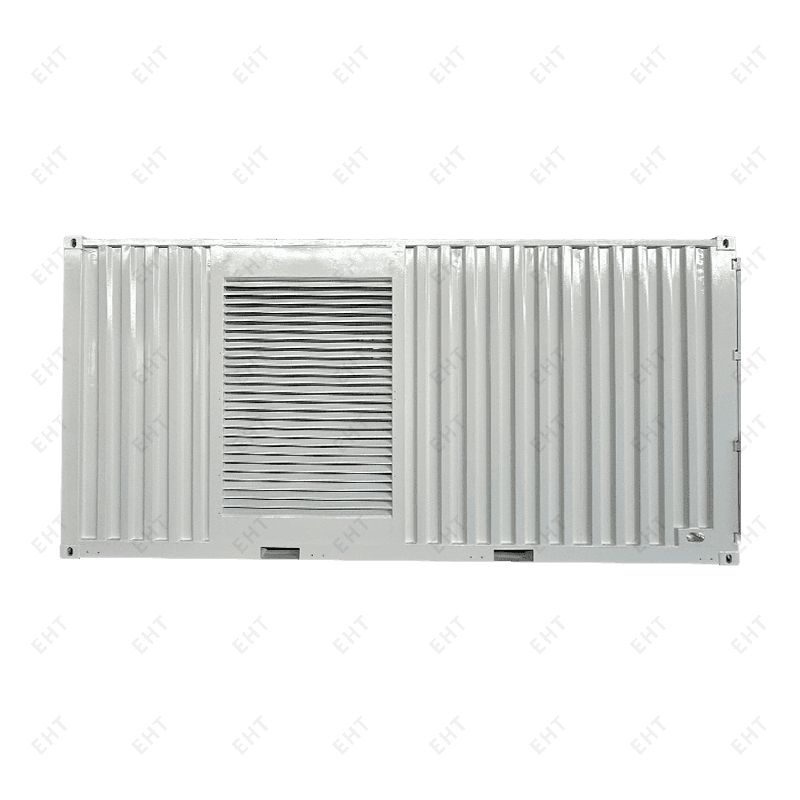
عربى40ft Custom Air Compressor Container
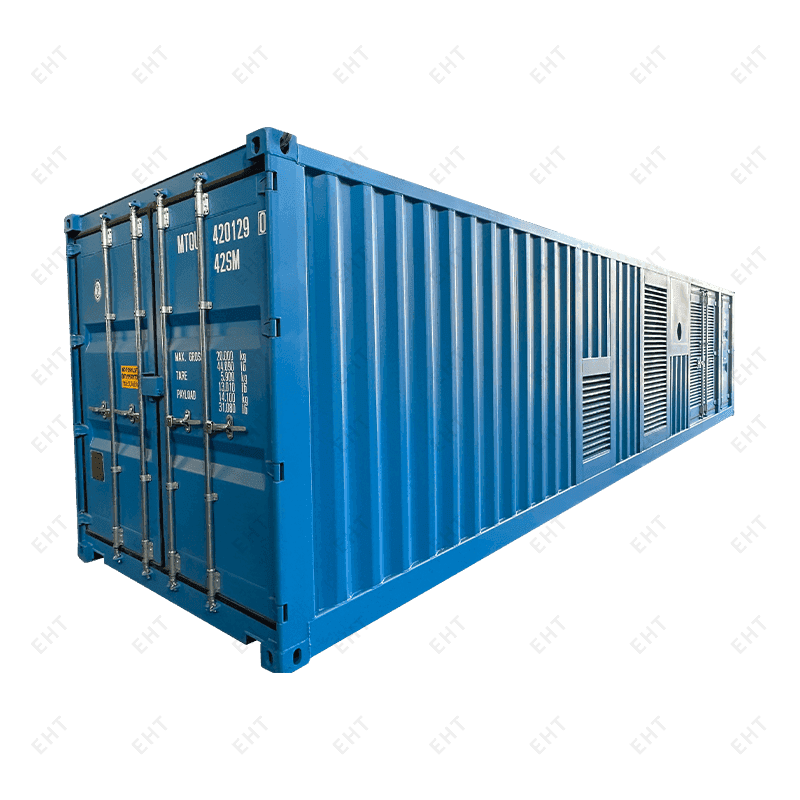
Specialized Shipping Container | 40ft Custom Air Compressor ContainerOverall Dimensions: 12192 × 2438 × 2896mmLarge...
If you manage cold chain logistics, you have likely felt the squeeze already. Booking a refrigerated container for an Asia-to-Europe shipment now requires more lead time, a higher budget, and a contingency plan for delays. The root cause is not a sudden spike in demand for perishables. It is a structural shift in how the world’s shipping lanes operate, and it has been building since late 2023. This article explains the causal chain between Red Sea disruptions and the global reefer container shortage of 2026, quantifies the market impact, and outlines practical procurement strategies for shippers who need to secure equipment now.
Content
The connection between the Red Sea crisis and reefer container availability is not immediately obvious to every shipper. But the mechanism is straightforward once you examine the route economics. Since late 2023, major carriers have diverted a substantial portion of Asia-Europe sailings away from the Suez Canal, routing vessels around the Cape of Good Hope instead. Industry consensus data cited across logistics analyses indicates that roughly 30% of Asia-Europe container traffic normally transits the Red Sea. With those transits disrupted, the Cape route has become the default for many services.
The math of the diversion is unforgiving. Sailing around the Cape of Good Hope adds approximately 10 to 14 days to a one-way voyage between Asia and Europe. That does not merely delay a single shipment; it fundamentally reduces the annual carrying capacity of every vessel assigned to the route. Analysts estimate that between 5% and 7% of global container capacity — equivalent to 1.3 to 1.8 million TEU — has been absorbed by longer transit times and the resulting decrease in vessel turnaround frequency.
Reefer containers are particularly exposed to this capacity absorption. Unlike dry containers, which can tolerate slower rotations and idle time at congested ports, refrigerated units are rotation-sensitive assets. They carry cargo with hard temperature and shelf-life requirements. When a voyage extends by two weeks, that unit cannot simply be loaded onto the next available ship. The cargo will spoil, and the equipment is tied up for a longer period, reducing the number of revenue-earning round trips it can complete in a year.
It would be reasonable to assume that a general capacity crunch affects all container types equally. In practice, reefer containers suffer disproportionately. Several compounding factors explain why the shortage of refrigerated equipment is more acute than the shortage of standard boxes.
Consider the operating cycle of a reefer container on the Asia-Europe lane. Under normal Suez transit conditions, a unit might complete several round trips per year. When the voyage extends by 10 to 14 days each way, the annual round-trip count drops by approximately two to three rotations per container. On a lane that moves millions of TEU annually, that reduction effectively removes a significant volume of available reefer slots from the market. For a shipper, this translates directly into fewer booking options and higher competition for each available unit.
Perishable goods, pharmaceuticals, and certain chemical products have strict temperature and time windows. A container of fresh produce cannot wait three extra weeks at a congested transshipment hub. A batch of temperature-sensitive biologics cannot sit on a dock while terminal operators prioritize other cargo. Because the cargo cannot wait, shippers are forced to pay premium rates to secure equipment and space immediately. This urgency also means that when a reefer unit becomes available, it is often snapped up quickly, leaving no buffer in the system for unexpected delays.
Expanding the global reefer fleet is not a quick fix. Unlike dry containers, which are relatively simple steel boxes, reefer containers integrate refrigeration machinery, insulation panels, and precise temperature control systems. This complexity means production capacity cannot be ramped up quickly. Major reefer container manufacturers are already operating near full capacity, and the delivery lead time for new units extends well beyond what the market can tolerate in a sudden shortage. The result is a structural supply-demand gap that cannot be resolved by simply ordering more boxes.
For those planning cold chain shipments in 2026, the market conditions are sharply defined. Freight rates on the Asia-Europe lane remain elevated compared with pre-crisis levels. Industry reports consistently cite increases of 25% to 40% above the rates that prevailed before the Red Sea disruptions. On a per-container basis, this translates into premiums of roughly $800 to $1,500 per 40-foot unit on affected trades. Reefer leasing rates have moved in tandem, reflecting the scarcity of equipment.
Lead times are the more operational concern. Before the crisis, a shipper could reasonably expect to secure a reefer container with a few weeks of notice. In 2026, booking confirmation can require considerably longer advance planning, and even confirmed bookings face the risk of rollover when vessels are delayed. Port congestion on the European side, compounded by rail and trucking bottlenecks, adds further unpredictability to the final delivery window. For shippers handling time-sensitive cargo, this means that procurement decisions must be made earlier and with more margin for error.
The type of equipment you need also matters. A standard food-grade reefer unit is different from a quick-freeze unit designed for rapid temperature pull-down. In a tight market, specialized units are even harder to source, because their production runs are smaller and their operating cycles are often longer. Shippers requiring quick-freeze reefer containers for temperature-sensitive cargo should factor in longer lead times for this specific specification.
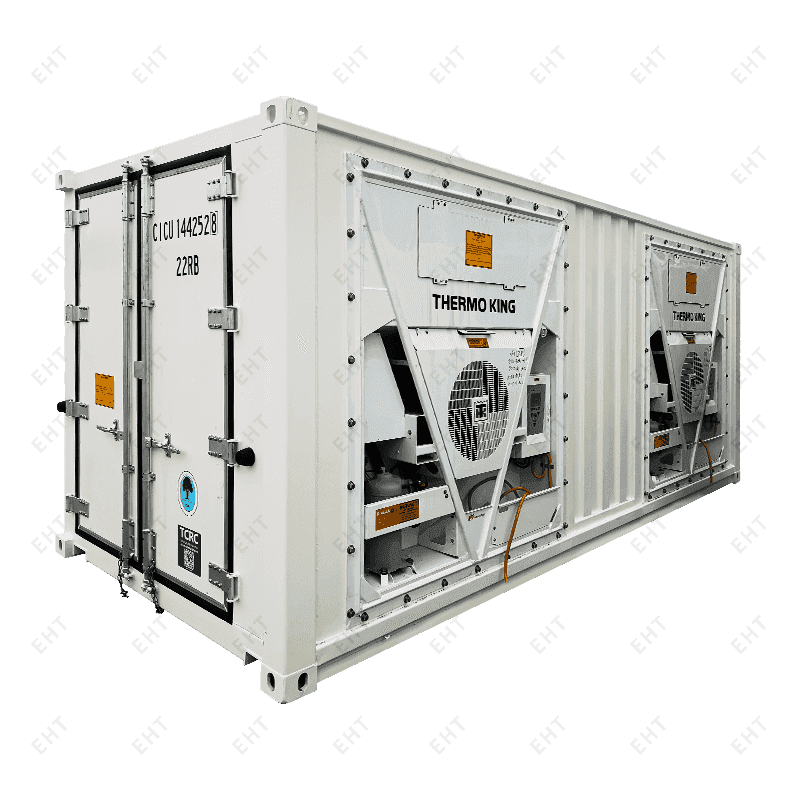 20 Feet Quick-Freeze Reefer Container Suppliers, Wholesale factory - Yangzhou YiYangzhou Yichengke Integrated Technology Co., Ltd is China Wholesale 20 Feet Quick-Freeze Reefer Container Suppliers and factory,View Product →
A natural question is whether the shortage will resolve once the Red Sea situation stabilizes. The answer, based on current industry analysis, is not a simple yes. Even in a best-case scenario where the Suez Canal reopens to full capacity, the recovery would take time and might initially worsen congestion.
One scenario discussed in logistics circles is a phased reopening of the Suez Canal. This would not immediately restore normal transit times. Instead, it could create a surge of vessels arriving at European ports simultaneously — those that had been routed around the Cape and those that switch back to Suez. The resulting concentration of arrivals could produce two to three weeks of acute port congestion, further delaying reefer units that are already in circulation.
Even after normalization, the operational recovery of the equipment pool is not instant. The 5% to 7% of global capacity currently absorbed by longer routes needs to be released gradually as vessels return to shorter itineraries. Container positioning must be rebalanced across regions, and empties need to be repositioned to where they are needed. This process can take several weeks, which means that even an immediate peace agreement would not eliminate the shortage before mid-2026 at the earliest.
Moreover, industry consensus suggests that the diversion may persist well beyond 2026. Several logistics networks and freight forwarders have publicly projected that Cape of Good Hope routings will remain the standard for at least a year, with some estimates stretching into 2027. For shippers, the prudent assumption is that the reefer container shortage is a structural condition of the current market, not a short-term spike. In this environment, alternative routes such as the China-Europe rail land bridge become more attractive, and the equipment used for those services — railway reefer containers for the China-Europe land bridge — can serve as a viable substitute for ocean transit in certain corridors.
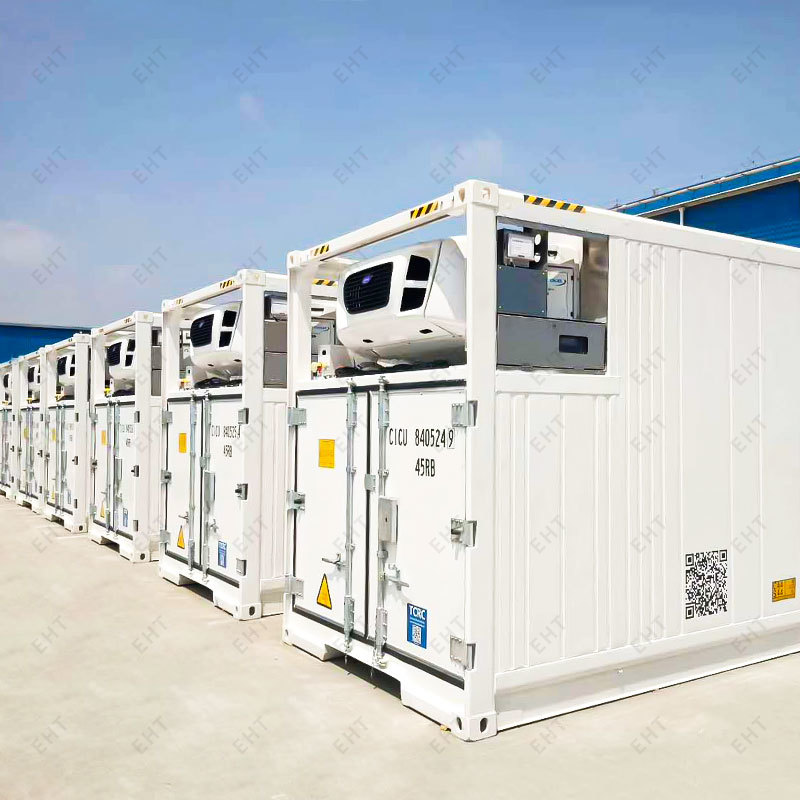 40 Feet Railway Reefer Container Suppliers, Wholesale factory - Yangzhou YichengYangzhou Yichengke Integrated Technology Co., Ltd is China Wholesale 40 Feet Railway Reefer Container Suppliers and factory,View Product →
Given that the shortage is structural, the response must be strategic rather than reactive. There are concrete actions that importers, exporters, and logistics managers can take to protect their cold chain operations in 2026.
The most direct countermeasure is to commit early. Waiting until a confirmed order is in hand before sourcing equipment is no longer viable. Instead, cold chain shippers should approach reefer equipment procurement with the same lead time they would apply to production planning. This means confirming container availability before finalizing shipping schedules and maintaining a buffer of two to four weeks in the planning calendar.
Diversification is equally important. Relying on a single carrier, a single leasing company, or a single equipment supplier exposes you to that counterparty’s own capacity constraints. Building relationships with multiple suppliers — including direct purchases from manufacturers — creates redundancy in the system. In a market where equipment is scarce, having two or three reliable sources of supply is a significant competitive advantage.
Not every reefer container is suited to every route, and understanding the specification differences can open up more sourcing options. For cross-border road transport, particularly where maritime schedules are unreliable, a 40-foot TIR reefer container for cross-border road transport offers flexibility because it is designed for intermodal movement and can be transferred between truck and rail without compromising temperature integrity. TIR-certified units are particularly relevant for shipments moving overland through Europe or Central Asia as an alternative to ocean transit.
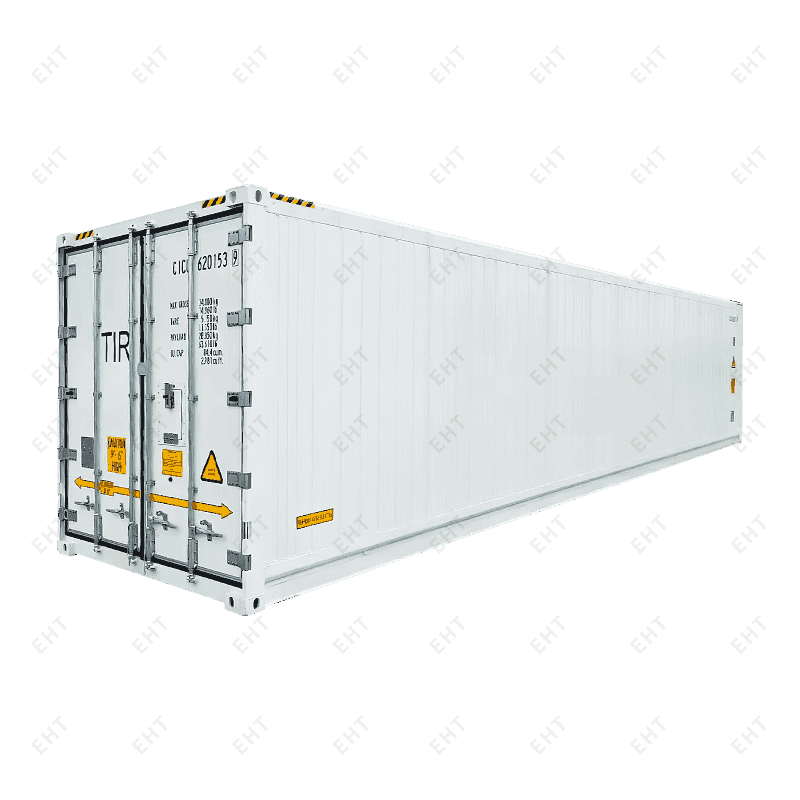 40 Feet TIR Reefer Container Suppliers, Wholesale factory - Yangzhou Yichengke IYangzhou Yichengke Integrated Technology Co., Ltd is China Wholesale 40 Feet TIR Reefer Container Suppliers and factory,View Product →
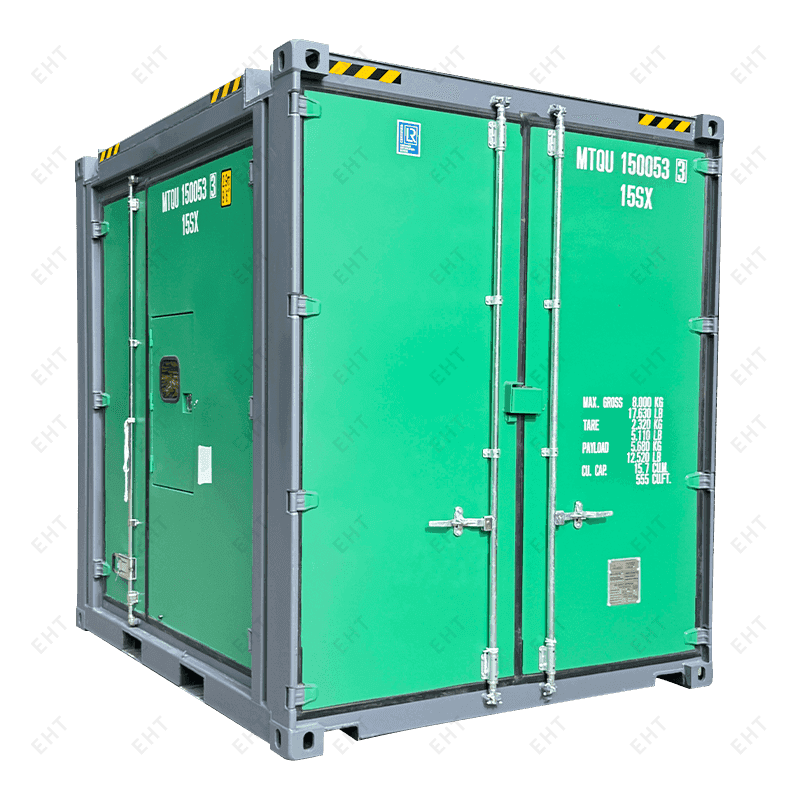
Similarly, the equipment size should match the operational context. Short-sea transshipment and offshore platform supply may call for compact units that do not occupy excessive deck space on feeder vessels. Large-scale food distribution between major cold storage hubs benefits from high-capacity units that reduce the number of container movements required per pallet shipped. The principle is straightforward: by matching the reefer specification precisely to the route and cargo type, you broaden the pool of available equipment and avoid competing for the same standard boxes as everyone else.
In a shortage market, the temptation to accept any available unit regardless of quality is real. That is a costly mistake. A reefer container that fails to hold temperature during a 20-day voyage does not merely cause one spoiled shipment; it damages client relationships and can trigger liability claims that far exceed the savings from a lower purchase price. When evaluating suppliers, verify that they hold recognized certifications such as ISO 9001 for quality management, CE marking for European compliance, and CSA certification for North American electrical safety. These certifications are not decorative; they indicate that the manufacturing process is audited and consistent. Always ask for temperature consistency test data and request warranty terms in writing before committing to a purchase.
In a balanced market, the choice of reefer container manufacturer has modest operational impact. In a shortage market, it becomes a strategic decision. A manufacturer with in-house production lines and complete testing facilities can commit to delivery dates with greater confidence. A manufacturer that merely assembles imported components may face the same supply chain delays as you do. The distinction matters when you are planning production around a confirmed delivery date.
Customization capability is another differentiator. Routes, cargo types, and regulatory environments vary widely. A standard reefer unit may not be optimal for a pharmaceutical shipment requiring precise temperature mapping, or for an offshore operation needing a compact footprint. A manufacturer that can adapt insulation thickness, refrigeration system type, or interior racking to your specific requirement adds value that a generic supplier cannot. This is particularly relevant when you are sourcing specialized equipment in a constrained market.
Certifications across multiple jurisdictions also signal operational flexibility. Equipment that meets CE, CSA, and AS/NZS 1170.2 standards, for example, can be deployed across European, North American, and Australian markets without re-certification. For shippers with multi-region operations, this compliance portability reduces downtime and simplifies fleet management. When assessing suppliers, ask for the specific certifications held and the testing protocols behind them. For large-scale cold chain operations, understanding the design and performance characteristics of 40H food reefer containers for large-scale cold chain operations can be a useful starting point when comparing options, as these units are built for high-volume food distribution.
The reefer container shortage of 2026 is not a temporary market wobble. It is the product of route diversification, extended transit times, and an equipment pool that cannot expand quickly enough to compensate. Cape of Good Hope routings are likely to persist through at least 2027, and even a phased Suez reopening would initially add congestion rather than relieve it.
For cold chain shippers, the actionable strategy is clear. Secure equipment commitments early, maintain multiple supplier relationships, and match container specifications precisely to routes and cargo requirements. Invest the time to verify manufacturer certifications and build quality, because the cost of a failed reefer journey in this market is higher than ever. The shippers who adapt to these conditions — by planning further ahead and diversifying their equipment sources — will be the ones who keep their cold chains moving reliably through 2026 and beyond.

What to stay up to date?
Contact us via the email address below.
No. 178, Wuzhou East Road, Economic Development Zone, Yangzhou, Jiangsu.
Copyright 2024 Yangzhou Yichengke Integrated Technology Co., Ltd. All Rights Reserved.

