

 English
 русский
 Español
 عربى
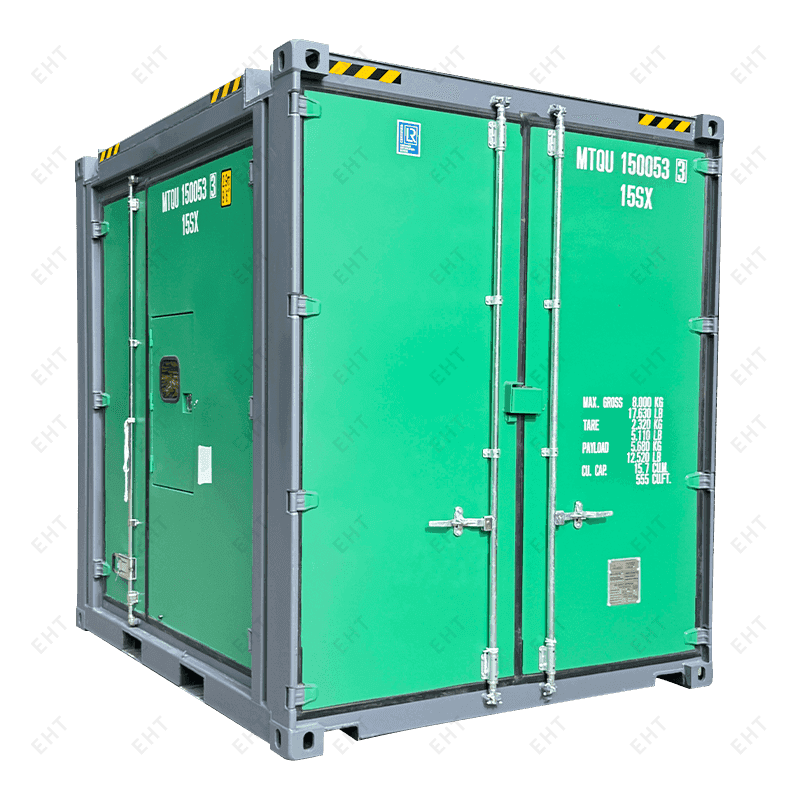
عربى40ft Custom Air Compressor Container
Specialized Shipping Container | 40ft Custom Air Compressor ContainerOverall Dimensions: 12192 × 2438 × 2896mmLarge...
Content
When you are evaluating a megawatt-hour-scale energy storage project, the first question is rarely about power output or footprint. It is about time: how long will the battery bank last before capacity fades to the point of replacement? For a grid-tied containerized system, the answer directly dictates the levelized cost of storage (LCOS), the payback period, and the reliability of your asset over a 10- to 15-year operating horizon. Extending battery life from 5 years to 10 years is not a minor efficiency gain; it can reduce the cost per kilowatt-hour stored by 30% to 50%, turning a marginal business case into a solid one.
This guide explains what "lithium battery longevity" actually means in an industrial context, breaks down the realistic lifespan numbers by battery chemistry, and outlines the system-level engineering and operational practices that separate a 3,000-cycle system from a 10,000-cycle system. If you are new to containerized storage, start with our overview of what an energy storage container is before moving on.
Battery lifespan is not a single number. When a manufacturer claims a battery lasts "5,000 cycles" or "10 years," they are referring to two different countdown clocks operating simultaneously. Understanding this distinction is critical because in most stationary storage applications, one of these clocks runs out far sooner than the other.
Cycle life measures how many complete charge-discharge cycles a battery can deliver before its capacity degrades to a defined threshold. This number is highly dependent on how deeply you discharge the battery. A cell rated for 3,000 cycles at 100% depth of discharge (DOD) might deliver 6,000 cycles at 50% DOD.
Calendar life measures aging over time, regardless of usage. Even if a battery sits on a shelf at 50% state of charge (SOC), chemical reactions inside the cell slowly degrade the electrodes and electrolyte. For most grid-scale energy storage systems operating on daily charge-discharge routines, the calendar life—typically 10 to 15 years for LFP—often becomes the binding constraint before cycle life is exhausted. This is why a storage system that cycles shallowly every day might retire due to age, not due to cycle count.
To make lifespan discussions measurable, the industry uses two standardized metrics. State of Health (SOH) is the ratio of current usable capacity to the factory-rated capacity, expressed as a percentage. End of Life (EOL) is typically defined as the point when SOH drops to 80%. At this threshold, internal resistance has risen and capacity has faded to the extent that the system can no longer deliver its rated energy reliably. For energy storage applications, planning your replacement budget around this 80% SOH threshold is a conservative and industry-accepted practice.
Not all lithium batteries age equally. The cathode chemistry determines both the energy density and the degradation rate. When comparing products for a containerized system, you need to look beyond the marketing label and understand the specific chemistry's cycle and calendar life characteristics.
Lithium iron phosphate (LFP) is the dominant chemistry for stationary storage installations because it balances safety, cost, and longevity. Standard LFP cells are rated for 3,000 to 5,000 cycles at 100% DOD, but high-quality cells operating under shallow cycling (20%-80% SOC) routinely exceed 6,000 cycles, with some cell suppliers quoting up to 10,000 cycles in optimized conditions. Calendar life for LFP is typically 10 to 15 years, making it the natural default choice for 20ft battery energy storage container for grid and renewable energy applications where long-term reliability is non-negotiable.
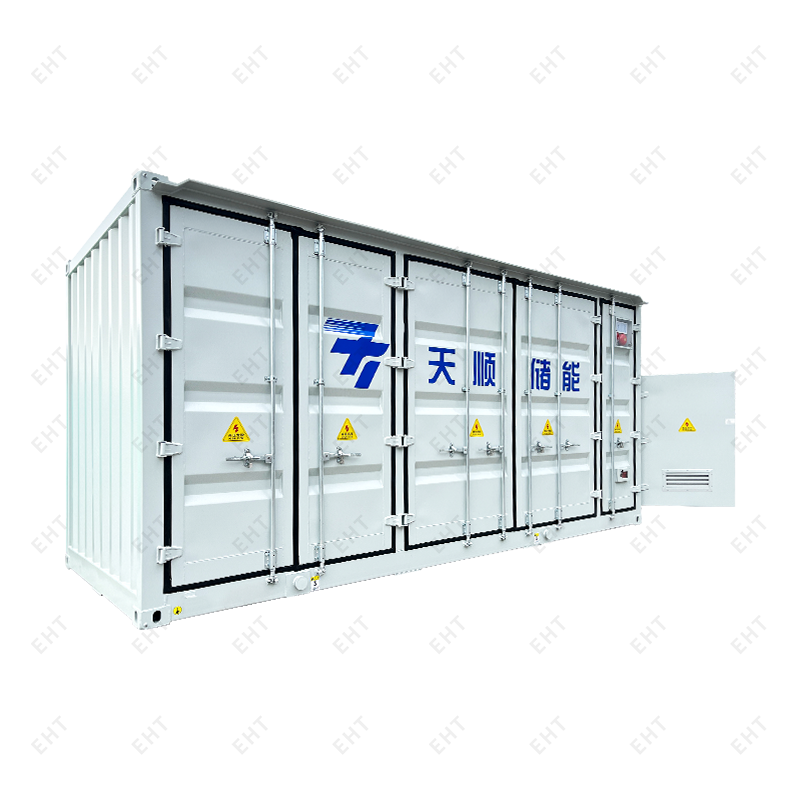 20ft Battery Energy Storage Container for Grid and Renewable Energy Suppliers, WYangzhou Yichengke Integrated Technology Co., Ltd is China Wholesale 20ft Battery Energy Storage Container for Grid and Renewable Energy ...View Product →
Nickel manganese cobalt (NMC) and nickel cobalt aluminum (NCA) chemistries offer higher energy density than LFP, which is why they dominate electric vehicles. However, this energy density comes at the cost of cycle life. Typical NMC cells deliver 1,500 to 3,000 cycles, and they are more sensitive to high temperatures and deep cycling. In stationary storage, NMC is sometimes chosen when footprint is severely constrained, but the shorter lifespan increases the long-term cost per kWh.
Lithium manganese oxide (LMO) is an older chemistry with a relatively short lifespan of 500 to 1,500 cycles; it has largely been displaced by LFP for new installations. Lithium titanate (LTO) is the outlier on the other end: it can achieve 15,000 to 20,000 cycles and has excellent low-temperature performance. However, LTO's low energy density (roughly half of LFP) and high cost limit its use to niche applications like fast-charging transit systems rather than bulk energy storage.
For a megawatt-hour-scale storage container, the more useful metric is annual capacity fade rate. A well-designed LFP system should hold its annual degradation to 2% to 3%. Over a 10-year operating period, that translates to a remaining SOH of 70% to 80%—right at or slightly above the EOL threshold. If the thermal management and BMS strategy are suboptimal, the fade rate can accelerate to 4% or higher, pushing the system to EOL in as little as 6 to 7 years.
| Chemistry | Cycle Life (100% DOD) | Calendar Life | Typical Use Case |
|---|---|---|---|
| LFP (LiFePO4) | 3,000 – 5,000 cycles | 10 – 15 years | Grid storage, C&I, off-grid |
| NMC / NCA | 1,500 – 3,000 cycles | 8 – 10 years | EV, short-duration storage |
| LMO | 500 – 1,500 cycles | 5 – 7 years | Legacy systems, power tools |
| LTO | 15,000 – 20,000 cycles | 15 – 20 years | Fast-charge transit, high-power |
Lithium battery longevity is not determined by a single weak point; it is the cumulative result of seven operating conditions that you can control through design and operational policy. Each factor below has a distinct mechanism of degradation, and together they define the real-world lifespan of your system.
Heat accelerates the chemical reactions that degrade the cathode material and thicken the Solid Electrolyte Interphase (SEI) layer—a passivation film that consumes active lithium. Cold temperatures, on the other hand, increase the risk of lithium plating on the anode during charging, which permanently traps lithium ions. The optimum operating window for most lithium cells is 15°C to 35°C. In a containerized system, this means the thermal management system must keep cell-to-cell temperature differences within 5°C to prevent the weakest cell from aging faster than the rest.
DOD is the percentage of the battery's capacity that is used in a single cycle. Shallow cycling directly extends cycle life because it reduces the mechanical strain on the electrode particles during lithium insertion and extraction. Industry data consistently shows that a battery cycled to 50% DOD lasts more than twice as long as the identical battery cycled to 100% DOD.
C-rate is the ratio of the charging or discharging current to the battery's rated capacity. A 1C rate means the battery is fully charged or discharged in one hour; 0.5C takes two hours. High C-rates increase internal resistance, generate excess heat, and accelerate lithium migration losses. For energy storage applications, keeping the C-rate at or below 0.5C is a practical design rule that preserves cycle life.
Operating above the manufacturer's maximum voltage causes the cathode structure to collapse and releases oxygen, which can trigger thermal runaway. Operating below the minimum voltage dissolves the copper foil in the anode, creating permanent short circuits. The BMS voltage cutoff thresholds are the last line of defense here, but the system's operating strategy should avoid approaching these limits in routine operation.
Storing a lithium battery at 100% SOC for extended periods accelerates calendar aging because the highly charged cathode is more reactive. The practical mitigation is to limit the daily operating window. Setting the operational SOC range between 10%-90% or 20%-80% dramatically slows degradation, especially in hot climates where calendar aging is already accelerated.
In containerized systems, especially those installed on offshore platforms or transported long distances, mechanical vibration loosens busbar connections and increases contact resistance at the cell terminals. This localized resistance heats up the connection point, which in turn accelerates aging of the adjacent cells. Proper mounting and qualified transport protocols mitigate this.
Moisture intrusion inside the battery enclosure leads to insulation breakdown and micro-short circuits between cells. The corrosion products increase internal self-discharge, which quietly drains capacity over time. Container systems should include desiccant systems or sealed enclosures with IP-rated ingress protection, especially in coastal or high-humidity environments.
The Battery Management System (BMS) is the electronic guardian of lithium battery longevity. It continuously monitors voltage, current, and temperature for every cell and intervenes before a damaging condition occurs. Without a properly configured BMS, even the highest-quality cells will fail prematurely. For a deeper look into the control logic, read about how BMS technology optimizes energy storage lifespan.
Cells in a series string are never perfectly identical. Over time, tiny differences in internal resistance and self-discharge cause some cells to reach full charge or full discharge earlier than others. Without balancing, the BMS must stop charging when the highest cell hits the limit, leaving the other cells underutilized. Passive balancing (dissipating excess energy as heat) and active balancing (transferring energy between cells) both extend the usable capacity of the pack and prevent accelerated aging of the weakest cell.
The BMS monitors the temperature at multiple points across the pack and triggers the thermal management system—whether fan cooling or liquid cooling—to maintain the optimal temperature window. It also detects abnormal temperature rise patterns that might indicate an internal short circuit, allowing for early intervention before thermal runaway propagates to neighboring cells.
By enforcing charging and discharging voltage cutoffs, the BMS prevents the two most damaging operational states: overcharge and overdischarge. Advanced BMS strategies also implement state-of-charge estimation that accounts for aging, ensuring the displayed SOC is accurate even as capacity fades.
In a containerized energy storage system, battery longevity is as much a systems engineering problem as it is a cell chemistry problem. The container's thermal design, fire suppression system, power dispatch logic, and structural insulation all influence how the cells age. This is where the expertise of a system integrator like Yichengke makes the measurable difference between a storage unit that lasts 8 years and one that lasts 15.
Air cooling is simpler and cheaper, but its heat transfer efficiency is limited by the low thermal capacity of air. In a high-density storage container, air cooling typically maintains cell temperature differences of 8°C to 10°C across the pack. Liquid cooling, by contrast, uses coolant circulating through cold plates in direct contact with the battery modules, achieving temperature uniformity within 3°C to 5°C. The tighter temperature distribution means every cell ages at roughly the same rate, preventing the weakest cell from dragging down the entire system's capacity. For large installations requiring tight thermal control, a 40ft high-capacity energy storage container with liquid cooling integration is the preferred engineering choice.
 40ft High-Capacity Energy Storage Container with 3~5 MWh Suppliers, Wholesale faYangzhou Yichengke Integrated Technology Co., Ltd is China Wholesale 40ft High-Capacity Energy Storage Container with 3~5 MWh Suppliers a...View Product →
Thermal runaway of a single cell releases a massive amount of heat that can cascade to adjacent cells within seconds. Early detection systems—including gas sensors and smoke detectors—trigger both the ventilation system and the fire suppression agent before the event propagates. This not only protects the asset from catastrophic failure but also prevents thermal damage from spreading to healthy cells, preserving their lifespan.
The Energy Management System (EMS) decides when to charge, when to discharge, and at what power level. By considering both the grid's needs and the battery's current SOH, the EMS can avoid high-rate cycling during battery stress periods. The coordination of BMS, EMS, and PCS is the key to balancing performance and longevity. For a detailed view, see how BMS, EMS, and PCS work together in a container.
The container itself contributes to battery life. Thermal insulation in the walls and roof reduces heat exchange with the external environment, limiting the impact of daytime solar gain and nighttime cooling. Sunshade canopies, orientation. and ventilation openings are designed to equalize the internal temperature. The overall system design is covered in our containerized BESS battery storage guide, which includes certification considerations.
Once the system is commissioned, the operations and maintenance (O&M) team becomes the custodian of lithium battery longevity. The following practices have a proven, direct effect on slowing capacity fade, and they cost little to implement.
Unless the application absolutely requires full capacity, limiting the operational SOC window reduces stress on both the cathode and anode. On days when the system is expected to be idle, setting the resting SOC to around 50% is ideal for calendar life preservation.
A system deployed in Arizona has different thermal requirements than one deployed in northern Canada. In hot climates, the cooling system must handle peak ambient temperatures of 45°C; in cold climates, a heating strategy is needed to bring the battery above the minimum charging temperature. The design must match the real operating environment, not a nominal average, especially for energy storage containers for off-grid and remote power where maintenance access is infrequent.
Battery capacity estimation drifts over time due to coulombic counting errors. A full charge-discharge calibration cycle performed every 6 to 12 months resets the SOC estimate and provides an accurate SOH measurement. This data is essential for predicting when the system will reach EOL and planning the replacement budget.
Every BMS and thermal management system has specific maintenance requirements—from cleaning air filters to checking coolant levels and torqueing busbar connections. Following these guidelines is a contractual requirement in many warranty agreements and is the most direct way to ensure warranty coverage when capacity falls below the expected curve.
The BMS continuously generates data on cell voltage, temperature, and charge throughput. Analyzing this data on a monthly basis reveals anomalies—such as a cell that is drifting out of balance or a cooling circuit that is losing efficiency—before they manifest as accelerated aging. Proactive analysis is the difference between a battery system that is managed and one that is merely monitored.
For decades, lead-acid was the default for off-grid and backup power. The comparison against lithium changes dramatically when analyzed over the full asset lifetime rather than the initial purchase price.
Lead-acid batteries are typically rated for 500 to 1,500 cycles at 50% DOD. Lithium batteries, even the less-durable NMC chemistry, are rated for 1,500 to 3,000 cycles at 100% DOD, and high-quality LFP systems reach multiples of that. The practical implication is that a lead-acid bank will need to be replaced 2 to 3 times during the lifespan of a single lithium bank.
Lithium batteries operate at 95%-98% round-trip efficiency, meaning only 2%-5% of the stored energy is lost as heat. Lead-acid systems operate at 80%-85% efficiency. Additionally, lithium systems can be safely discharged to 80%-100% DOD, while lead-acid should not be regularly discharged below 50% to avoid premature failure. This means a smaller lithium battery can deliver the same usable energy as a much larger lead-acid bank.
The initial purchase price of lithium is 2 to 3 times that of lead-acid. However, when you divide the total lifetime cost by the total energy throughput (kWh delivered over the battery's life), lithium consistently comes out ahead in most energy storage applications. The calculation should include replacement labor, disposal costs, and the revenue lost during downtime for battery replacement.
Lithium battery longevity is not a static target. Ongoing advancements in materials science and control systems are pushing the boundaries of cycle life and calendar life even further.
Replacing the liquid electrolyte with a solid electrolyte eliminates the SEI layer growth and suppresses lithium dendrite formation, two of the primary degradation mechanisms in conventional lithium batteries. Solid-state prototypes have demonstrated significantly higher cycle life in laboratory settings, and commercialization is expected to reach stationary storage within the decade. For a broader look at how different chemistries are being integrated into large-scale systems, explore the 45ft lithium and sodium-ion energy storage container—a design built to accommodate multiple battery technologies.
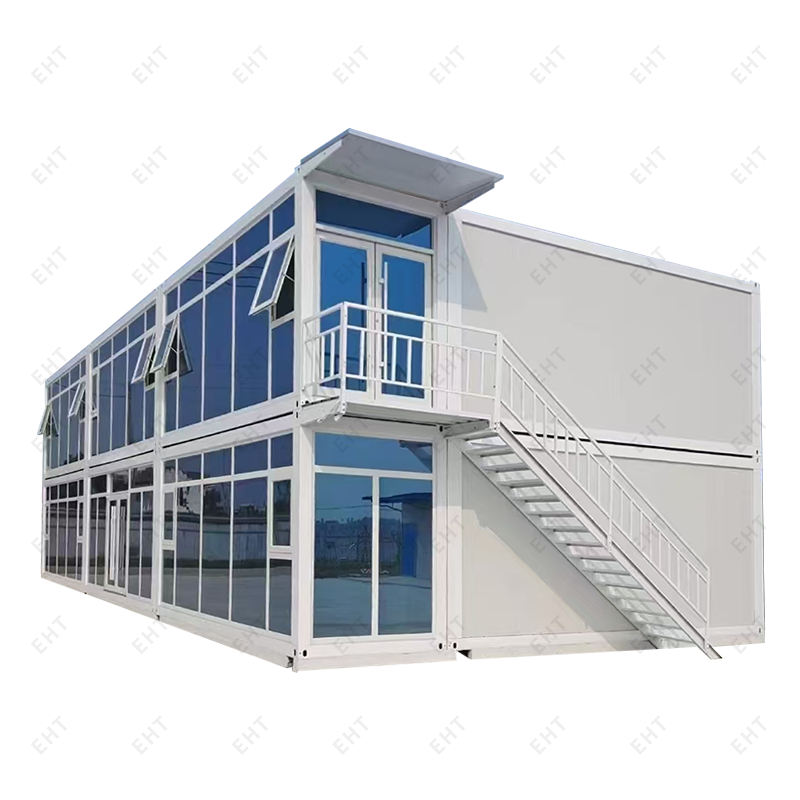 45ft Lithium and Sodium-Ion Energy Storage Container for Large-Scale Projects SuYangzhou Yichengke Integrated Technology Co., Ltd is China Wholesale 45ft Lithium and Sodium-Ion Energy Storage Container for Large-Scale...View Product →
Machine learning models can predict the remaining useful life of individual cells by analyzing years of operational data. Instead of reacting to thresholds, an AI-driven BMS can adjust charge and discharge strategy in real time based on the cell's actual degradation trajectory, potentially extending life by 10%-15% compared to rule-based logic.
Electric vehicle batteries that have degraded to 80% SOH are still highly functional for stationary storage, where the duty cycle is far less demanding than in a vehicle. This "second-life" market is creating a new source of low-cost energy storage capacity, though system integrators must carefully screen and match cells to ensure pack-level longevity.
Lithium battery longevity is not a simple specification sheet number; it is an engineered outcome. The choice of cell chemistry sets the theoretical ceiling, but the temperature management, BMS strategy, and operational discipline determine whether that ceiling is reached. For project developers and asset operators, the path to lower LCOS is to work with a system integrator that embeds longevity into every design decision—from thermal architecture to power dispatch logic. Yichengke designs and integrates containerized energy storage systems with a holistic focus on protecting battery lifespan, ensuring that the 10-year economic model you plan for is the 10-year reality you operate. Choosing a quality single source provider can change an uncertain estimate into an institutional-grade investment.

What to stay up to date?
Contact us via the email address below.
No. 178, Wuzhou East Road, Economic Development Zone, Yangzhou, Jiangsu.
Copyright 2024 Yangzhou Yichengke Integrated Technology Co., Ltd. All Rights Reserved.

