

 English
 русский
 Español
 عربى
عربى40ft Custom Air Compressor Container
Specialized Shipping Container | 40ft Custom Air Compressor ContainerOverall Dimensions: 12192 × 2438 × 2896mmLarge...
When you are specifying energy storage for a commercial, industrial, or grid-scale project, the term “all-in-one energy storage system” often comes up. It promises fewer interfaces, shorter installation times, and a single point of responsibility. But what exactly does “integration” mean when you move from a small outdoor cabinet to a 40-foot container rated in megawatt-hours?
The answer matters because your procurement decision depends on understanding where the integration happens. If a supplier merely bolts components together in the field, you inherit all the interface risks. If the battery, power conversion system (PCS), battery management system (BMS), energy management system (EMS), thermal management, and fire suppression are pre-integrated and factory-tested inside a single enclosure, you can compress your site work down to foundations and electrical connections.
This guide is written for engineers, EPC contractors, project developers, and distributors evaluating integrated BESS solutions. It explains the architecture, the trade-offs versus split systems, the certification questions you must ask, and the practical evaluation criteria for a megawatt-level purchase. The focus is on containerized, pre-integrated units—the highest-expression form of the all-in-one concept for large projects.
Content
An all-in-one energy storage system integrates the battery rack, PCS, BMS, EMS, thermal management, fire suppression, and monitoring communication into a single physical unit or a tightly coupled product family. The boundary of integration is not arbitrary. It means the supplier takes responsibility for how these subsystems interact before the unit leaves the factory.
At the equipment level, an all-in-one unit can be an outdoor cabinet for small commercial applications. At the system level, the same philosophy extends to a containerized BESS—the container itself becomes the integration boundary. In both cases, the core value proposition is the same: fewer field-installed interfaces mean fewer potential failure points.
The U.S. Department of Energy has long recognized energy storage as a critical tool for strengthening grid reliability and flexibility; integrated systems accelerate that adoption by reducing deployment risk. For a deeper look at the fundamentals, you can start with what an energy storage container is before diving into the integration specifics below.
To evaluate an integrated system, you need to know what is inside and which parameters matter. Six functional modules define the architecture.
Lithium iron phosphate (LFP) is the dominant chemistry for commercial, industrial, and grid-side projects. It offers a balanced profile of energy density, cycle life, and thermal stability. For most installations, LFP is the default choice because of its safety margin and long calendar life.
Sodium-ion is emerging where low-temperature performance or supply chain diversity is a priority. The trade-off is lower energy density and a less mature cycle-life track record compared with LFP. However, in a containerized system, the physical footprint penalty of sodium-ion is less critical because the container volume is fixed and can be adapted.
Evaluate three dimensions across chemistries: energy density (Wh/L), cycle life at a given depth of discharge, and thermal stability. A single container platform can accommodate both chemistries; for example, a 45ft energy storage container supporting both lithium and sodium-ion platforms demonstrates how flexible the integration architecture can be.
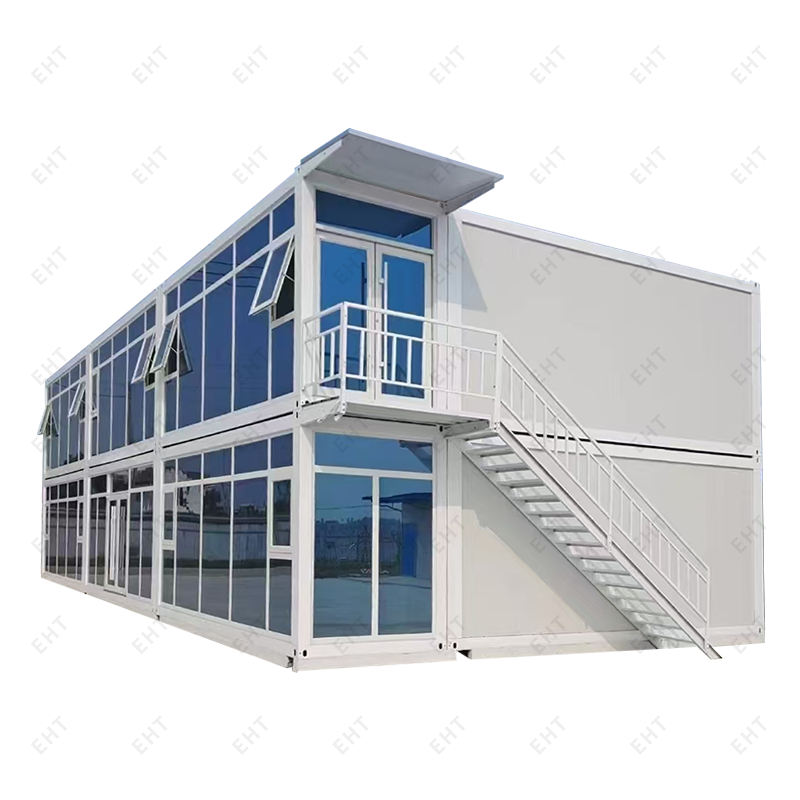 45ft Lithium and Sodium-Ion Energy Storage Container for Large-Scale Projects SuYangzhou Yichengke Integrated Technology Co., Ltd is China Wholesale 45ft Lithium and Sodium-Ion Energy Storage Container for Large-Scale...View Product →
The PCS controls the power flow between the battery and the grid, load, or renewable source. Its capacity must match the battery’s energy rating and the intended charge/discharge duration. For a 3.5 MWh battery, you typically see a PCS rated between 1.5 MW and 2.5 MW, depending on whether you need a 2-hour or 4-hour discharge profile.
In an all-in-one system, the PCS-to-battery match is engineered at the factory, including AC-side protection and grid code compliance. This is the primary reason an integrated unit reduces commissioning risk: the inverter and battery have been tested as a pair with the communication and protection logic already validated.
The BMS handles cell-level protection, including voltage, current, and temperature limits. The EMS handles system-level energy scheduling and decides when to charge or discharge based on tariffs, grid signals, or site demand. The PCS executes the power commands.
These three layers must communicate reliably under all operating states, including fault conditions. Rather than duplicating the full explanation here, the detailed signaling sequence is covered in our dedicated article on how BMS, EMS, and PCS interact inside a BESS. When evaluating a supplier, ask for the control architecture diagram; it tells you how mature the integration really is.
Thermal management choices are straightforward in principle: liquid cooling offers better temperature uniformity and higher packing density, while air cooling is simpler and cheaper to maintain. For containers above 2 MWh, liquid cooling is the standard because it better manages the temperature delta across the rack, which directly affects cell degradation and system safety.
Fire suppression is non-negotiable. Verify the type of gas suppression system, the presence of explosion venting panels, and whether the design follows recognized standards. For a containerized unit, also check the enclosure’s ingress protection (IP) rating and the anti-corrosion treatment, especially if the system will operate near coastal areas or in industrial environments. The structural design must withstand transportation vibration and on-site wind loads as well.
The return on investment for an integrated system is not only in the energy arbitrage; the largest gains come from reduced engineering, procurement, and construction costs. Consider the total cost of ownership across these five areas:
From an engineering logic perspective, every field-installed interface is a potential failure point, whether it is a communication fault, a voltage mismatch, or a cooling capacity mismatch. You can reduce site risks significantly by moving the integration and testing into the factory.
While the all-in-one approach is persuasive, a split system is still the better choice in specific situations. Knowing when to choose split systems is part of sound engineering.
Stick with a split system if one of the following applies to your project:
For off-grid or remote sites, the integrated unit’s shorter installation time and smaller commissioning footprint are decisive advantages, as covered in our guide on how an energy storage container supports off-grid and remote sites. But if your business case depends on a very specific non-standard capacity, the flexibility of a split system may be worth the additional interface risk.
When you move from concept to vendor evaluation, you need a verification checklist. The supplier’s technical ability is expressed in what they are willing to provide in writing before you place an order.
When comparing suppliers, require the following documentation and confirm these capabilities:
You should also ask for specific technical documentation: a single-line diagram (SLD), thermal simulation report, factory test reports, and the lifting and installation plan. These documents are the first sign of whether a supplier truly understands the engineering behind the system. For a detailed exploration of large-scale design constraints, review the key design considerations for large-scale energy storage containers.
When a project exceeds 1 MWh, the logical evolution of the all-in-one concept is the containerized BESS. Here, the container is the integration boundary. The factory delivers a sealed, pre-tested unit where batteries, PCS, thermal management, fire suppression, and the control system are fully integrated. On site, you complete the foundation, terminate the high-voltage connection, and run the commissioning procedure.
The relationship between container size and capacity is practical. A 20-foot container typically holds 1 to 1.5 MWh of LFP batteries. A 32-foot container can reach around 3.7 MWh using liquid cooling. A 40-foot high-capacity unit reaches the 3.5 MWh range with dense rack configurations. The 45-foot container offers more interior volume, supporting larger capacities or dual-chemistry flexibility. For a concrete example, you can explore a 40ft, 3.5 MWh containerized solution to see how the integrated design handles high-density liquid cooling.
Liquid cooling is the key enabler for higher capacity density inside the container. It keeps the cell-level temperature delta within a tighter range, preserving capacity and calendar life. In high-wind or offshore environments, the structural integrity and anchor design of the container must meet local standards; our detailed guide on containerized BESS design considerations for offshore and harsh environments covers the enclosure and structural specifics. The containerized approach is most effective when the supplier has deep manufacturing knowledge of both the container structure and the battery system integration, not just one of them.
The integrated architecture will not be displaced by a fundamentally different model; it will deepen. Three trends are already visible.
First, chemistry diversification is happening within the same container platform. Sodium-ion and solid-state batteries will eventually coexist alongside LFP, and the containerized BESS will be designed to accommodate different cell platforms without redesigning the entire enclosure.
Second, EMS intelligence is evolving. The energy management system is moving from rule-based scheduling to AI-driven predictive dispatch. That means the integrated system must have a strong communication backbone, which is easier to achieve within a factory-integrated unit.
Third, multi-energy coupling is the next frontier. Containers that combine energy storage with power generation are emerging as a hybrid solution for districts with unreliable grids. EHT’s product line, including hydrogen production containers and methanol power generation storage boxes, demonstrates the direction of this trend. You can explore a methanol power generation and storage hybrid container to understand how storage and generation units are now being merged into a single integrated asset.
Before you issue a purchase order, work through the following verification list. This turns the technical concepts into actionable procurement confirmation steps.
Working through this list will narrow your options and expose gaps in a supplier’s proposal early. An all-in-one system only delivers its benefits when the supplier has truly industrialized the integration and testing process. You are not just buying a battery; you are buying a factory-tested, ready-to-connect energy asset.

What to stay up to date?
Contact us via the email address below.
No. 178, Wuzhou East Road, Economic Development Zone, Yangzhou, Jiangsu.
Copyright 2024 Yangzhou Yichengke Integrated Technology Co., Ltd. All Rights Reserved.

