

 English
 русский
 Español
 عربى
عربى40ft Custom Air Compressor Container
Specialized Shipping Container | 40ft Custom Air Compressor ContainerOverall Dimensions: 12192 × 2438 × 2896mmLarge...
A standard 20-foot shipping container is engineered to carry up to 28 tonnes of cargo and survive being stacked nine units high when fully loaded. That reliability is the product of shipping container manufacturing done right: controlled steel fabrication, precision welding, corrosion protection, and verification testing. The practical conclusion for buyers is that differences between container factories show up directly in service life, safety margins, and how well a box can be adapted for specialized use.
Content
Every container begins as steel coils. Most dry containers are made from weathering steel in grades such as SPA-H or Q355NHD, which slow corrosion through a stable oxide layer. Typical sheet thickness is around 1.6 mm for side and roof panels, while structural components use heavier material.
Steel coils are uncoiled, leveled, cut to length, and fed through a corrugating press. The corrugated profile adds stiffness so a thin side wall can resist wind, stack pressure, and handling forces without extra framing weight. Roof panels are corrugated the same way.
The understructure is built from bottom side rails, cross members, and forklift pockets. Cross members run across the full width to support the floor during the ISO floor test, which applies a 5,460 kg axle load to a 20-foot box. Corner castings, the precision-machined blocks that connect the container to twistlocks, are positioned at this stage.
Corner posts are welded to the corner castings together with the door frame. The squareness of the door opening matters: a frame even slightly out of square creates doors that bind and gaskets that leak. Weld quality along these joints also determines structural integrity and watertightness.
Side walls, front wall, roof, and floor are joined at the main assembly station. Modern factories rely on automatic MAG welding stations for consistent penetration. Yichengke's line, for example, includes dedicated stations for front corner post assembly, front frame assembly, 6-meter automatic welding, door drilling, rear corner assembly, rear frame assembly, roof panel butt welding, and side panel seam welding. The box is clamped square so its external dimensions meet ISO 1496-1 tolerances.
The completed box is shot blasted to remove mill scale and rust, then receives a multi-coat paint system: typically a zinc-rich or epoxy primer, an intermediate coat, and a polyurethane topcoat, with dry film thickness commonly specified at 120 microns or more. The paint system is the main defence against corrosion, so film thickness is measured rather than assumed.
Marine-grade plywood, usually 28 mm thick, is cut, sealed, and fastened to the cross members. Bamboo flooring is increasingly used as a sustainable alternative. The finished floor must pass the loaded axle and concentrated roll load tests in ISO 1496-1.
Sealant is applied to roof and side seams, and every container undergoes a watertightness test in which water is sprayed under pressure across the entire surface while inspectors watch for leaks inside. Only then does the container receive its ISO type codes, weight ratings, manufacturer's plate, and the CSC approval plate required for international transport.
The manufacturing process only produces a trustworthy container when the materials and the process control are both right. Buyers should treat the two as a single package rather than as paperwork to file away.
| Component | Typical Specification | Why It Matters |
|---|---|---|
| Side and roof panels | Weathering steel, about 1.6 mm, corrugated | Corrugation adds stiffness at low weight; the steel grade slows corrosion |
| Corner posts and bottom rails | Hot-rolled steel, heavier gauge | Carry stacking and racking forces during lifting and sea transport |
| Corner castings | Cast steel, machined faces | Engage twistlocks; dimensional accuracy follows ISO 1161 |
| Flooring | 28 mm marine plywood or bamboo | Supports fork truck axle loads; must resist moisture and rot |
| Paint system | Zinc-rich primer, epoxy intermediate, polyurethane topcoat | Defines corrosion protection in salt air and tropical climates |
Process certifications give buyers a way to verify consistency. ISO 9001 covers the quality management system behind production, ISO 14001 covers environmental management, and ISO 45001 covers occupational health and safety. Product-level approvals matter equally: CE marking supports European market access, CSA certification covers use in the United States and Canada, and AS/NZS 1170.2 addresses structural design requirements in Australia. Yichengke, a manufacturer focused on integrated container systems, holds all of these certifications, which is the kind of documentation a procurement team should expect before ordering.
For harsh environments, the stakes are higher. Offshore platforms expose every weak weld and coating defect, which is why build quality makes all the difference in offshore containers for harsh marine conditions.
Standard dry containers are only part of the picture. The same fabrication discipline extends to specialized designs, but the structure changes, the loads change, and the testing changes. The principle stays the same: controlled steel work, correct sealing, and verification before delivery.
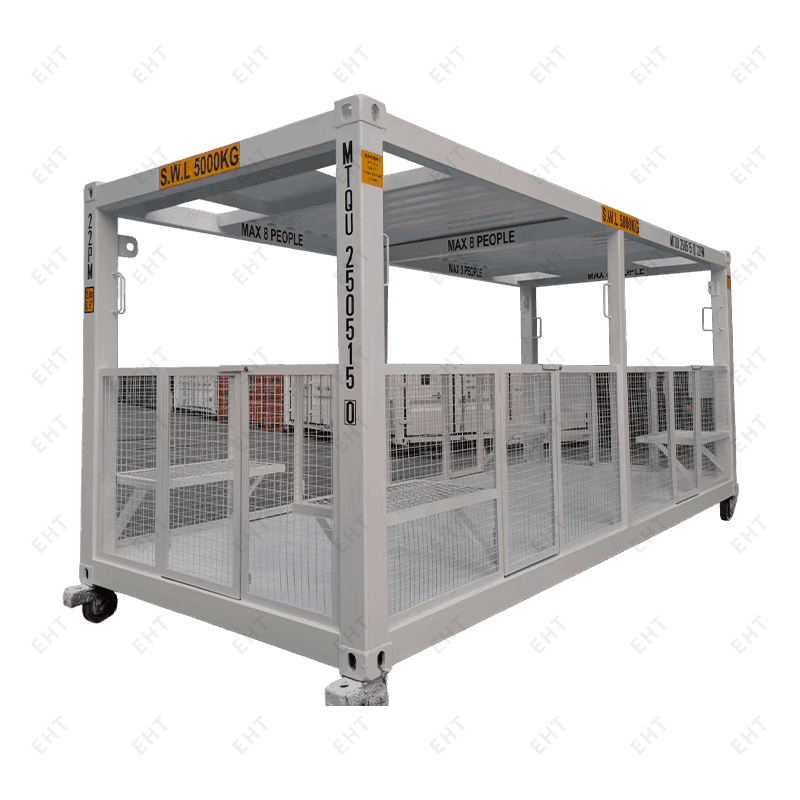
Open-top containers replace the fixed roof with a removable cover and a movable header, which requires re-engineering the top side rails and the corner interface. Side-door containers add large openings in the side wall, so the wall loses its original shear stiffness and must be reinforced with extra framing. Both designs are common in logistics, and buyers should compare load ratings and sealing details before committing. A credible manufacturer will document a product such as the 20-foot open-top specialized shipping container with verified load capacity and sealing details.
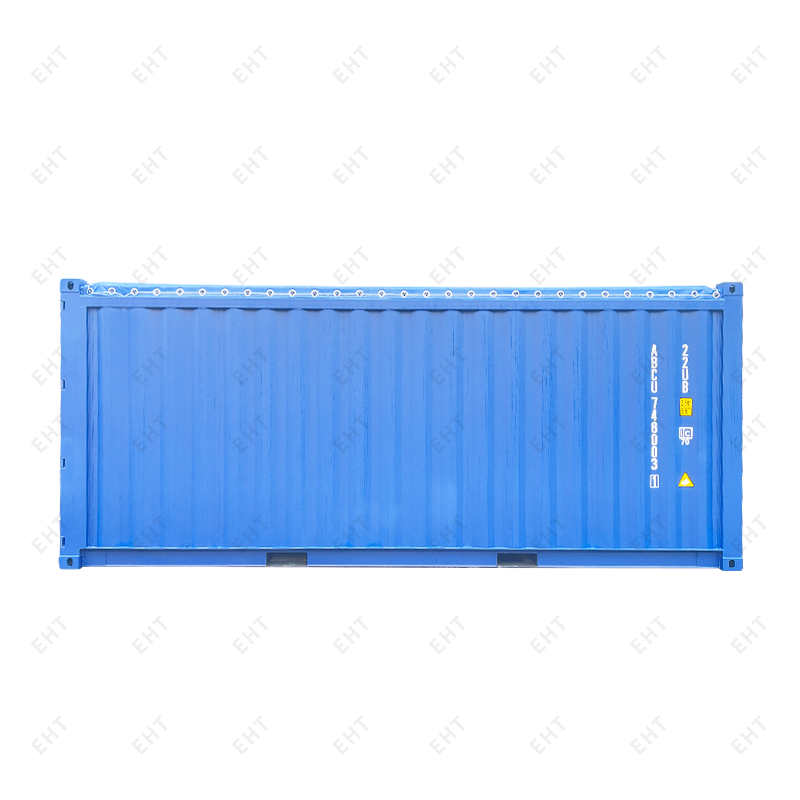 Open Top Container Suppliers,20ft Open Top Container CompanyAs China Open Top Container Suppliers and 20ft Open Top Container Company, Yichengke Integrated supply Wholesale Open Top Shipping Contai...View Product →
Refrigerated containers are a different engineering problem. Instead of corrugated steel walls, they use insulated foam between steel or composite skins, and the box must hold a stable interior temperature against heat entering through the roof, floor, and door seals. The refrigeration unit, airflow ducts, power supply interfaces, and temperature monitoring are installed during manufacturing rather than added later. For food logistics, the 20-foot food reefer container shows how insulation, refrigeration, and hygienic flooring are integrated into one certified unit.
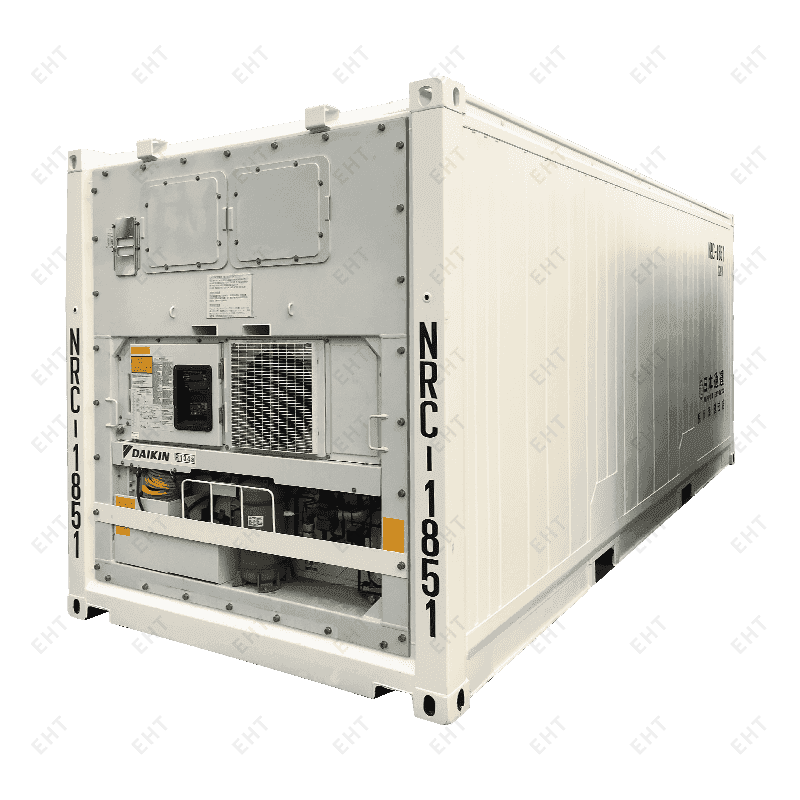 20 Feet Food Reefer Container Suppliers, Wholesale factory - Yangzhou Yichengke Yangzhou Yichengke Integrated Technology Co., Ltd is China Wholesale 20 Feet Food Reefer Container Suppliers and factory,View Product →
When a container becomes a home, an energy storage rack, or a hydrogen production module, manufacturing expands well beyond the steel shell. Interior fit-out, electrical wiring, fire suppression, acoustic insulation, and climate control become part of the build. Cutting windows, adding partitions, or mounting heavy equipment changes the load path, so designs must be verified by structural calculation before fabrication. A 20-foot housing container is a simple shell transformed into a living space with insulation, windows, and utility connections, while remaining transportable by standard handling equipment.
 20 Feet Housing Container Suppliers, Wholesale factory - Yangzhou Yichengke InteYangzhou Yichengke Integrated Technology Co., Ltd is China Wholesale 20 Feet Housing Container Suppliers and factory,View Product →
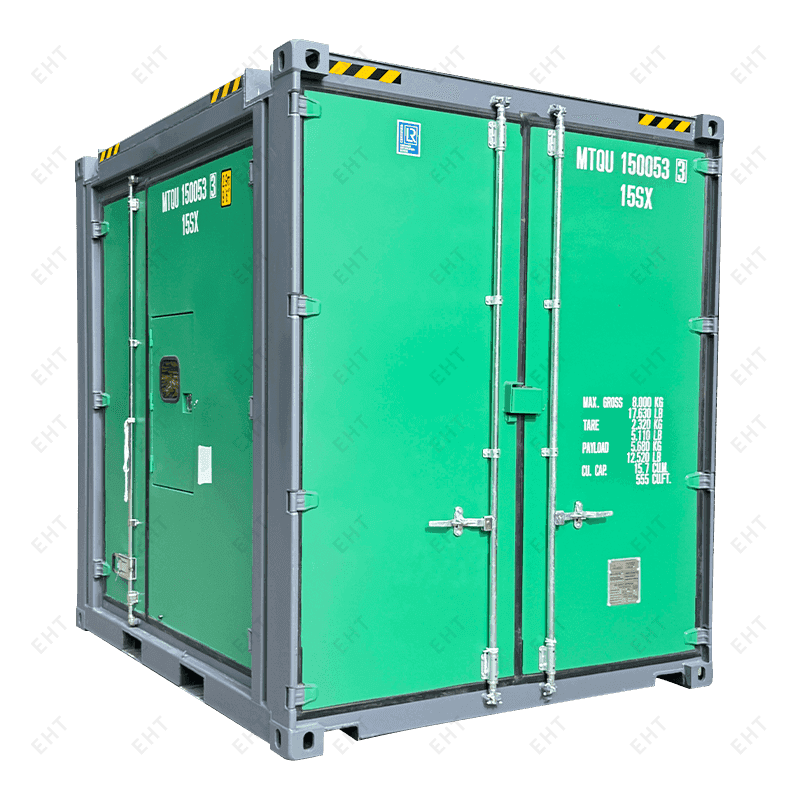
This is where manufacturer breadth matters. Yichengke builds battery energy storage systems, hydrogen production containers, DNV offshore units, reefer containers, diesel generator sets, and specialized transport containers under the same certification framework, which shortens the path from a custom design to a compliant product.
Buying directly from a factory is different from buying from a local dealer. Savings can be significant, but so is exposure. The sensible approach is to verify the manufacturer's process before the order, not after delivery.
Weight ratings, payload, and cost are practical considerations as well. The guidance in shipping container weight, pallet, and cost considerations when buying covers the operational limits that affect transport permits, stacking plans, and pallet counts.
The manufacturing process is why a container can be stacked nine high, soaked in salt spray, and still open and close properly a decade later. It is also why a cheap box can develop roof leaks, sag under load, or fail early. When material grades are confirmed, welds are consistent, surfaces are protected, and tests are passed, the container becomes an asset rather than a liability.
For buyers, the takeaway is straightforward: understand the process, ask for proof, and choose a manufacturer whose production line and certifications match the intended use. The overview of different logistics containers and their uses is a useful starting point when deciding what to source. For specialized units, a manufacturer like Yichengke that combines automated production with multi-standard certification offers a practical path from drawing to delivered container.

What to stay up to date?
Contact us via the email address below.
No. 178, Wuzhou East Road, Economic Development Zone, Yangzhou, Jiangsu.
Copyright 2024 Yangzhou Yichengke Integrated Technology Co., Ltd. All Rights Reserved.

