

 English
 русский
 Español
 عربى
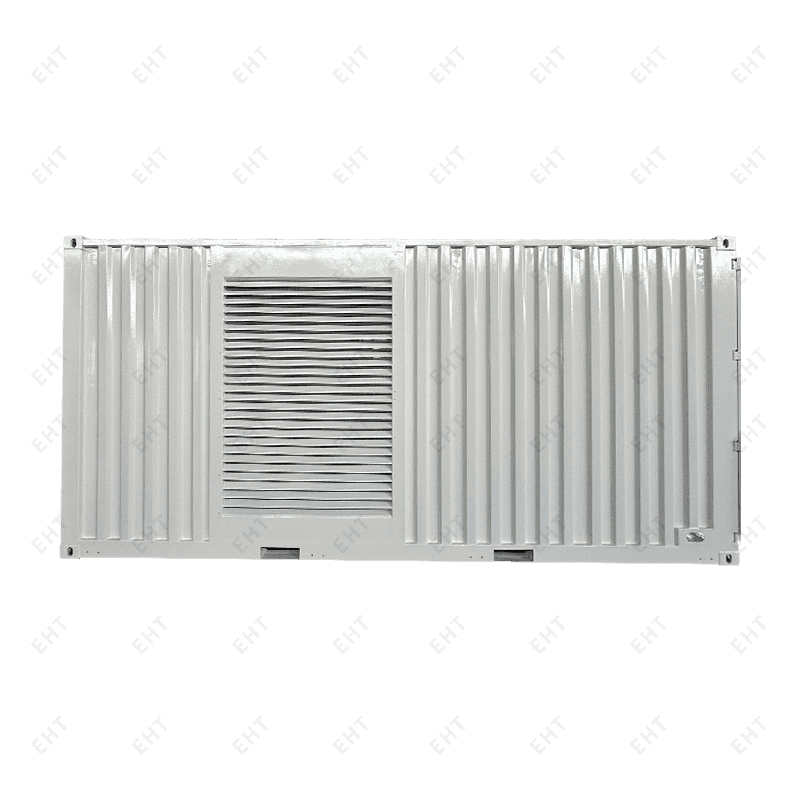
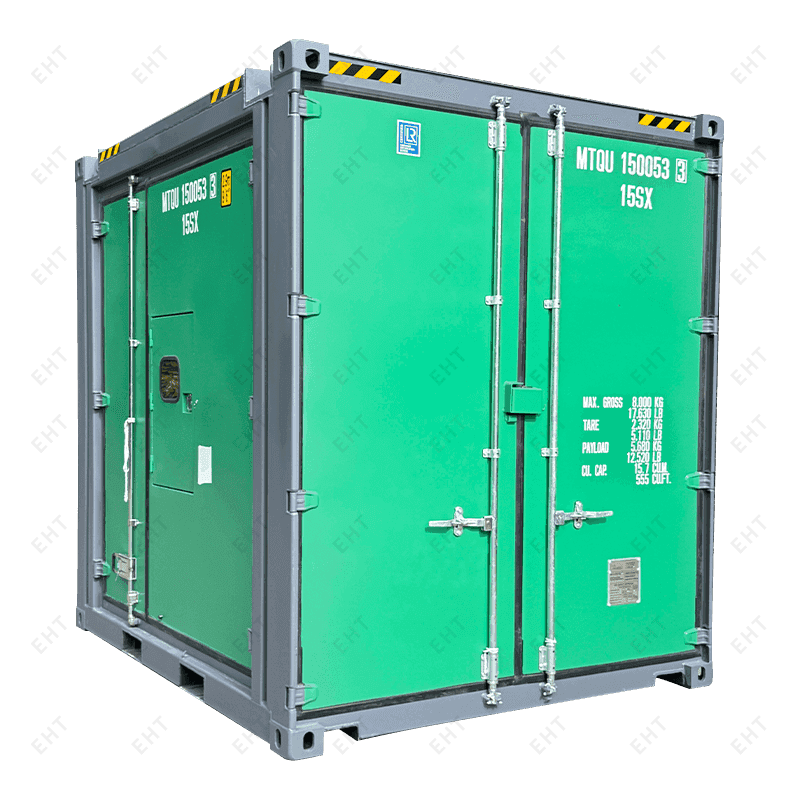
40ft Custom Air Compressor Container
Specialized Shipping Container | 40ft Custom Air Compressor ContainerOverall Dimensions: 12192 × 2438 × 2896mmLarge...
Ask anyone who has opened a container on a hot afternoon and the story is always the same: steel holds heat. A plain dry box can sit well above 50°C inside while the air outside is a mild 32°C, and that same box will drop close to freezing overnight in a cold climate. For pallets of cardboard that is an inconvenience. For food, pharmaceuticals, electronics or calibration equipment, it is a straight loss.
A climate controlled container exists to break that cycle. It is a steel shell with a managed interior: insulated, sealed, and usually fitted with refrigeration, heating or ventilation equipment that holds a setpoint instead of simply following the weather. We have built these units for cold chain operators, offshore crews, battery projects and instrument rooms over the years, and the lessons tend to repeat themselves no matter what is being stored inside.
Content
The phrase is used loosely in the market, so it helps to separate the family into its actual members. At one end sits the insulated container: a passive box with foam or mineral wool panels and tight door seals, but no machinery. It cannot cool anything down. What it does is slow change, which is often enough to stop condensation forming on machinery or to keep a shipment from cooking during a two-day road leg.
At the other end sits the refrigerated container, a reefer with an integrated refrigeration pack that actively pulls the interior toward a setpoint and holds it there, cycle after cycle. Between those two poles you will find quick-freeze units built for blast freezing, super freezer boxes running down to -80°C for sensitive biological cargo, and dual-mode units that heat as readily as they cool.
The practical difference shows up when power is interrupted or doors stay open for a shift change. Active units recover; passive units only buy time. Knowing which behaviour your operation needs is the first real decision in the whole project.
| Type | Typical setpoint range | Where it earns its place |
|---|---|---|
| Insulated container (passive) | Ambient, no active control | Slowing temperature swings and keeping condensation off sensitive goods |
| Refrigerated container (reefer) | -25°C to +25°C | Chilled and frozen food, pharmaceuticals, general cold chain |
| Quick-freeze unit | -35°C to -40°C | Freezing product fast enough to protect texture and shelf life |
| Super freezer | -40°C to -80°C | Biological samples and specialised frozen cargo |
| Heated or dual-mode unit | Up to around +50°C on the warm side | Cold-climate storage and temperature-stable equipment rooms |
Specification starts with the product, not the box. A container that is perfect for frozen beef is the wrong answer for fresh berries, and neither is quite right for a switchgear room that generates its own heat. Three patterns come up most often in our order book.
Here the enemies are door openings, uneven stacking and ambient heat. Produce needs airflow through the load rather than around it, so the floor profile and the gap above the cargo matter as much as the thermostat. Dairy and chilled meat want tight control with minimal defrost cycling. Frozen goods want capacity headroom for the summer peak. If you are shipping internationally, it is worth checking the markings and dimensions that customs and carriers expect, which we cover in our guide to refrigerated container dimensions and ISO markings.
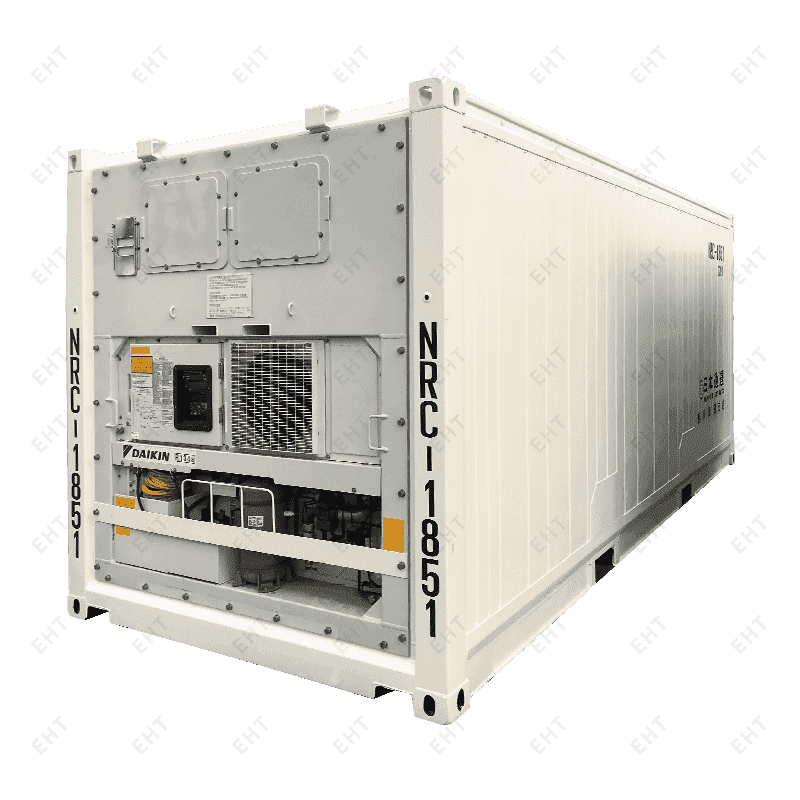 20ft Reefer Container for Temperature-Controlled CargoFor chilled, frozen or constant-temperature cargo, this 20ft unit combines insulated construction, T-bar airflow and a Thermo King refrigeration system.View Product →
Blast freezing is a different job from holding temperature. The unit has to remove a large amount of heat quickly, which means evaporator surface, air velocity and defrost strategy all get pushed harder, and the insulation has to keep up when the outside air is 35°C and humid. We usually ask customers how many kilos per batch, at what inlet temperature, and how long the freeze window is, because those three numbers shape the whole design far more than a nominal temperature figure does.
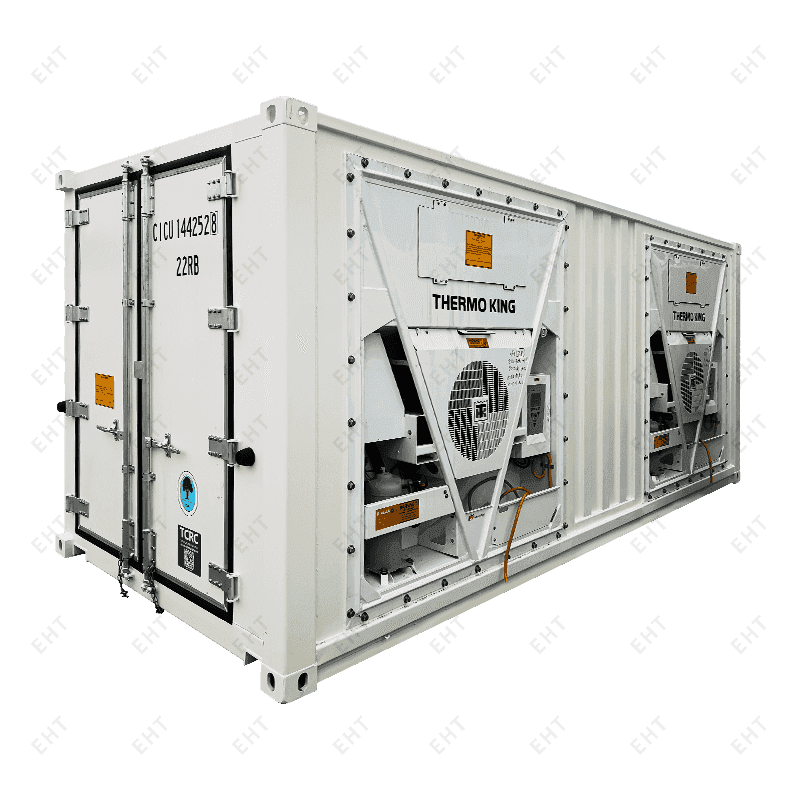 20ft Quick-Freeze Reefer Container for Blast FreezingBuilt for rapid heat removal, this twin-unit 20ft container supports blast freezing and even air circulation for seafood, produce, pharmaceuticals and other perishable cargo.View Product →
A working platform is an unforgiving place for refrigeration. Salt spray, constant vibration, tight deck footprints and maintenance windows measured in hours instead of days all push toward compact, robust units with easy-access service panels. A 10-foot offshore reefer is a common answer: small enough to fit where a 20-foot box will not, and engineered to keep going through weather that would stop a standard unit. Frames and lifting points need to be designed to the relevant structural standard, not simply bolted on.
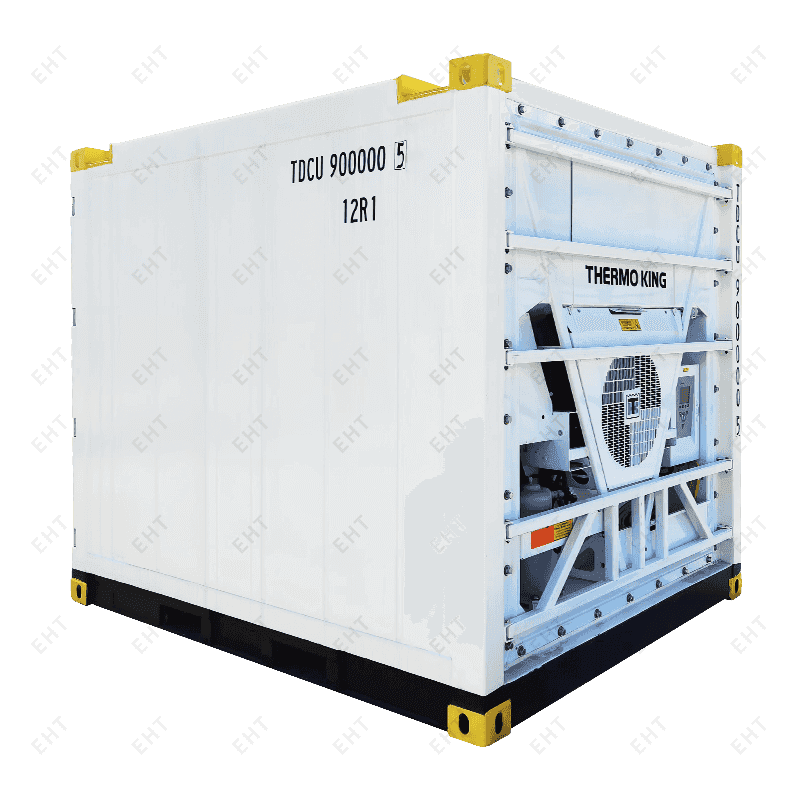 10ft DNV-Compliant Offshore Reefer ContainerDesigned for cramped decks and remote sites, this compact DNV 2.7-1 unit offers corrosion-resistant construction, offshore lifting frame and Thermo King cooling to -20°C.View Product →
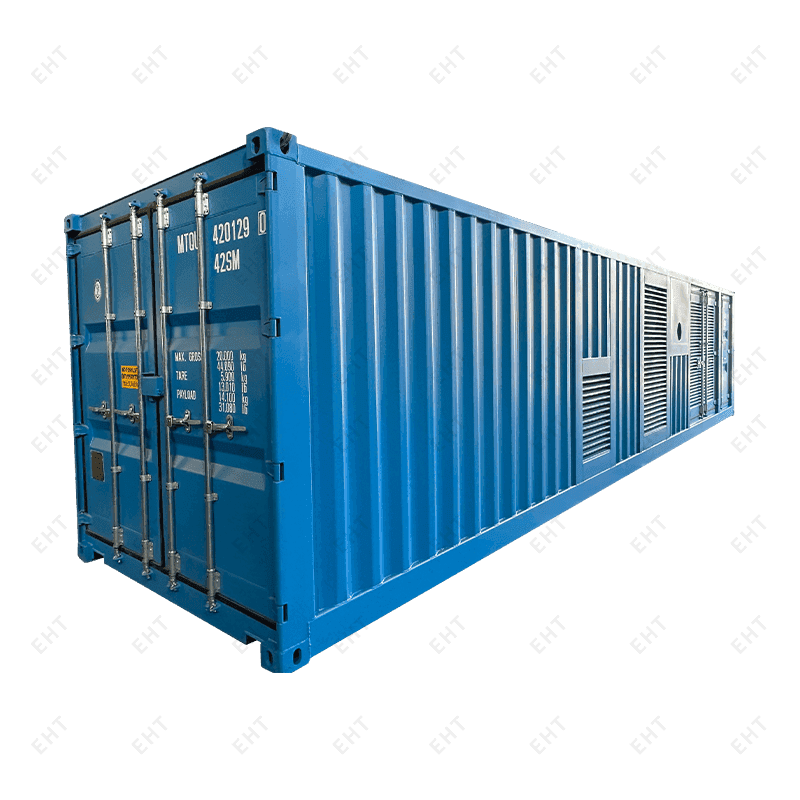
Equipment rooms deserve a mention too. When the cargo is a switchgear cabinet, a nitrogen generator or an instrument rack, the design goal flips: now the container is removing heat generated inside, and ventilation, filtration and dual access often matter more than holding a tight setpoint.
Two containers with the same nominal rating can behave very differently on site. These are the points that separate a unit that performs from one that gets complained about:
Refrigeration is an electrical promise, and the site has to keep it. Most reefer packs run on three-phase supply, and voltage and frequency have to match what the unit was built for; a 60 Hz pack on a 50 Hz supply will not deliver its rated capacity. Where grid power is unreliable, a dedicated generator or a hybrid setup with battery support is usually cheaper than a spoiled load.
Placement matters more than people think. A unit pushed against a wall with no clearance for condenser airflow will run hot, draw more current and shorten its own life. Shade helps. So does a level, well-drained base and a cable route that will not be driven over by a forklift in week two. If the container will move between sites, plan the lifting points and transport approvals at the design stage rather than after delivery.
We build containers on a production line that runs from front corner post assembly and a six-metre automatic welding station through to roof and side panel seam welding, with jigs and fixtures designed to keep dimensions consistent across a batch. For climate controlled work, that consistency is what makes the insulation and sealing behave predictably, unit after unit.
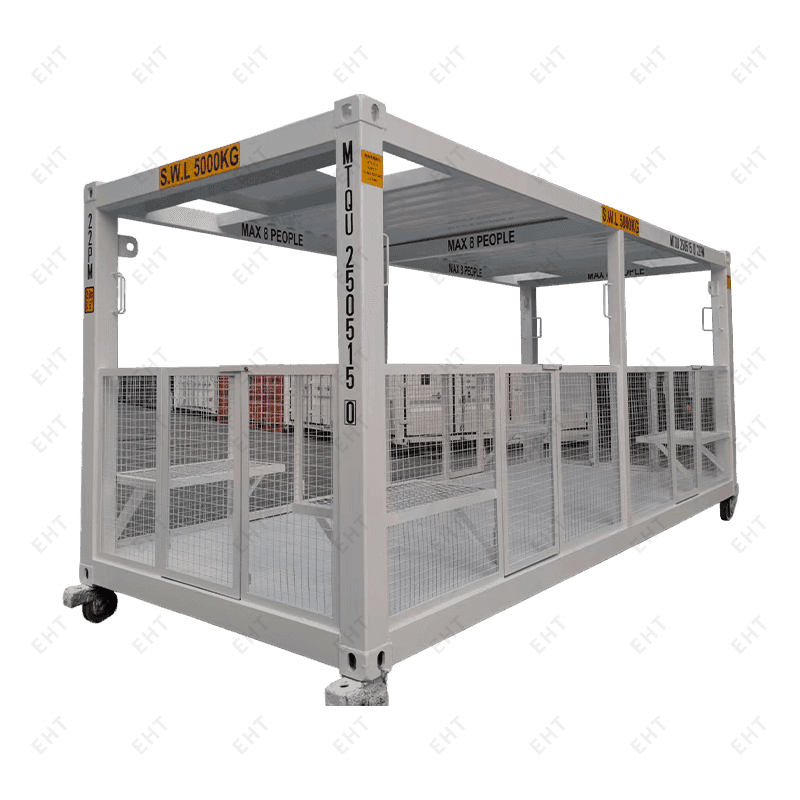
Most of our temperature-controlled projects start as a drawing, a sample or a short description of a problem. We work from there, sizing the refrigeration pack, choosing 10, 20 or 40-foot footprints, and adding the door configuration and access details the site actually needs. Our reefer container range covers offshore, food, quick-freeze, railway and TIR variants, and the wider plant handles everything from hydrogen and battery storage containers to instrument rooms and custom equipment housings.
The factory holds ISO 9001, ISO 45001 and ISO 14001 certification, and products carry CE marking, CSA approval for North America, AS/NZS 1170.2 structural design certification and DNV-standard offshore build where the application calls for it. If your project has a temperature to hold, a footprint to fit and a deadline that will not move, we would rather hear about the awkward constraints early. That is usually where the sensible design comes from.

What to stay up to date?
Contact us via the email address below.
No. 178, Wuzhou East Road, Economic Development Zone, Yangzhou, Jiangsu.
Copyright 2024 Yangzhou Yichengke Integrated Technology Co., Ltd. All Rights Reserved.

