

 English
 русский
 Español
 عربى
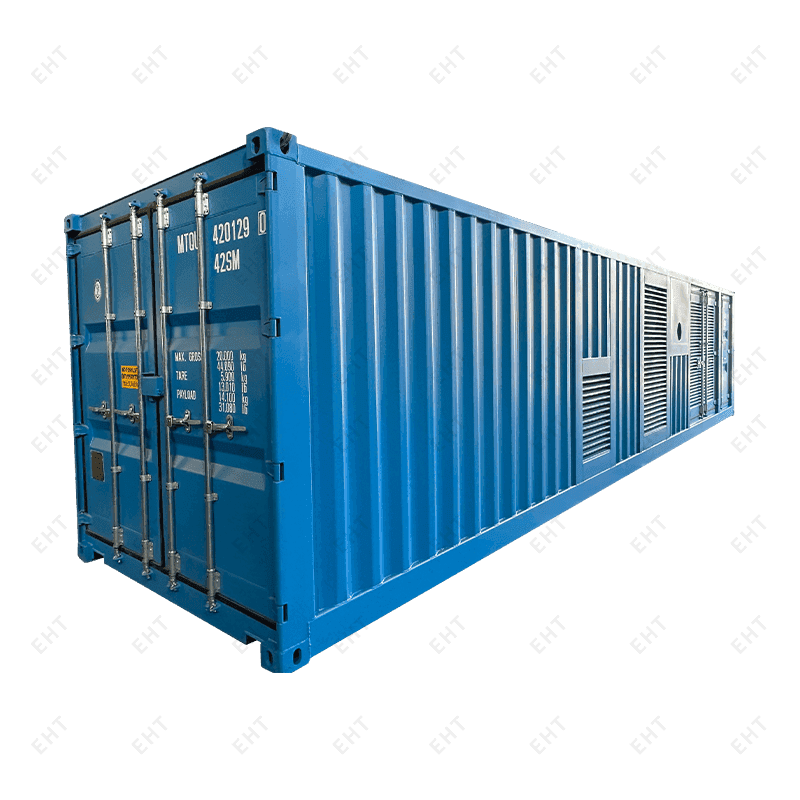
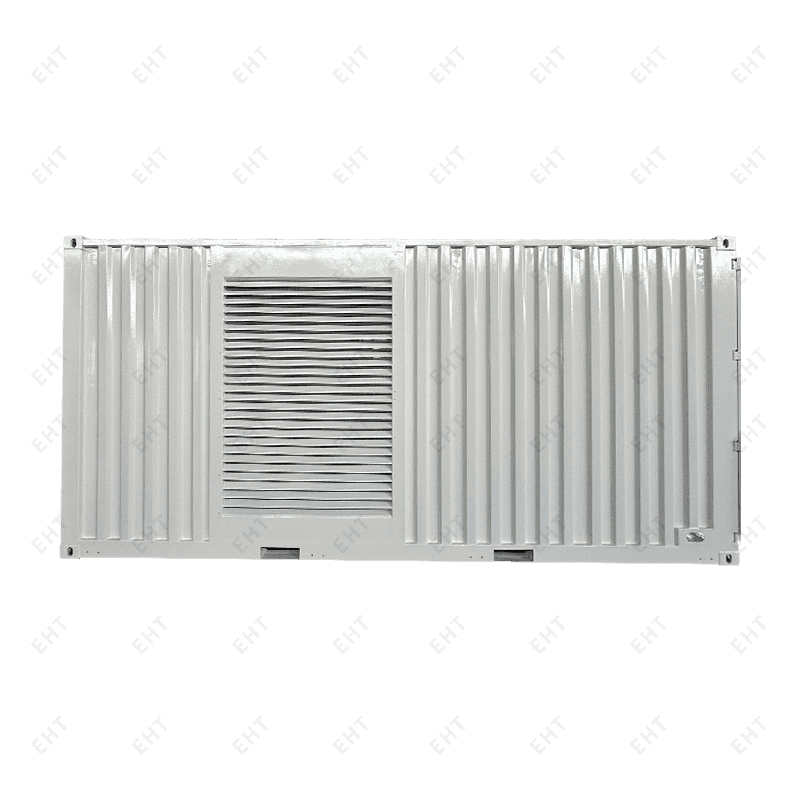
40ft Custom Air Compressor Container
Specialized Shipping Container | 40ft Custom Air Compressor ContainerOverall Dimensions: 12192 × 2438 × 2896mmLarge...
Ordering a custom shipping container is closer to commissioning a small building than to picking something off a catalogue page. The steel shell is usually the easy part. What decides whether a project runs smoothly is the thinking that goes inside it: where the doors land, how the machinery is mounted, how heat and vibration are handled, and which certification the destination market will ask for when the box reaches port.
We have built this kind of container for years — energy storage units, hydrogen production skids, offshore tool boxes, reefer boxes and plain equipment rooms — and the same questions come up on almost every enquiry. This guide is a practical walkthrough of how customisation really works, written so you can plan sensibly before you ask anyone for a price.
Content
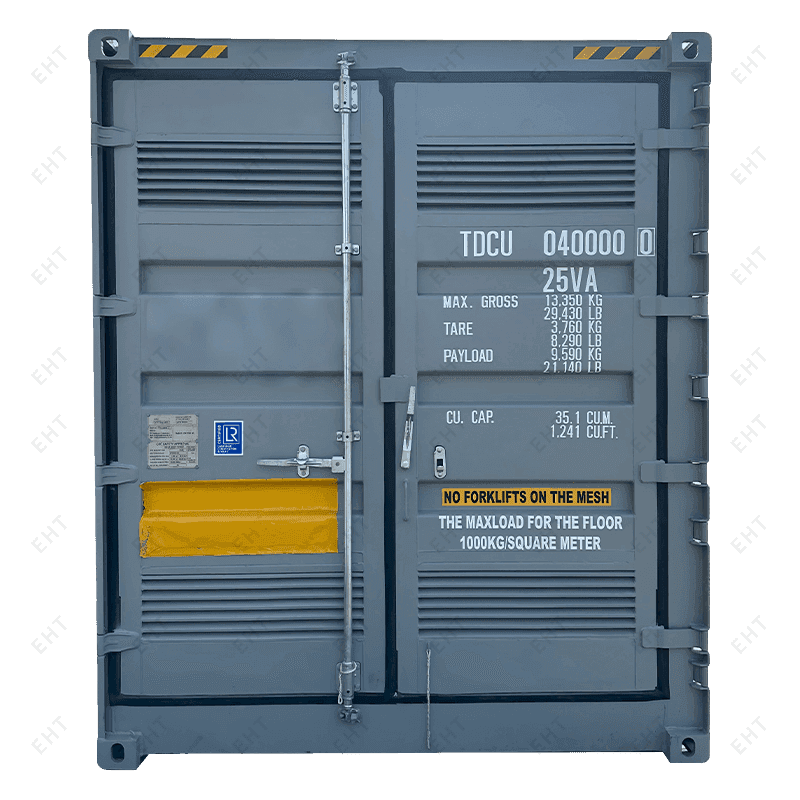
A standard dry container is a known quantity: fixed ISO dimensions, corrugated walls and a pair of doors at one end. Customisation means keeping the parts that serve you — the ISO footprint, the corner castings, the stacking and lifting geometry — and reworking the parts that do not.
In practice, custom work falls into a handful of layers, and most projects combine two or three of them:
One piece of advice worth sharing early: not every change is free of consequence. Cutting a large opening into a load-bearing wall changes how the box carries stress, and it has to be re-engineered rather than simply cut. That is exactly why a careful builder asks for drawings before quoting a number.
Most projects start in one of the families below and then drift into another as the requirements sharpen. The footprints listed are typical starting points, not a fixed menu.
| Container family | Common footprints | Typical use |
|---|---|---|
| Equipment and instrument containers | 10–40 ft | Compressors, switchgear, analysers, nitrogen or oxygen systems |
| Side-opening and open-top units | 20 ft, 40 ft | Forklift loading, oversized cargo, multi-stop logistics |
| Reefer and cold storage | 10–40 ft, 40H | Food, pharma, quick-freeze, rail and TIR transport |
| Energy storage (BESS) | 20, 32, 40, 45 ft | Grid support, renewables integration, off-grid supply |
| Hydrogen production containers | 20 ft, 40 ft | Auxiliary compressor systems and complete production skids |
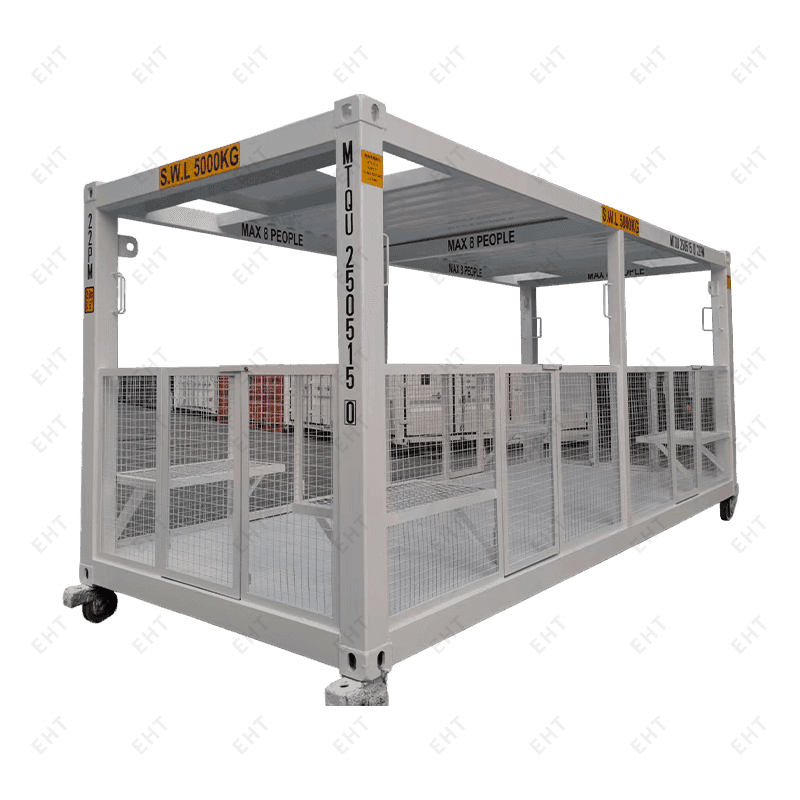
| Offshore DNV containers | 10 ft, 20 ft | Tool storage, maintenance workshops, pipe baskets |
| Accommodation and housing | 20 ft, 40 ft, expandable | Site camps, remote living, temporary offices |
| Flat pack and special logistics | 20 ft | One-way shipping, camp deployment, return-cost savings |
Wing-opening units are a good illustration of how far customisation can go. Instead of a single end door, the long side lifts hydraulically to expose the full working width, which turns the container into something closer to a mobile workshop for maintenance crews. We build them for clients who need the cargo to stay sheltered in transit and fully accessible on site.
 20ft Hydraulic Wing Open Container for Logistics and EquipmentCustomized 20ft container with hydraulically opening side panels to 90°, offering full interior access for large cargo and equipment integration.View Product →
This is where most projects begin and where most mistakes are made later. A four-door side-opening logistics box solves a loading problem on a busy yard but needs a different structural approach than a two-door version. If you are still weighing side-door access against open-top lifting, this guide to side-opening and open-top shipping container specifications is a useful companion before you commit to a layout.
Equipment containers live or die by their services. Ambient temperatures, dust, salt air and the duty cycle of the machinery inside all shape the ventilation and cooling plan. We usually ask for the equipment datasheet first, then work backwards to cable entries, air changes, filtration and fire detection — a sequence that avoids the familiar problem of a container that is finished before anyone checks the heat load.
 40ft Instrument and Meter Container for Specialized Equipment EnclosuresCustomized 40ft enclosure for instruments and meters, providing sealing, shock resistance and temperature-humidity control for testing, research and rapid deployment.View Product →
Anything that leaves the ground on a crane needs lift points that match the finished weight and centre of gravity, not just the bare shell. Offshore work raises the bar further, with DNV framing, sea fastening and corrosion protection that have to be designed in rather than added afterwards.
Every project is different, but the sequence is fairly predictable. Knowing it helps you plan internal approvals and site works around the container rather than after it.
The unglamorous steps — drawing sign-off and first-article review — are usually where a schedule is saved or lost.
Certification is the part buyers tend to think about last and customs officers think about first. A container that is perfectly functional but undocumented can sit at a port while paperwork is chased.
On the manufacturing side, a works with ISO 9001, ISO 45001 and ISO 14001 behind it should be able to show consistent process control, not just a certificate on a wall. On the product side, the relevant marks depend on where the unit will be used: CE for European markets, CSA for the United States and Canada, and AS/NZS 1170.2 structural design for Australia and New Zealand. Offshore containers follow DNV practice, which affects framing, lifting sets and inspection intervals.
Ask early which of these your project actually needs. The answer shapes the drawing set long before steel is cut, and retrofitting compliance into a finished container is expensive on both sides.
You do not need a finished design to start a conversation, but a few documents shorten the path considerably:
Send those across and the first response should be specific questions rather than a generic price list. If you would like to see the wider range first, the custom container production capabilities page shows what our lines are set up to handle.
 Customized Container Solutions for Equipment, Storage and Modular UseA range of 13 custom-engineered container solutions for specialized equipment protection, storage, operation, logistics, energy and modular living applications.View Product →
None of these are unusual; they simply cost time when they surface late.
Simple fit-outs of a standard footprint can move quickly once drawings are approved, while engineered units with certification, refrigeration or complex equipment integration take longer. The honest answer always depends on drawing sign-off, material lead times and the current production queue — so ask for a schedule after the design is agreed rather than before.
Yes. Many clients arrive with a full drawing set; others bring a sketch, a machine datasheet or a sample of an existing unit. Both routes are workable, provided the technical requirements are clear enough to engineer against.
Sometimes, for light duties where appearance and tolerances are forgiving. For equipment integration, offshore work or anything requiring certification, starting from a controlled new build is usually the cheaper route once repairs and re-engineering are counted.
Custom containers reward a little patience at the front end. Get the drawing right, agree the certification before fabrication, and keep the equipment data honest, and the rest of the process tends to behave itself. If you are at the stage where you have a machine, a location and a rough idea of the footprint, that is already enough to start a useful conversation.

What to stay up to date?
Contact us via the email address below.
No. 178, Wuzhou East Road, Economic Development Zone, Yangzhou, Jiangsu.
Copyright 2024 Yangzhou Yichengke Integrated Technology Co., Ltd. All Rights Reserved.

