

 English
 русский
 Español
 عربى
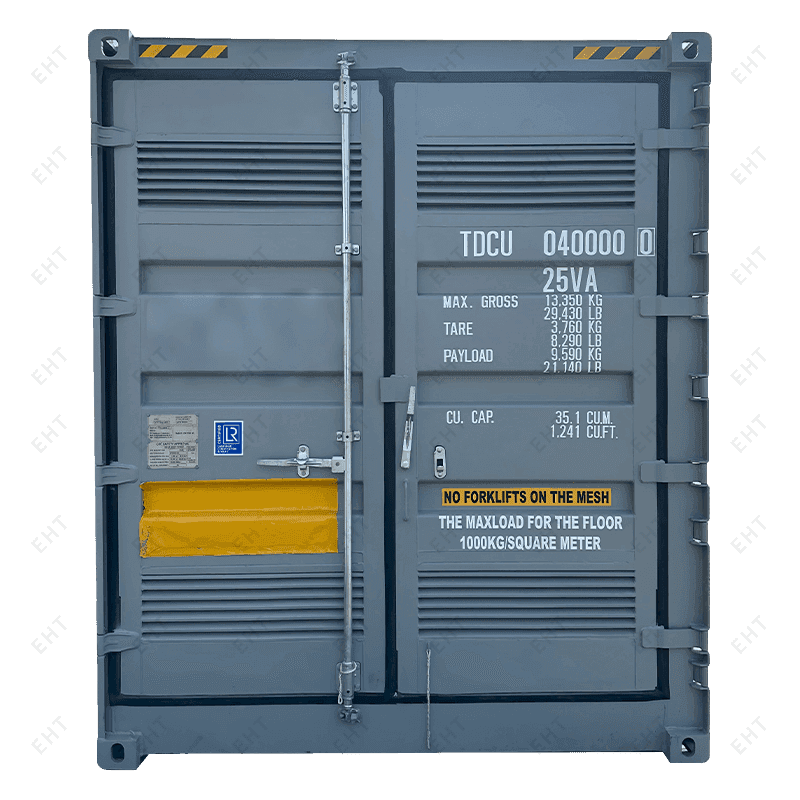
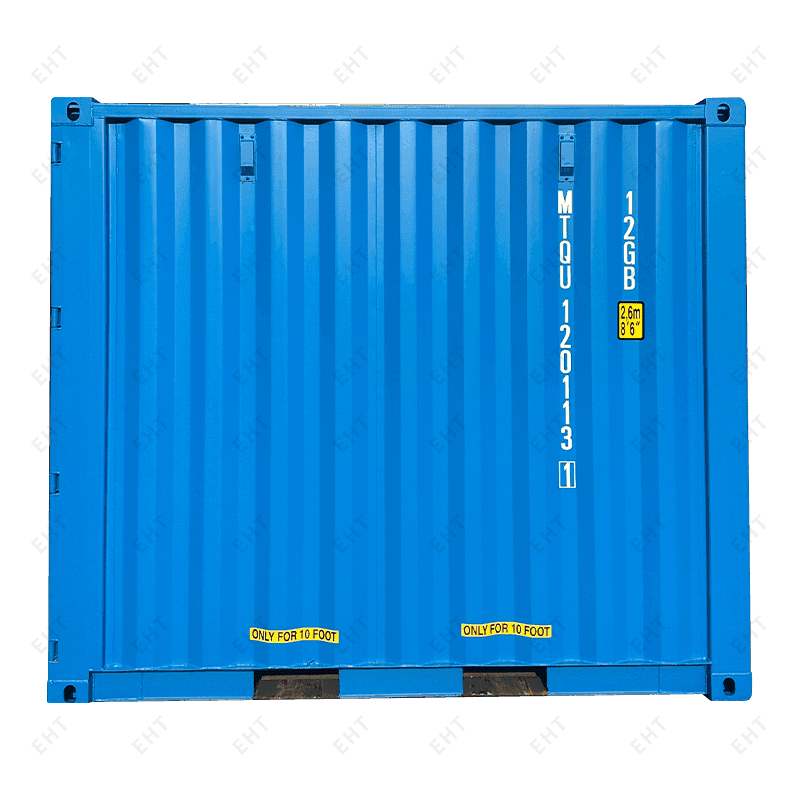
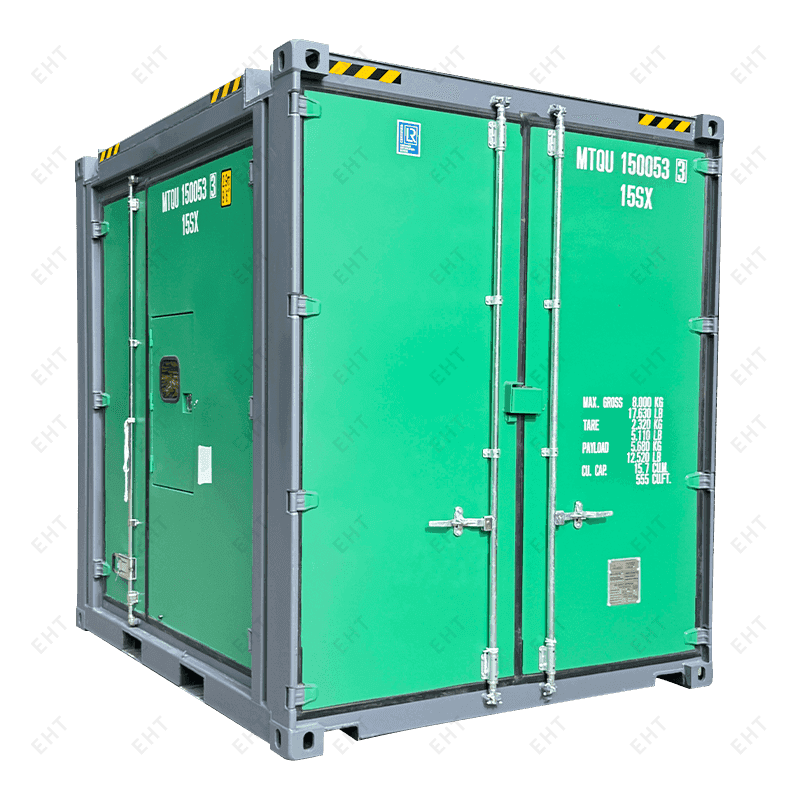
عربى40ft Custom Air Compressor Container
Specialized Shipping Container | 40ft Custom Air Compressor ContainerOverall Dimensions: 12192 × 2438 × 2896mmLarge...
Content
Energy storage containers make it practical to deploy reliable electrical systems where grid extension is prohibitively expensive or technically impractical. By combining battery energy storage, power conversion, thermal management and control systems in a transportable enclosure, these containers reduce field engineering, speed deployment and provide a turnkey platform for microgrids, telecom sites, mining camps, remote communities and disaster relief. The key advantage is predictable dispatchable power that smooths renewable output, replaces fuel-hungry gensets for many hours, and provides secure blackstart and islanding capabilities.
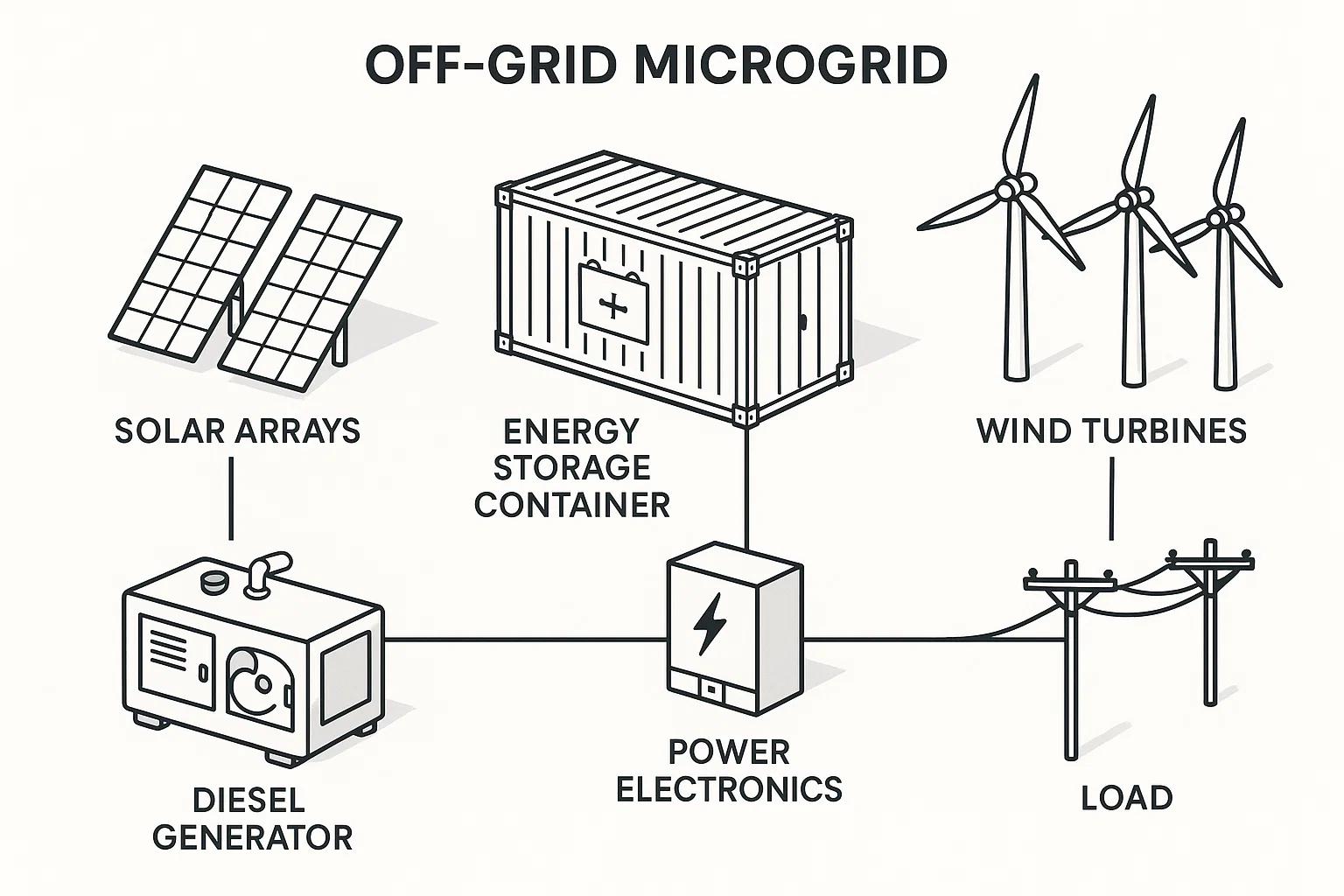
Designers select container architectures to balance energy capacity, peak power, modularity and environmental resilience. Common configurations include solar-plus-storage microgrids, hybrid genset-storage systems for fuel reduction, and pure battery-buffer systems for short-term backup and load leveling. Container layouts are influenced by battery chemistry, expected depth of discharge, thermal control needs, and site access constraints—each factor determining inverter sizing, DC bus voltage and cooling strategy.
A solar-plus-storage container pairs photovoltaic arrays with an ESS container that houses inverters, batteries and EMS. The EMS coordinates PV curtailment, charge scheduling and load shaping so stored energy is used during night-time or cloudy periods. This configuration often reduces diesel consumption dramatically and improves power quality for sensitive loads.
When continuous autonomy is required, containers are integrated with diesel gensets. The battery handles transient loads and short peak shaving while the genset provides long-duration energy. Properly sized, the battery reduces genset runtime, lowers fuel costs and extends maintenance intervals.
Off-grid design begins with a load profile analysis: average daily energy demand, peak instantaneous power, and critical-load duration during outages. Energy capacity (kWh) determines how long the site can run without generation; power rating (kW) determines whether inrush currents and peak loads can be handled. For remote sites with heavy motor starts or HVAC, prioritize higher continuous and short-term peak power ratings plus suitable inverter surge capability.
|
Design Aspect |
Primary Concern |
Typical Guidance |
|
Energy Capacity (kWh) |
Autonomy duration |
Size for worst-case days without generation |
|
Power Rating (kW) |
Peak/load start |
Match to largest simultaneous starts plus margin |
|
Cycle Life / DoD |
Lifetime & replacements |
Choose chemistry and DoD to meet lifecycle cost targets |
Remote areas often present wide temperature ranges, humidity, dust and limited maintenance. Lithium iron phosphate (LFP) is common for off-grid containers due to safety, long cycle life and tolerance to high-depth-of-discharge. However, lead-acid may still be used where cost is the overriding constraint and maintenance staff are available. Choose chemistries based on operating temperature window, energy density (affects container footprint), and local logistics for replacement or recycling.
Containers use active cooling (AC or liquid chillers) or passive heating elements plus insulation depending on ambient extremes. In cold climates maintain minimum cell temperature for charging; in hot climates increase ventilation, deploy chilled coolant loops or use phase-change insulation to prevent thermal runaway and capacity fade.
Robust PCS and EMS enable smooth transition between grid-connected and island modes, or between genset and battery supply. For off-grid sites, fast frequency and voltage control, seamless transfer relays and blackstart capability are essential. EMS logic should prioritize critical loads, manage state-of-charge reserve, and coordinate generator start/stop events while minimizing fuel use.
Blackstart capability allows the ESS to energize the local bus and start essential systems without external power. Design requires the PCS to support “grid-forming” inverter control, islandable switchgear and pre-configured load-shedding sequences to prevent overload during start.
Containerized systems are sized to ISO standards (20ft/40ft) for shipping. Site preparation focuses on a level foundation (concrete pad or compacted gravel), cable entries, grounding systems, and perimeter security. Consider access for maintenance vehicles, crane capacity for placement, and local permitting for fire and environmental compliance.
Safety is paramount in remote deployments where emergency services are distant. Containers should include fire detection, automatic suppression suited to battery chemistry (e.g., aerosol, Novec alternatives, or water mist where appropriate), gas detection for off-gassing, and clear ventilation zoning. Compliance with local electrical codes and international standards (such as IEC 62485, UL 9540) simplifies permitting and insurance.
Because staff presence can be minimal, remote monitoring and predictive maintenance are essential. Telemetry should include SOC/SOH, inverter status, thermal maps, coolant system health and alarm conditions. EMS platforms that support over-the-air updates, alarm escalation and rule-based automation reduce onsite interventions. Plan periodic physical inspections and a spare-parts strategy tailored to lead times for your location.
While upfront capital for containerized ESS can be high, total cost of ownership (TCO) often favors storage when replacing fuel, reducing diesel consumption, lowering maintenance and extending equipment life. Evaluate lifecycle costs including replacement battery modules, container maintenance, fuel savings, avoided grid extension costs and potential revenue from ancillary services or demand charge reduction in nearby grids.
|
Cost Element |
Impact on TCO |
Mitigation |
|
CapEx (container + batteries) |
High initial cost |
Leasing, energy-as-a-service, or phased expansion |
|
Fuel & genset maintenance |
Reduced with storage |
Optimize dispatch and minimize genset runtime |
|
O&M & spare parts |
Ongoing expense |
Remote monitoring, predictive maintenance, local stocking strategy |
Successful off-grid projects share common traits: thorough pre-deployment simulation, conservative sizing to allow margin for future loads, strong remote telemetry and a logistics plan for spare modules. Lessons from field projects highlight the importance of training local operators, designing for modular replacement of battery modules and ensuring fire-safety systems are tested under site conditions.
A concise checklist ensures nothing critical is missed during planning and implementation. Use it to align stakeholders, reduce surprises and accelerate commissioning.
Energy storage containers enable off-grid capability by packaging complex power, control and safety systems into deployable modules. When engineered for the environmental, operational and logistical realities of remote sites, they reduce reliance on fuel, improve power quality and support sustainable electrification. The success of any deployment depends on careful sizing, conservative control logic, robust thermal and safety design, and an operations plan that accounts for remote maintenance realities.
If you provide your target capacity, primary loads and ambient conditions, I can produce a tailored technical spec sheet and a high-level cost estimate for a containerized off-grid system suited to your project.

What to stay up to date?
Contact us via the email address below.
No. 178, Wuzhou East Road, Economic Development Zone, Yangzhou, Jiangsu.
Copyright 2024 Yangzhou Yichengke Integrated Technology Co., Ltd. All Rights Reserved.

