

 English
 русский
 Español
 عربى
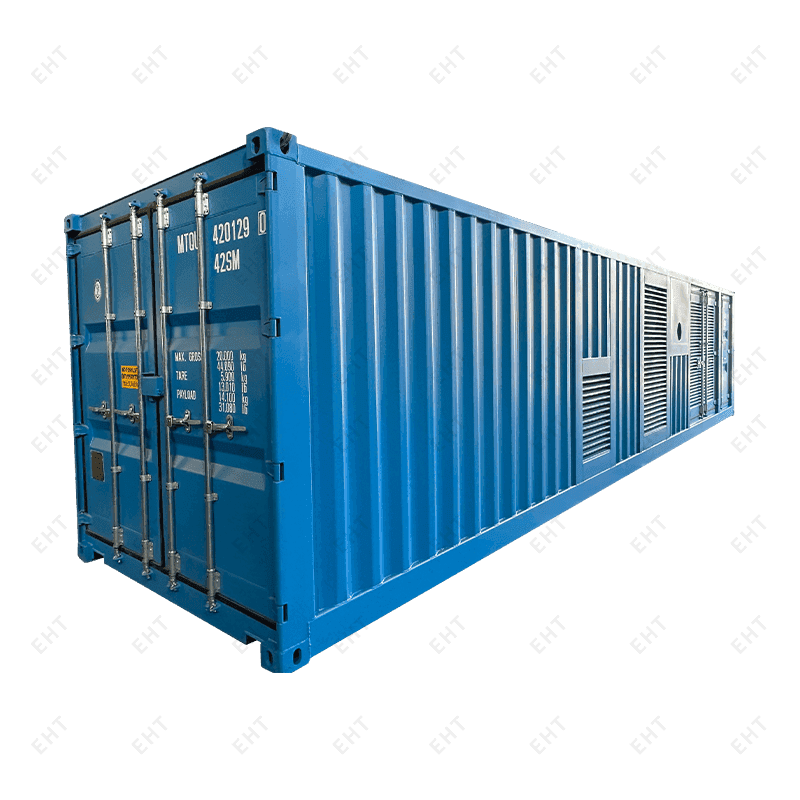
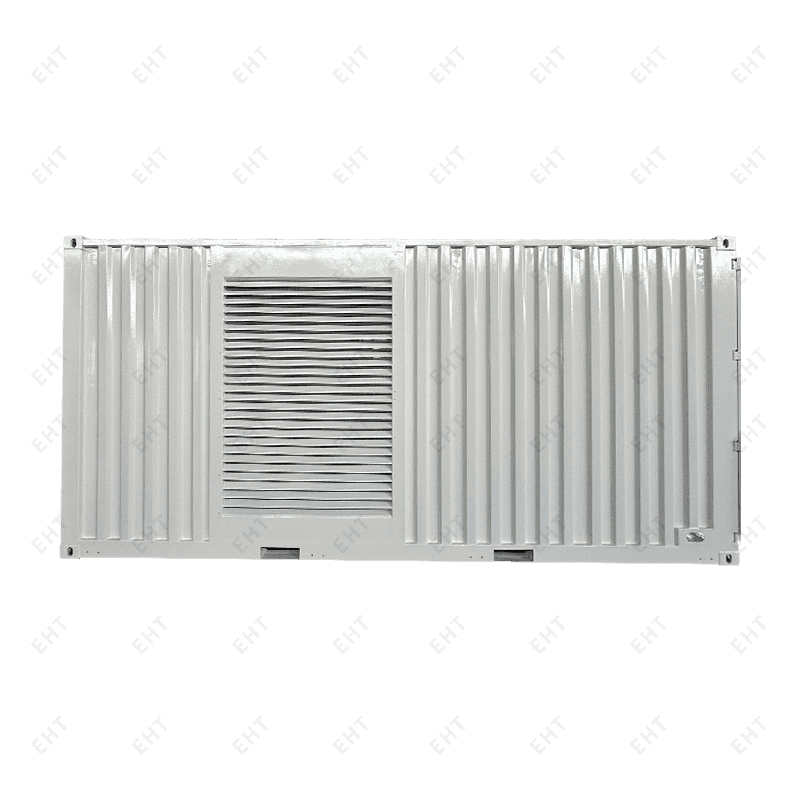
40ft Custom Air Compressor Container
Specialized Shipping Container | 40ft Custom Air Compressor ContainerOverall Dimensions: 12192 × 2438 × 2896mmLarge...
Most people ask, “How wide is a shipping container?” because they are standing on a site, looking at a gate, or sketching a layout. The short answer is reassuringly simple: a standard steel shipping container is 8 feet wide on the outside, or about 2.44 meters. That figure holds for the common 20ft and 40ft containers, and it does not change when you choose a high cube. The extra height gives you more headroom, not more width.
Inside, the clear width usually drops to around 7 feet 8 inches, or roughly 2.35 meters. That difference is small on paper, but it matters when you are loading pallets, installing equipment, or planning an office or accommodation unit. At EHT, we spend a lot of time helping customers compare the nominal number with the real usable space. The width on the drawing is the starting point; the door opening and internal fit-out decide what actually works.
Content
ISO series 1 freight containers are built around an 8ft external width. You will see this on 10ft, 20ft, 40ft, and 45ft high cube units. Length and height change, but the width stays the same for ocean-going containers. That is one reason container handling equipment, twist locks, and ship cells are so consistent.
There are exceptions. A 53ft domestic container used in North America is often 8 feet 6 inches wide. Pallet-wide containers, common in some European and regional trades, can be around 2.5 meters wide inside or outside depending on design. Some specialized offshore, military, or site-built units are wider again, but those are not the standard ISO boxes most buyers mean. If a container is wider than 8 feet, check road permits, lane widths, and lifting points before you assume it can travel like a normal box.
External width includes the corner posts, side rails, corrugated steel walls, and any insulation or lining. Internal width is the clear space between those elements. On a standard dry container, you can expect roughly 2.35 meters of clear width. A refrigerated container loses more because of its insulated walls. A custom container with a lined office, electrical panels, or battery racks may lose even more.
This is why two containers with the same external footprint can behave very differently on site. If you are loading 1.2 meter pallets, do not assume that two will sit side by side just because the external width is 2.44 meters. Pallet orientation, door opening, load rails, and forklift clearance all affect the real layout. A simple load plan, drawn to the internal width, saves a lot of time on the first delivery.
The table below gives a practical reference for common container widths. Treat it as a planning guide, not a substitute for the manufacturer’s drawing. Exact figures vary by model, corner casting design, insulation, and modifications.
| Container type | Typical external length | Typical external width | Typical external height | Typical internal width | Notes |
|---|---|---|---|---|---|
| 10ft standard | 10 ft (3.05 m) | 8 ft (2.44 m) | 8 ft 6 in (2.59 m) | About 7 ft 8 in (2.34 m) | Compact footprint; confirm internal length |
| 20ft standard | 20 ft (6.06 m) | 8 ft (2.44 m) | 8 ft 6 in (2.59 m) | About 7 ft 8 in (2.35 m) | Most common general-purpose size |
| 20ft high cube | 20 ft (6.06 m) | 8 ft (2.44 m) | 9 ft 6 in (2.90 m) | About 7 ft 7 in (2.32 m) | Taller, not wider |
| 40ft standard | 40 ft (12.19 m) | 8 ft (2.44 m) | 8 ft 6 in (2.59 m) | About 7 ft 8 in (2.35 m) | Same width, more length |
| 40ft high cube | 40 ft (12.19 m) | 8 ft (2.44 m) | 9 ft 6 in (2.90 m) | About 7 ft 7 in (2.32 m) | Extra height for tall cargo |
| 45ft high cube | 45 ft (13.72 m) | 8 ft (2.44 m) | 9 ft 6 in (2.90 m) | About 7 ft 7 in (2.32 m) | Check local road limits |
| 53ft domestic | 53 ft (16.15 m) | 8 ft 6 in (2.59 m) | 9 ft 6 in (2.90 m) | Varies by design | North American domestic; not a standard ISO ocean box |
Notice that the width column stays remarkably consistent. The big decisions are usually length, height, and access, not a dramatic change in external width.
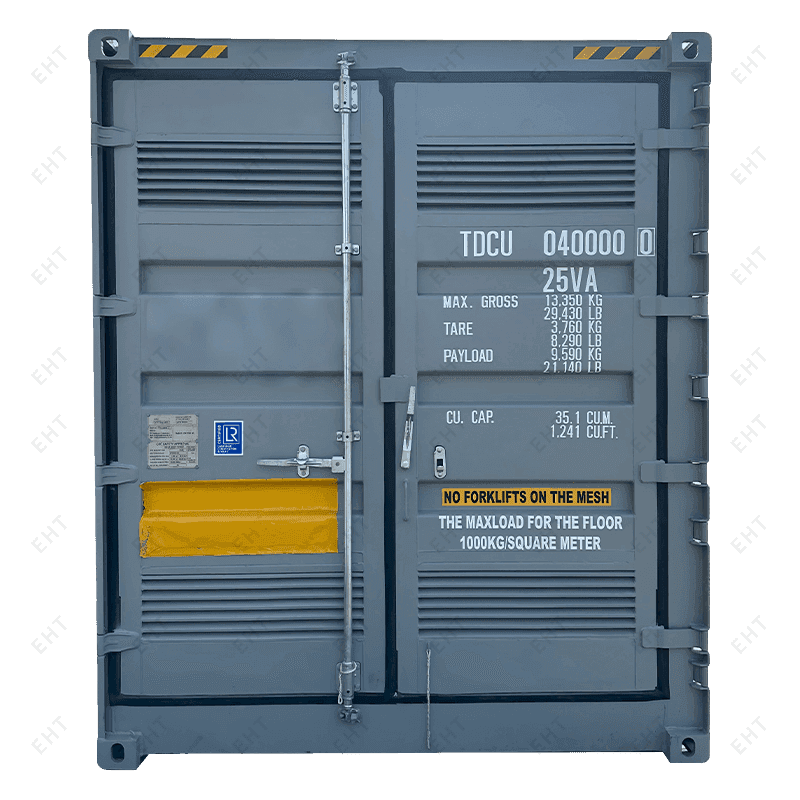
The door opening is often the tightest point in the whole container. On a standard dry box, the clear door width is close to the internal width, but hinges, locking bars, and gaskets still take a few centimeters. If a machine or pallet fits inside but not through the door, the container is no use. Always compare the cargo’s widest point with the door opening, not just the internal floor width.
This is where side-opening and open-top container designs earn their keep. A side door gives you a full-length opening along the 20ft or 40ft side, so long or awkward loads do not have to squeeze through the end. Open-top designs help with height and crane loading, but they do not make the box wider. The right choice depends on whether your constraint is width, height, or access.
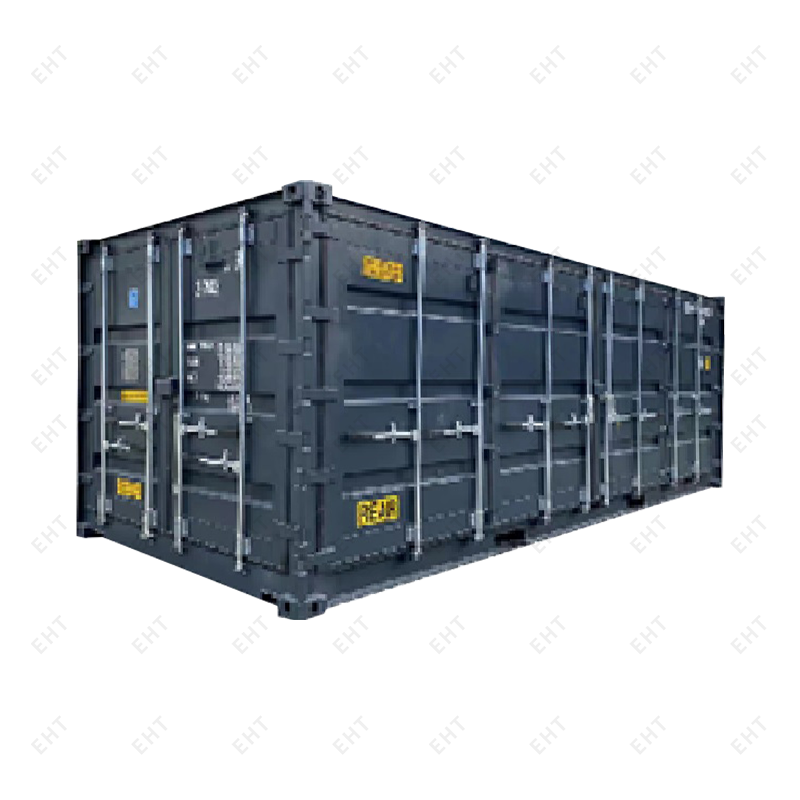 20ft Side-Door Shipping Container for Wide-Access LoadingProvides full-length side access for awkward or long loads, suited to storage and logistics where end-door entry is the constraint.View Product →
For projects where the end door is the bottleneck, a 20ft side-door container can turn a difficult load into a straightforward one. We usually ask for a cargo drawing and a photo of the site access before recommending a layout, because a side-opening box is only helpful if the crane or forklift can reach that side.
A 40ft container is not wider than a 20ft container. It is the same 8 feet across, with double the length and a higher payload in most cases. That extra length changes the transport picture: turning circles, site roads, and crane positions matter more. A 40ft high cube adds height, not width, so it is useful for tall equipment or extra racking but does not solve a narrow-load problem.
When a 40ft box is used for logistics or equipment integration, side access often becomes the deciding feature. A standard end-door 40ft container can be awkward for long racks, pipe sections, or maintenance benches. A side-opening 40ft container gives the operations team a wider working face without changing the 8ft road footprint.
 40ft Side-Opening Container for Logistics and Equipment AccessOffers a sliding side door for side loading and unloading, practical for depot, warehouse and workshop operations using a standard 40ft footprint.View Product →
We see this most often in depot, workshop, and offshore support projects. The container still travels as a familiar 40ft unit, but the side opening makes day-to-day loading and maintenance much more practical.
For storage and shipping, 8 feet is a proven compromise. For people, it can feel tight. A standard container office or accommodation unit has enough width for a corridor and a row of desks, but not for a wide open-plan layout. A 20ft or 40ft high cube helps with headroom, while insulation and lining reduce the clear width further. Good design uses the length of the container to create zones, rather than trying to force a square room into a narrow box.
When the program needs more floor width, expandable container designs are worth a look. A double-wing expandable unit opens out on site to create a wider room, while still shipping at a standard road width. That can be a good fit for site offices, welfare units, and temporary accommodation where the container has to travel legally and then open up into something more comfortable.
 20ft Double-Wing Expandable Container House for Temporary AccommodationExpands from 2.2 m transport width to 6.3 m on site, creating 37 m² for site offices, welfare units and relocatable accommodation.View Product →
The key is to plan the open and closed states separately. Check the transport width, the deployed width, the foundation or leveling requirements, and the door swing. A container that is clever on paper can still fail on site if the access route is tight or the ground is uneven.
At EHT, we build standard and custom containers for energy storage, hydrogen production, refrigeration, offshore support, accommodation, and specialized logistics. The external width often stays at the familiar 8ft ISO figure, but the internal layout is designed around the equipment, the maintenance access, and the local transport rules. We work from customer drawings or samples and can adjust door positions, lining, insulation, and structural openings to suit the job.
Because our containers are used across different markets, we pay close attention to certification and structural requirements. Our work is supported by ISO 9001, ISO 45001, and ISO 14001 systems, and products can be built to CE, CSA, and AS/NZS 1170.2 requirements where applicable. For offshore projects, DNV container designs bring another layer of checking. None of that changes the basic width answer, but it does change how the usable width is protected and verified. You can see the range of custom container projects we support if you want to compare layouts.
Before you order, run through a short width checklist. It takes ten minutes and can save a costly surprise on delivery day.
If you remember one thing, remember this: the standard answer to “how wide is a shipping container” is 8 feet externally, but the working answer is the clear opening and internal width on the actual drawing. Get those numbers early, and the rest of the project becomes much easier to plan.

What to stay up to date?
Contact us via the email address below.
No. 178, Wuzhou East Road, Economic Development Zone, Yangzhou, Jiangsu.
Copyright 2024 Yangzhou Yichengke Integrated Technology Co., Ltd. All Rights Reserved.

